A supporter hears about your food pantry, opens your site on a phone, and cannot tell what a gift funds. She tries to finish the donation form, but it will not work with her keyboard. That lost gift comes from design, not from doubt. An accessible nonprofit site fixes this. This guide shows you how to build an accessible nonprofit site step by step, so your website supports giving.
Step 1: Map the Mission and Supporter Journey
Make the First Visit Clear
Before you pick colors or software, write down what your site must do. Most donors land on your homepage for one of three reasons: to give, to learn what you do, or to volunteer. Your job is to guide each one in under ten seconds.
Put your mission in one plain sentence near the top of the page. Then place a Donate button where eyes go first, usually the top right corner. Follow the visitor’s path from homepage to donation form and remove every step that does not help. That means fewer form fields, clear costs, and mobile-friendly pages. An accessible nonprofit site also means readable fonts, strong color contrast, and text that works with screen readers, so no supporter is blocked from giving.
An accessible web design partner can handle those details for you, but your team should still own the map: who visits, what they need, and what action you want from them.
Quick checklist:
Priority
Action
Why It Matters
Mission
One clear sentence above the fold
Visitors understand you fast
Donate
Button visible on every page
Cuts friction at the key moment
Accessible nonprofit site
Contrast, alt text, keyboard navigation
Every supporter can give
Step 2: Choose a Website Setup Your Team Can Maintain
Compare Features With Real Workflows
The best platform is the one your volunteers can actually run. Before you compare prices, map out who will post updates, how often, and what happens when someone goes on vacation.
Then test each option against that routine:
Update ease: Can a non-designer swap a photo or event date in under ten minutes?
Donations built in: Does it handle recurring gifts, receipts, and mobile giving without extra plugins?
Support when stuck: Is help available by phone or chat, not just forums?
Maintenance included: Who applies security updates and backups?
Many small nonprofits skip this step and outsource everything to a service instead. A managed plan like website maintenance from Monkey Business covers hosting, updates, and fixes for one monthly fee, which suits teams with no technical staff.
Setup Type
Upfront Cost
Ongoing Work
DIY platform
Low
You handle all updates
Managed service
Low monthly fee
Provider handles maintenance
Custom developer
High
Depends on contract
Generated illustration
Whichever route you pick, ask for a trial run. Post one real update yourself before you commit.
Step 3: Build an Accessible, Trustworthy Giving Path
Remove Common Barriers From the Donation Flow
Your donation page should let someone give in under two minutes. Every extra field, forced account, or confusing button costs you gifts, so cut the form to the basics: amount, payment, contact, and an optional note. Offer preset amounts with clear labels, plus a monthly option, and make the “Donate” button easy to spot on every page.
Accessibility matters just as much. Use large, readable text, strong color contrast, and keyboard-friendly navigation. Add alt text to images and label form fields clearly, because screen readers depend on them. If you want a fuller walkthrough, our guide to non-profit website accessibility covers the details.
Trust closes the gift. Show your secure checkout badge, explain where the money goes, and confirm each donation with a clear thank-you page and receipt email.
Test the full flow yourself, on a phone, before launch. Give five dollars, then try to cancel the monthly plan. If that frustrates you, it frustrates donors.
Generated illustration
Step 4: Test, Launch, and Keep the Site Useful
Before launch, test on a phone, a tablet, and a laptop. Give a small donation yourself and fix anything confusing. Check the site with a screen reader if you can.
After launch, the work shifts to upkeep: software updates, backups, and security checks. Assign one person to own these tasks, or hand them off. Many small nonprofits use ongoing website maintenance services so staff can stay focused on the mission.
Tip: Review your site every quarter. Update stale photos, test the donate form, and thank recurring donors.
Homepage
Need a giving-ready site but lack the time or web skills? Monkey Business handles design, hosting, and care for you, so your team can focus on the mission.
Frequently Asked Questions
Q1: Top nonprofit website packages for small teams?
Look for bundles that include design, hosting, maintenance, and donation tools in one monthly plan. Managed services like Monkey Business suit small teams best.
Q2: How much should a nonprofit website cost?
Expect $30-$150 monthly for managed plans, or $3,000+ upfront for custom builds.
Q3: Do we need ADA compliance?
Yes. Accessible design protects your nonprofit legally and helps every visitor give.
Build a Website That Makes Giving Easier
A strong nonprofit site shares your mission clearly, makes donating simple, and stays secure and accessible. Build it step by step, and plan for ongoing maintenance so every visit turns into support.
Quick Summary: Professional website design pricing varies widely because scope drives cost, not just looks. The biggest factors are project strategy, page count, custom design, and functionality like ecommerce or booking, with ecommerce alone often adding $3,000 to $10,000 for small sites. To get fair quotes, write a clear brief, ask providers to price the same scope, compare recurring costs like hosting and maintenance, and confirm ownership of files and accounts. For California small businesses and nonprofits, Monkey Business bundles design, hosting, and support into one flat monthly plan, which fits well if you want predictable costs.
Two proposals can look almost identical, yet one team prices research, original content, and integrations that the other skips. That gap makes professional website design pricing hard to compare. This guide ranks the cost factors in modern web design, explains project versus monthly pricing, and flags which providers fit different levels of scope – ranked by how broadly each factor shapes the work, effort, and after-launch care.
Website Design Cost Factors at a Glance
Factor
Best for
What affects cost
Budget question
Project strategy and scope
Organizations needing a dependable project estimate
Discovery, research, planning, deliverables, and change control
What is in scope, and what is explicitly excluded?
Page count and site architecture
Teams comparing small brochure sites with larger websites
Unique templates, page volume, navigation, and migration
How many unique layouts and pages are included?
Custom design and brand requirements
Businesses with distinct brand and experience requirements
Original layouts, brand assets, interactions, and review rounds
Which design elements are bespoke, and how many revisions are included?
Functionality and integrations
Sites that need more than standard informational pages
Feature complexity, integrations, data flows, and testing
Which integrations and third-party fees are included?
What to know about professional website design pricing
A price quote tells you what you’re paying for only if you know what’s inside it. Professional website design pricing covers far more than the interface you see: discovery, content, development, integrations, testing, and support after launch.
That’s why two modern web design quotes can differ by thousands and still be reasonable. Compare them with the same scope in hand, and split one-time build costs from recurring expenses like hosting, maintenance, and marketing.
Here are the factors that move your number.
1. Project strategy and scope
Every solid estimate starts with a business goal: leads, bookings, donations, sales, or credibility. Before design begins, a good team runs discovery work like audience definition, research, and sitemap planning, which takes time and shapes the price. If the brief changes after approval, new pages or features affect both budget and schedule.
Consultant and owner sketching sitemap on whiteboard
Highlights
Define your main audience and the one action you want visitors to take.
Agree on deliverables, decision-makers, revision rounds, and project assumptions up front.
Separate launch essentials from future enhancements so the quote stays reliable.
A clear written scope prevents disputes, since both sides know what is included and excluded.
Specs
Best for: Organizations needing a dependable project estimate
What affects cost: Discovery, research, planning, deliverables, and change control
Budget question: What is in scope, and what is explicitly excluded?
Keyword lens: Scope drives the real cost behind any professional website design pricing quote, including modern web design builds.
Why it ranks here: Scope sits at the top because every other cost driver depends on what the site must accomplish and what the agency must deliver, from discovery through planning.
A four-page site with a homepage, services, about, and contact is a much lighter build than one with service-area pages, staff profiles, and landing pages. Raw URL count matters less than the number of unique page templates, since each new layout needs its own design, content, and build effort.
Designer arranging website page mockups on desk
Highlights
Count unique page types as well as total URLs.
Include navigation, redirects, and content migration in the estimate.
Plan for reusable layouts where appropriate.
Specs
What affects cost: Unique templates, page volume, navigation, and migration
Budget question: How many unique layouts and pages are included?
Best for: Teams comparing small brochure sites with larger websites
It ranks here because page scope is one of the clearest inputs to compare across proposals.
A distinctive visual system and tailored layouts take more design and review time than a theme. Fully custom work sits at the top of the pricing range, while template builds stay low, and many quotes hide revision limits.
Designer presenting custom layout to client
Highlights
Ask whether the project uses a design system, theme, or fully custom layouts (Clutch pricing guide).
Clarify if brand identity work is part of the website scope (Brand Vision guide).
Confirm revision limits and approval milestones.
Specs
What affects cost: Original layouts, brand assets, interactions, and review rounds
Budget question: Which design elements are bespoke, and how many revisions are included?
It ranks here because visual customization directly drives design hours, and unclear approval steps often add rounds nobody budgeted for.
Interactive features turn a plain website into a working system, and each one adds development, setup, and testing. A contact form is simple; booking, payments, donations, or CRM links cost far more, and ecommerce work alone often runs $3,000 to $10,000 for smaller sites according to WebFX’s cost guide.
Highlights
Document booking, payments, ecommerce, donations, and lead-routing needs.
Identify third-party tools and their separate license fees.
Include integration testing and who owns each account.
Specs
Best for: Sites that need more than standard informational pages
What affects cost: Feature complexity, integrations, data flows, and testing
Budget question: Which integrations and third-party fees are included?
It ranks here because functionality can shift a mostly informational build into an integrated business system with a much larger technical scope.
Four scope drivers get most of the attention, but four more quietly shape what you’ll actually pay. Ask about each one before you sign.
Content, copy, and photography – Confirm whether writing, editing, photo sourcing, and content entry are included or come from your team.
Accessibility, SEO, and technical requirements – Check what accessibility checks, technical SEO setup, privacy tools, and testing the proposal really includes.
Maintenance and post-launch support – Compare hosting, updates, backups, security, and included content edits over time.
Provider and pricing model – Weigh one-time agency projects, freelancers, and managed subscriptions by deliverables, ownership, cancellation, and lifetime cost.
How to choose the right website design budget
Set yourself up for fair quotes before you contact anyone:
Write a short brief first. Name your audience, business goal, required pages, and the actions visitors must take (call, book, donate).
Ask every provider to quote the same scope, itemized across design, development, content, integrations, launch, and support.
Compare full recurring costs, not just the project price: hosting, updates, maintenance, software, and support add up.
Confirm ownership of the domain, files, content, analytics accounts, and subscriptions, plus transfer and cancellation terms.
Match the model to your situation. Custom builds suit teams with in-house help. If you want one flat monthly payment with everything handled, a managed service is usually the better fit.
For California small businesses and nonprofits, Monkey Business bundles design, hosting, maintenance, and support into one done-for-you monthly plan, so there are no surprise invoices later.
Homepage
Now that you know what drives web design costs, skip the surprise invoices. Monkey Business bundles design, hosting, maintenance, and support into one flat monthly plan. Get a clear quote today.
Frequently Asked Questions
Q1: Top agencies for high-end business websites?
Look for agencies that show transparent pricing, real client work, and ongoing support. Monkey Business offers done-for-you design, hosting, and maintenance in one plan, while firms like Jottful and Eversite serve similar needs.
Q2: Why do website prices vary so much?
Scope drives cost. Page count, custom features, copywriting, and compliance needs all add hours. A five-page site costs far less than a booking or e-commerce build.
Q3: What is Website-as-a-Service pricing?
Instead of one large upfront fee, you pay a flat monthly rate covering design, hosting, updates, and support. It spreads costs out and keeps your site maintained.
Q4: Should I budget for maintenance after launch?
Yes. Even a one-time project needs security updates, backups, and edits. Plan for ongoing care, or choose a subscription model that includes it.
Quick Summary: Turnkey website solutions bundle design, copy, hosting, security, and support into one package, cutting launch timelines from months to weeks by running tasks in parallel instead of sequentially. Providers like Monkey Business handle the full build, which prevents handoff delays and scope creep. Before signing, compare what’s actually included, who owns your domain and files, and post-launch support. Run a final checklist covering content, forms, SSL, analytics, and removing staging noindex tags to ensure the site truly works, not just looks done.
A California consultant can lose a referral while a website project waits on separate copy, design, hosting, and development vendors. Each handoff adds weeks, and the launch ready site keeps slipping. This guide shows how a coordinated turnkey build turns that backlog into a launch ready site fast, and what separates a true launch ready site from one that just looks finished. You get a practical checklist, drawn from years of building sites for California businesses.
What Turnkey Website Solutions Include
A turnkey website solution bundles every part of a site build into one package: design, copy, hosting, security, maintenance, and support. You get one team and one invoice instead of juggling a designer, a developer, a hosting company, and a copywriter.
One Team, Fewer Handoffs
When one team handles everything, nothing falls through the cracks between contractors. There is no waiting on a developer to apply a designer’s plan, and no finger-pointing over who owns a bug. Providers like Monkey Business and Jottful run this model as a monthly service.
What a Launch-Ready Site Should Contain
A genuine turnkey package should cover:
Design and build – custom layout, mobile-friendly, on-brand
A turnkey website launches faster because one team handles design, writing, hosting, and setup together. You approve the plan instead of coordinating designers, developers, and IT vendors yourself.
Parallel Work Replaces Sequential Delays
In a traditional build, design finishes before coding starts, and content waits its turn. Each handoff adds weeks. A turnkey provider like Monkey Business runs design, copy, and compliance checks at the same time, cutting the typical website launch timeline from months to weeks.
A Defined Scope Prevents Launch Drift
Scope creep is a classic project killer. Research on project failure shows unmanaged changes stretch schedules and budgets. Turnkey contracts fix the deliverables up front: pages, features, and launch date. That agreement keeps momentum and stops endless revision cycles.
Not every “turnkey” offer includes the same things. Before you sign, line up providers on what actually ships after launch.
Compare Scope, Ownership, and Support
Ask for a written list of what’s included: design, hosting, security updates, backups, and post-launch support. Then ask the ownership question – who controls your domain, files, and logins if you leave? Some providers, like Jottful or Eversite, bundle maintenance monthly; others charge per fix. Get the numbers in writing.
Two business owners comparing website service quotes
Check Strategy, Performance, and Local Fit
A launch-ready site starts with goals, not graphics. Experts recommend asking how the provider handles SEO, page speed, and mobile testing before the build begins (see this guide to hiring web developers). For California businesses, it also helps to pick a partner who understands local compliance and your market. Ask to see three live sites launched over a year ago – that’s the real test of quality (more questions worth asking).
Launch Checklist: Confirm the Site Is Ready to Work
Run these checks the day before go-live. A site that looks done and a site that works are not the same thing.
Content and Conversion Checks
Proofread every page twice; placeholder text still ships more often than you’d think.
Test every button, form, and phone link end to end.
Confirm the privacy policy and contact page are live and linked.
Ask one person outside the project to click through the main path to purchase or booking.
Technical and Handoff Checks
Remove any staging noindex tags and make sure robots.txt allows crawling – this is the top launch bug.
Verify HTTPS works on every page and the SSL certificate auto-renews.
Test forms, confirm analytics fire on the live domain, and submit the sitemap to Google Search Console.
Run a speed test and fix anything dragging load time down before users see it.
Keep the old DNS records and a backup for at least 72 hours so you can roll back fast if something breaks.
With a turnkey provider like Monkey Business, most of this list is handled for you and documented in a handoff report – ask for it if your provider doesn’t offer one (see this launch checklist for the full scope).
Homepage
Ready to launch fast without cutting corners? Monkey Business handles design, hosting, and maintenance so you can go live in weeks, not months.
Frequently Asked Questions
Q1: Top agencies for launch-ready websites?
Turnkey providers like Monkey Business, Jottful, AcumenSites, and Eversite deliver launch-ready sites with design, hosting, and support bundled together.
Q2: How fast can a turnkey site go live?
Most turnkey projects launch in two to six weeks, since templates, hosting, and setup are already prepared.
Q3: Do I own my turnkey website?
Ask upfront. Providers like Monkey Business ensure you own your content and domain, avoiding lock-in issues.
Conclusion
A turnkey website compresses weeks of design, SEO, and setup into a launch-ready package. Judge providers on ownership, security, support, and maintenance – small business web adoption shows speed now decides who gets found first.
Quick Summary: California businesses lose leads if their websites lack keyboard navigation or proper form labels, so choosing an agency that builds accessibility into design-not just adding overlays-is critical. Monkey Business stands out for small teams by bundling design, hosting, security, and ADA compliance into a single managed service, while other agencies like Razorfrog focus on WordPress-specific fixes or Accessibility Innovations offer deep audits for formal programs. Always demand written scopes with WCAG testing details, post-launch support, and proof of real-world fixes like screen-reader compatibility, not just automated scans.
A California firm can lose a ready-to-buy lead before the contact form if keyboard focus is hidden, fields lack labels, or the site needs a mouse. A web accessibility agency may be a designer, auditor, consultant, platform, or overlay seller. This shortlist compares web accessibility agency options for redesigns, fixes, and support. We reviewed services, California fit, testing, upkeep, and platform skills. Ask each web accessibility agency for a written scope and test plan.
Specialist ADA-friendly design and remediation process
Training and consulting; confirm maintenance options
What to know about accessible web design agencies in California
A strong agency does more than add a statement or a toolbar. It builds accessible structure, contrast, keyboard paths, forms, media, and mobile layouts from the start.
Ask how the team tests with assistive tools, records issues, fixes them, and handles new content after launch.
California buyers should expect clear audit notes, repair plans, and ongoing support.
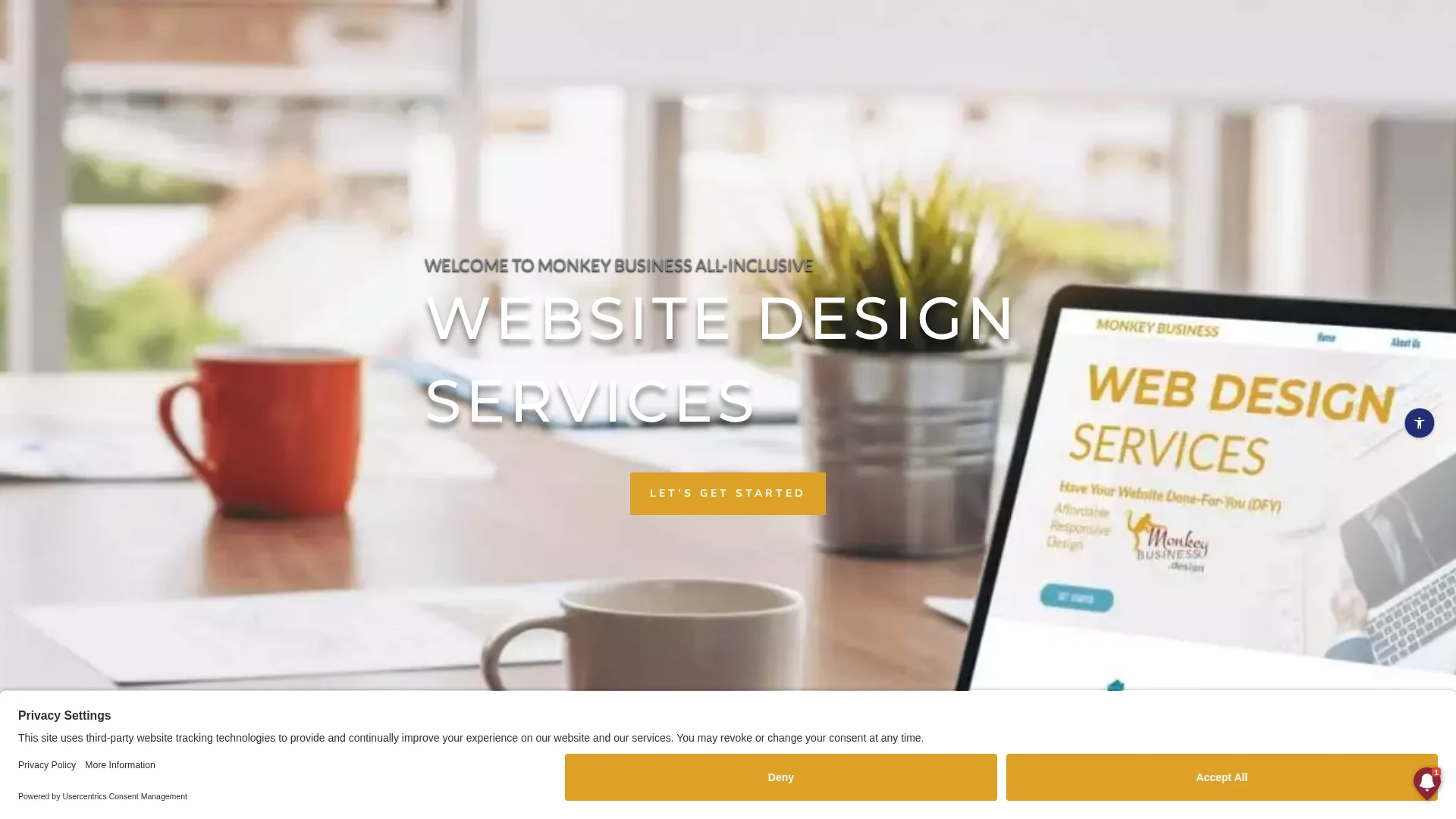
Monkey Business is the best overall fit for California small organizations that want one hands-on web partner. Its WaaS model bundles design, hosting, security, updates, support, and stated accessibility coverage. Highlights
Custom, managed sites for small businesses, nonprofits, and professionals
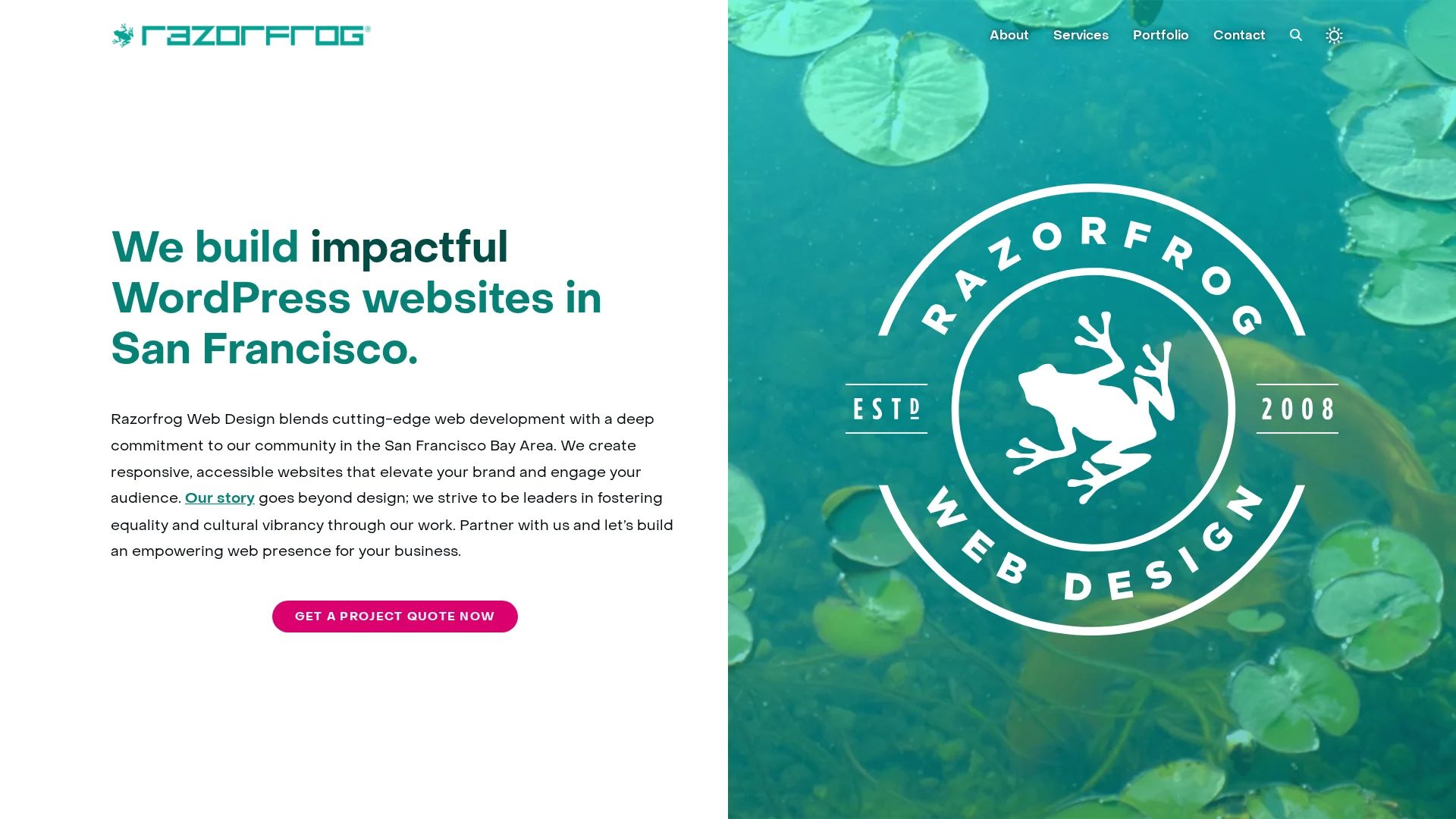
Razorfrog is a strong San Francisco option for accessible WordPress projects. It combines redesign work with WCAG remediation and ongoing site care, as shown in its published service range. Highlights
Bay Area WordPress design, e-commerce, SEO, and care plans
Accessibility Innovations suits teams that need governance, not just a redesign. Its California consulting service covers audits, training, remediation guidance, and monitoring. Highlights
Manual, automated, assistive-tech, and real-user testing
Training, policies, VPATs, and retesting Specs
Best for: Formal accessibility programs
Primary service: Audits and remediation guidance Pros
Broad testing and governance scope Cons
May need a separate web design partner It ranks third for its deep WCAG audit process, though it may exceed a basic redesign’s needs.
SF Web Accessibility is a specialist option for San Francisco accessible website design and remediation. Its remediation process starts with a consultation. Highlights
Accessible design, remediation, training, and consultations
Local San Francisco focus
Specs
Best for: Organizations seeking a specialist
Ongoing support: Training and consulting – confirm maintenance
Pros
Focused accessibility services
Cons
Confirm platform testing and retesting
It ranks fourth for strong focus, but narrower public service detail.
Last updated: August 16, 2026
More California Accessibility Providers to Consider
These providers fit projects that need a focused specialty or a different service setup.
Ideary Works – Manual audits and native code-level WCAG fixes for California firms.
Interstellar Design – Bay Area accessible web, branding, SEO, WordPress, and government work.
CalApps – WordPress design, accessibility, SEO, and maintenance.
Kha Creation – Audits, manual testing, remediation, and responsive fixes.
How to choose the right web accessibility agency in California
Choose the service that fits your starting point:
Pick a full redesign partner for a new site. Monkey Business is the standout for small teams needing design, hosting, upkeep, and support in one plan.
Use a remediation specialist if your current site needs targeted fixes.
Hire a consultant if your in-house team will do the work.
Ask for a written scope naming WCAG level, templates, forms, media, PDFs, and third-party tools.
Automated scans are not enough. Require keyboard, screen-reader, mobile, zoom, and human testing.
Confirm post-launch monitoring, training, retesting, issue reports, and ownership of code, files, hosting, and accessibility records.
Homepage
Need an accessible, maintained website without managing vendors? Choose Monkey Business for done-for-you design, compliance, hosting, and support.
Frequently Asked Questions
Q1: Top accessible web design agencies in California?
Shortlist agencies that combine design, WCAG testing, fixes, and ongoing support. Ask for recent accessible site examples, audit scope, timelines, and who handles updates after launch.
Q2: Should I hire an auditor or full-service agency?
Choose an auditor for a clear gap report. Choose a full-service agency if you need the site rebuilt, repaired, hosted, and maintained.
Q3: How do I compare accessibility proposals?
Check testing methods, repair scope, staff training, content support, and monthly monitoring. A low audit price can exclude the fixes your site actually needs.
Quick Summary: A privacy policy alone won’t protect your site if hidden trackers, ad pixels, or forms collect data without notice-California’s CCPA requires matching policies to actual data practices, not just legal jargon. Start by mapping every data collection point (forms, analytics, chat tools) and flagging high-risk activities like selling user data or tracking kids, then add clear opt-out paths and vendor checks. The key move is testing real user rights requests (like deletion or opt-out) to catch gaps before regulators do, since California enforcement targets sites that ignore these steps. A polished privacy policy will not protect a California consulting firm if forms, analytics, schedulers, or ad pixels collect data before visitors get notice. The hard part is matching your privacy policy setup to what your website actually does. This guide gives a practical privacy policy setup checklist for notices, tracking, vendors, security, and reviews. It focuses on California rules and real website workflows, not legal theory.
Step 1: Determine Which Privacy Rules and Data Practices Apply
Inventory Every Collection Point
Map what your site collects before writing any notice. Include forms, bookings, donations, checkout, cookies, analytics, chat, email signups, and embedded tools. Record the data type, purpose, vendor, and where it goes.
Tip: A privacy policy cannot fix tracking you have not identified.
Check California Coverage and Higher-Risk Activities
Review whether CCPA applies to your business and its data practices. The law gives Californians rights over data collection, sharing, deletion, and correction, and covered businesses must give required notices, per the California Attorney General.
Step 2: Complete the Privacy Policy Setup and Required Notices
Write an Accurate, Maintainable Privacy Policy
Your policy must match what your site actually does. List data collected, its sources, uses, sharing partners, retention period, consumer rights, and a contact method. California guidance says policies should explain categories collected, purposes, and third-party disclosures. Review it whenever forms, analytics, or vendors change.
Keep a dated change log.
Link it in every website footer.
Nonprofit manager reviewing privacy policy documents by laptop
Add Notice at Collection and Opt-Out Disclosures
Show a Notice at Collection at or before each form collects personal data. Link to the policy and state categories and purposes. If you sell or share data for targeted ads, provide a clear Your Privacy Choices or opt-out path. California recognizes rights to opt out of sale or sharing, including through GPC signals, under the CCPA.
Warning: Do not claim “we do not sell or share” until you check ad pixels and analytics settings.
Step 3: Configure the Website, Security Controls, and Providers
How to Choose a Privacy-Compliant Website Provider
Choose a provider that can name every tool handling visitor data and support your privacy requests. Ask for written terms covering data use, access, backups, breach response, and vendor oversight.
Confirm who hosts the site and maintains updates.
List forms, analytics, chat tools, and payment services.
Make sure the provider can honor opt-out signals.
California enforcement has targeted sites that shared tracking data without proper controls or opt-outs, according to state enforcement examples.
Web designer reviewing privacy compliance checklist beside hosted dashboard
Apply Data-Minimization and Security Controls
Collect only what each form needs. Remove unused plugins, set strong unique logins, enable multi-factor authentication, and keep backups tested.
Tip: Review every third-party script before publishing. If it is not needed, remove it.
Step 4: Test Rights Requests and Maintain Compliance
Run a Practical Compliance Test
Submit a mock request to know, delete, correct, or opt out. Confirm the form works, your team can verify identity, vendors receive the request, and you log the outcome. California consumers have these rights under the CCPA.
Test on desktop and mobile.
Time each handoff.
Save proof of completion.
Do not treat a request as a support ticket. Give one person clear ownership.
Create a Recurring Review Calendar
Privacy compliance needs routine checks because site tools and vendors change.
Review forms, cookies, and trackers every quarter.
Review vendor terms before adding new tools.
Update notices after material data-use changes.
Keep a simple log of tests, fixes, and policy updates.
Homepage
Get a secure, privacy-ready website without managing every detail. Monkey Business handles design, hosting, updates, and compliance support for California organizations.
Frequently Asked Questions
Q1: How do I choose a privacy compliant website provider?
Choose a provider that documents data tools, updates policies, manages consent, and maintains security. Ask who handles vendor checks and breach support.
Q2: Do small California businesses need a privacy policy?
Yes. If your site collects names, emails, analytics data, or form entries, post a clear policy.
Q3: How often should I review website privacy settings?
Review settings every six months and after adding forms, tracking tools, chat, or new vendors.
Conclusion
Privacy compliance is practical: map data, post clear notices, control vendors, secure forms, and test often. The California DOJ confirms consumers have rights to know, delete, correct, and opt out.
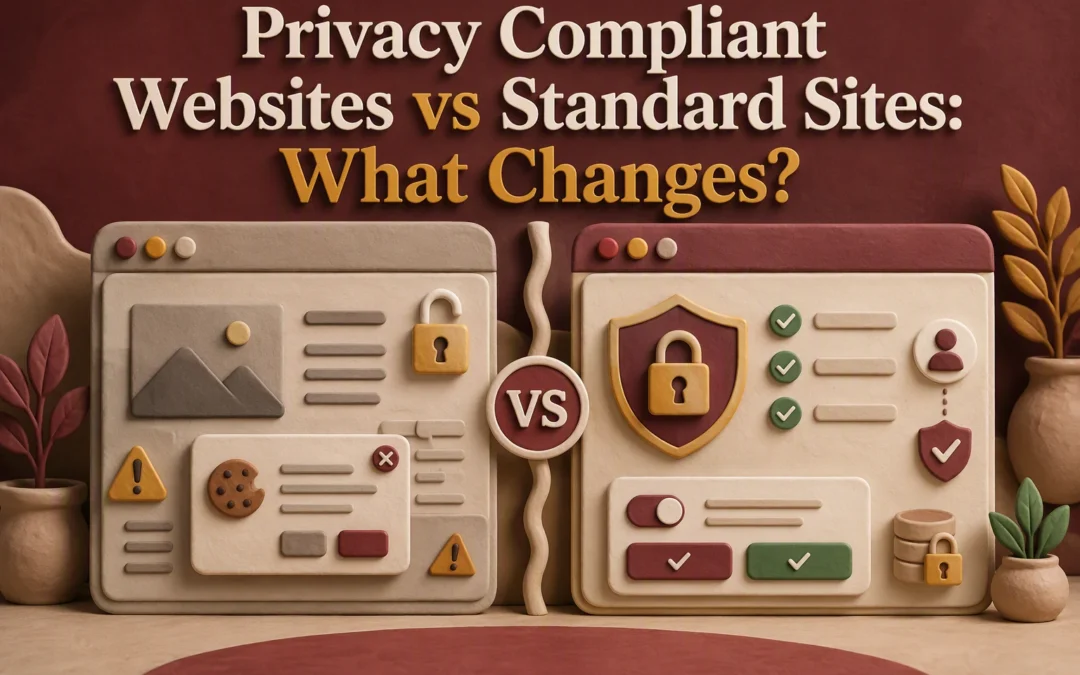
Quick Summary: A privacy-compliant site cuts data collection to only what’s needed-like a contact form asking just for name, email, and message, not extra details-and blocks optional tracking until users opt in. Standard sites often collect more than necessary and bury privacy notices in footers, leaving gaps that California’s CCPA rules can expose. The real cost comes later: fixing broken consent flows or facing enforcement after a vendor or plugin quietly adds trackers. For businesses handling leads, ads, or California customers, privacy-first design avoids these risks by baking controls into the site from the start.
A contact form shows the real difference. A standard site may collect first and explain later. Privacy-first design limits fields, states the purpose, and blocks optional tracking until a visitor chooses. For California firms facing CCPA rules, privacy-first design changes data flow, vendor control, and upkeep. This comparison helps you choose privacy-first design or a tightly audited standard site.
Privacy-Compliant Websites vs Standard Sites: At a Glance
Built for organizations that treat privacy as a design rule, not a patch. It limits data, gives visitors clear choices, and reviews forms and vendors after changes. ![A local business owner reviewing privacy settings on a laptop] Key strengths
Clear notices and user controls
Ongoing tracking and vendor checks
Standard website
Built mainly for marketing, visual appeal, and core functions. Privacy tools often arrive later, so forms, pixels, and new plugins can create gaps over time.
What Changes in the Design and Data Model
Forms, Booking Tools, and Lead Capture
A privacy-first site collects only what each task needs. A contact form may ask for name, email, and message, not a birth date or detailed intake notes. Show a short notice beside each form. California requires covered businesses to explain collection and use practices to consumers under the CCPA.
Nonprofit director reviewing simplified booking form on laptop
Purpose, Retention, and Access
Map every field to a clear purpose, storage location, retention rule, and approved staff role.
Data
Purpose
Access
Email
Reply to inquiry
Sales lead
Booking time
Confirm appointment
Scheduler
Remove old leads on schedule. Do not keep data “just in case.”
What Changes in Tracking, Notices, and User Choice
Optional Scripts Should Not Be an Invisible Default
A standard site often loads ad pixels and analytics before a visitor acts. A privacy-first site separates required tools from optional tracking.
Block optional scripts until the user chooses.
Record and honor that choice.
Honor Global Privacy Control where required. California DOJ guidance says covered businesses must treat it as a valid opt-out request.
Web designer configures script consent controls
Tip: Test every choice. A banner means little if trackers still fire.
Notices Must Appear Where Data Is Collected
Put clear notices beside contact forms, newsletter signups, bookings, and donation fields. State what you collect, why, and who receives it. The CCPA requires covered businesses to give notice at or before collection. California DOJ outlines these consumer rights.
After launch, approve every new form, chat tool, pixel, and booking link before it goes live. Keep a vendor list showing what data each tool receives. California enforcement examples show businesses had to update vendor contracts and stop transfers after Global Privacy Control signals. The Attorney General’s guidance makes this a real operating task.
Tip: A free plugin can quietly add tracking. Treat every update as a privacy review.
Testing Is the Difference Between a Claim and a Control
Test consent choices monthly in a private browser. Confirm blocked tags stay blocked, forms match your notice, and opt-out requests reach the right inbox. California consumers have rights to know, delete, correct, and opt out under the CCPA.
Choose a privacy-first website if you collect leads, run ads, use tracking tools, or serve Californians. It builds consent, data controls, and clear notices into the site from day one. Covered businesses must honor valid Global Privacy Control opt-out requests, according to the California Attorney General.
Choose a standard site only if it collects little data and you can review it often.
Your situation
Better choice
Basic brochure site, no tracking
Standard site with regular checks
Forms, analytics, ads, or member data
Privacy-first site
Tip: Privacy-first costs less than rebuilding broken tracking and consent flows later.
Homepage
Choose Monkey Business for a secure, privacy-ready website with ongoing support handled for you.
Frequently Asked Questions
Q1: Privacy compliant websites vs standard websites?
Privacy-first sites limit data at collection. Standard sites often add notices later, while trackers, forms, and vendor tools still collect too much.
Q2: Do small California businesses need a privacy policy?
Yes. If your site collects personal data, publish a clear policy and match it with real consent and data-handling practices.
Q3: What must change during a redesign?
Review forms, cookies, analytics, embedded tools, opt-out links, vendor contracts, and staff steps for data requests.
Conclusion
Privacy-first sites limit data at the source, document vendors, and support user rights. California’s CCPA guidance confirms these rights matter.