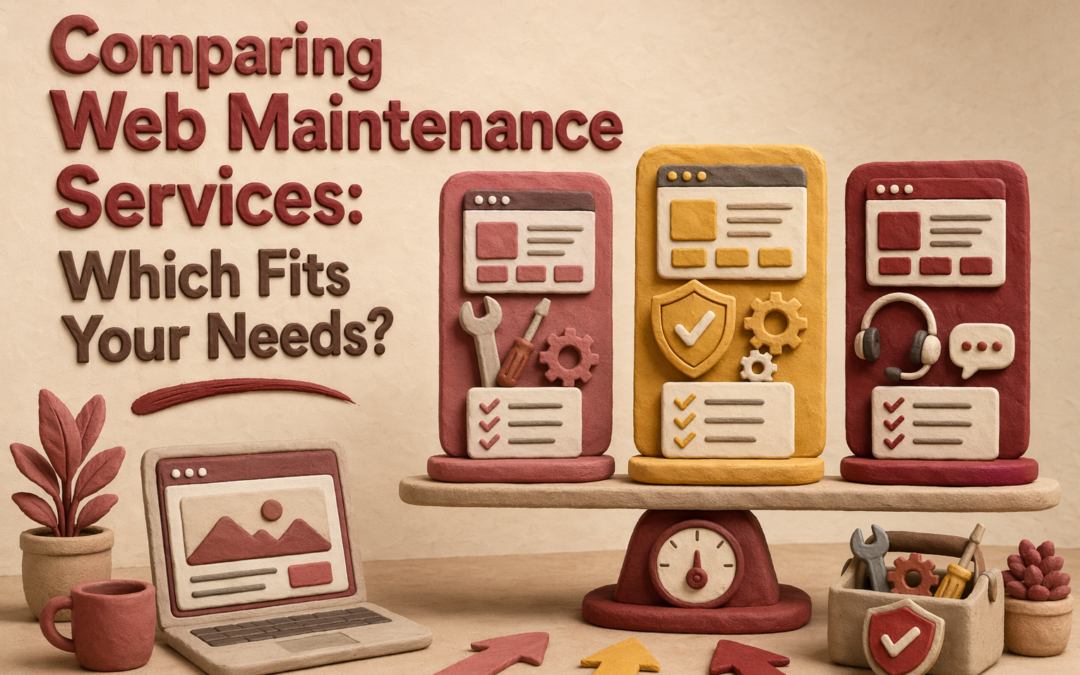
Quick Summary: If you want your website to stay secure, perform well, and comply with regulations, a full-service maintenance plan like Monkey Business is best. It handles updates, backups, security, and SEO with minimal owner effort. Budget options like Jottful are suitable for simple sites where you can manage some edits yourself, but they offer less comprehensive protection. Need more than quick edits? Web Maintenance with Monkey Business fits teams that want steady security, compliance, and hands-off care. Jottful suits simpler, lower-cost Website Maintenance. Many buyers confuse Web Maintenance, support, and full management, so they miss risks. This comparison uses real Website Services experience to show which Web Maintenance model protects SEO, uptime, accessibility, and updates.
Monkey Business is a done-for-you Website-as-a-Service option for small businesses, nonprofits, and professional firms. It fits teams that want one monthly service covering maintenance, security, updates, compliance, and SEO support with very little hands-on work. Key strengths
Monthly subscription
1-hour monthly content updates
24/7 security, backups, and SSL
Jottful Website Service
Jottful is a small-business website service built for owners who want lower upfront cost and simple support. Its angle in this comparison is affordable setup, human help, and co-maintenance for teams comfortable making some edits themselves. Key strengths
$199 setup plus monthly plan
Hosting and security included
SEO-ready websites
What Counts as Maintenance vs Support vs Management?
The labels matter because they change what you can expect. Maintenance is routine care like updates, backups, and security checks. Support is reactive help when something breaks or you need a quick fix. Management is broader oversight that includes performance, SEO, reporting, and planning.
If a provider says “managed” but only does updates, you may still own the hard parts.
Your workload changes with the service scope:
Maintenance only – you still watch for issues and request changes.
Support plus maintenance – you get help, but you still direct the work.
Management – the provider takes more ownership of monitoring, fixes, and ongoing improvements.
Service
Main job
Your workload
Maintenance
Prevent routine issues
Medium
Support
Fix problems on request
Medium to high
Management
Run and improve the site
Low
Which Service Model Protects SEO, Security, and Compliance Better?
Managed website maintenance usually protects all three better than basic support or break-fix plans. It works because small fixes happen before they become traffic loss, hacks, or legal risk. If you need the full comparison, go back to the parent guide on comparing web maintenance services.
SEO stability depends on quiet, continuous upkeep. Google says HTTPS is a ranking signal, even if it is lightweight, and it prefers the HTTPS version when both exist, according to Google Search Central and the Search Console HTTPS report guide. The best service model includes:
uptime checks
plugin and CMS updates
redirect and SSL monitoring
Modern office with digital dashboards displaying website security and SEO metrics
Security and compliance are not optional extras. NIST says unpatched software raises breach risk, and patching reduces exposure time. Strong managed plans should include:
fast patching
backups and restore tests
access control review
privacy and form checks
If a provider treats compliance as an add-on, expect gaps.
Which Should You Choose: Monkey Business or Jottful?
Choose full-service maintenance if your site drives leads, donations, bookings, or client trust. Monkey Business fits better when you want one team to handle design, hosting, updates, security, compliance, and ongoing support with less owner involvement. Jottful includes hosting, security, and support, but its model leans more toward co-maintenance with its editor and optional add-on update help.
Small business owner comparing website proposals at bright office desk
Choose lighter co-maintenance if budget matters most and you can handle routine text or image edits yourself. Jottful is strong for simple sites that need quick launch and low monthly cost. Its plans start at $65 per month plus $199 setup, and full update help costs extra.
Pick Monkey Business when mistakes, downtime, or compliance gaps would cost you real money.
Homepage
Need a done-for-you option? Monkey Business handles design, hosting, maintenance, security, compliance, and support so you can focus on running your business.
Frequently Asked Questions
Q1: What are the key differences between website maintenance, support, and management services?
Maintenance covers updates, backups, and security checks. Support fixes issues when something breaks. Management is broader. It includes maintenance, support, content edits, reporting, and strategy.
Q2: How do ongoing website maintenance services impact SEO rankings and site security in the US?
Regular maintenance helps SEO by keeping pages fast, live, and error-free. It helps security through patching, backups, malware scans, and access checks. Neglect often leads to downtime, hacks, and ranking loss.
Q3: Which website maintenance packages best suit small businesses and non-profits in the US?
Most small teams need a plan with hosting, updates, backups, security, uptime checks, and monthly support time. Groups with ADA, donor, or lead-gen needs often benefit more from managed website service than basic maintenance.
Conclusion
Pick based on risk, not price. The best fit covers updates, backups, SEO, and compliance. NIST notes small firms need clear, scaled cybersecurity basics.
If your business does not appear when a customer asks a conversational AI for a recommendation, you are effectively invisible to the modern buyer. In 2026, staying relevant requires shifting from traditional keyword chasing to a comprehensive strategy that ensures AI models recognize, trust, and cite your brand as the definitive local authority.
The digital landscape has shifted beneath the feet of every local entrepreneur. We have moved beyond the era of simple blue links into a world dominated by Artificial Intelligence Generated Overviews and Direct Answer Summaries. If your current digital presence is not optimized for these Conversational Search Tools, you are losing customers to competitors who have already adapted.
The New Reality of Search Engine Visibility
In 2026, search engine visibility is no longer just about appearing on page one of Google. It is about being the cited source in a conversational response. Modern user behavior has shifted toward voice-based queries and complex, long-form questions that demand immediate, accurate answers.
Recent data from Search Engine Journal suggests that nearly 50% of all searches are now voice-based or conducted through AI interfaces. These searches often result in zero-click results, where the user finds the answer directly in the AI overview without ever clicking through to a website. To survive, your small business website must provide Structured Digital Sources that AI models can easily ingest and verify.
Why Artificial Intelligence Website Builders Fail Small Businesses
Many owners turn to an Artificial Intelligence website builder or cheap DIY platforms in hopes of a quick fix. While these tools can create a site that looks professional on the surface, they often lack the technical excellence required for high search engine algorithms performance. Studies show that 62% of AI-built websites fail to meet basic local SEO requirements.
At Monkey Business, we see the fallout of these “fast” solutions every day. These platforms often ignore Robots.txt Configuration and Metadata, leading to poor Search Engine Crawling and Indexing. Without a professional touch, your site becomes a generic template that lacks the Trust Signals and Experience, Expertise, Authoritativeness, and Trustworthiness (E-E-A-T) that Google and other AI models demand.
Strategic Local SEO Strategy and Geographic Relevance
For a local business, geographic relevance is the lifeblood of your digital marketing. Reports from BrightLocal confirm that 98% of consumers use the internet to find local business information, and 76% of those users visit a physical location within 24 hours. If your Local Search Engine Optimization is not precise, you are invisible to the people standing right outside your door.
We focus on a Done-For-You (DFY) approach that manages your Google Business Profile, local citations, and localized content marketing. This ensures that when someone searches with local search intent, your business is the primary recommendation. AI tools often neglect these nuances, leaving your business buried under outdated or inaccurate information.
The Power of Structured Data and Technical Optimization
To be recognized by AI search results, your website needs more than just good writing. It requires a robust Information Hierarchy and Structured Data Implementation. This “behind-the-scenes” code tells AI models exactly what you sell, where you are located, and why you are a trusted authority in Oroville and beyond.
Technical SEO is a critical pillar of search engine optimization. Research indicates that poor technical performance can cause conversion drops of over 4% for every second of delay in page load speed. Our managed website services prioritize mobile responsiveness and site architecture to ensure your organic traffic stays on the page and converts into a lead.
Building Topical Authority Through Content Architecture
AI models like Google Gemini or other conversational search tools prioritize Topical Authority. They look for websites that demonstrate a deep, comprehensive understanding of a subject. This is achieved through a strategic Content Architecture and Internal Linking strategy that connects related topics on your site.
Generic, AI generated content often fails this test because it lacks a unique Value Proposition and authentic expertise. To stand out, you need original content that reflects your specific industry insights. We help you move away from keyword research that only looks at volume and move toward understanding search intent, the “why” behind the customer’s query.
The Monkey Business Process for AI Dominance
Optimizing for the future of search requires a multi-layered approach that most business owners simply do not have time to manage alone. We provide a comprehensive, all-inclusive service that handles every technical detail so you can focus on what you do best.
PHASE 1: COMPREHENSIVE SEO AUDIT AND COMPETITIVE POSITIONING
We begin by analyzing your current online visibility and comparing it against your top local competitors. We identify gaps in your digital presence and look for opportunities to improve your Google ranking through deep technical analysis.
PHASE 2: ON-PAGE OPTIMIZATION AND STRUCTURED DATA
Our team implements advanced Schema markup and Metadata to ensure your site is ready for search engine crawling. We optimize every page for both human readers and AI models, ensuring your brand is ready for Artificial Intelligence Generated Overviews.
PHASE 3: CONTENT MARKETING AND TRUST BUILDING
We develop a content strategy that highlights your genuine expertise. By creating high-quality, authoritative articles and service pages, we build the trust signals necessary for AI models to cite your business as a reliable source.
PHASE 4: ONGOING WEBSITE OPTIMIZATION AND MONITORING
The digital world moves fast. We use Google Analytics and other advanced tracking tools to monitor user behavior and search engine algorithms updates. We constantly iterate on your site to maintain your competitive edge and grow your website traffic.
Professional Managed Website Services: We handle the hosting, security, and updates.
Advanced Local SEO: Dominate the local search intent for Oroville and surrounding areas.
AI-Ready Infrastructure: Structured data that ensures your business is cited by conversational AI.
Peace of Mind: No more DIY struggles or worrying about technical glitches.
High Conversion Design: Websites built to turn organic traffic into loyal customers.
The Value of Done-For-You Solutions
In an era where search is becoming more complex, the DIY approach is a liability. Your business deserves a digital presence that reflects your hard work and professional standards. Relying on “cheap” freelancers or automated builders often leads to a fragmented digital presence that AI search results will ignore.
Our “Done-For-You” model is designed for the busy professional who needs results without the headache. We integrate everything from robots.txt configuration to complex internal linking, ensuring your site is a cohesive, authoritative entity in the eyes of Google. This strategic positioning is what separates the market leaders from the businesses that remain invisible.
Stop struggling with the technical hurdles of search engine optimization and start focusing on your growth. The shift to AI-driven search is an opportunity for those who are prepared. We are here to ensure that when the AI is asked for the best in your industry, your name is the first one it mentions.
Ready to secure your place in the future of search? Schedule a Discovery Session with Monkey Business today and let us transform your digital presence into a powerful, AI-optimized growth engine.
The Silent Shift from Search Engines to Answer Engines
The digital landscape has undergone a fundamental transformation in how information is surfaced. We have moved from a world of traditional search engines to a new era of Answer Engines. This shift means that instead of a user scrolling through a list of ten blue links, they are presented with Artificial Intelligence Generated Overviews that synthesize data into a single, cohesive response.
Statistics show that 50% of searches are now voice-based. A significant portion of these queries result in Direct Answer Summaries that provide the user with everything they need without a single click to a website. This zero-click reality means that if your digital presence is not structured for these Conversational Search Tools, your organic traffic will continue to decline. At Monkey Business, we help you navigate this transition by ensuring your content architecture is built for Search Intent and Topical Authority.
The Impact of AI Search on Small Business Visibility
If your business does not appear when a customer asks a conversational AI for a recommendation, you are effectively invisible to the modern buyer. AI search results and voice searches have changed search dynamics, causing many local companies to vanish from the digital map. Because most AI-driven queries do not result in traditional website traffic, your brand must be cited as a trusted source within the AI generated content itself to maintain relevance.
To survive this shift, you must move beyond basic keyword research and focus on becoming a Structured Digital Source. Search engine algorithms now prioritize Experience, Expertise, Authoritativeness, and Trustworthiness. We specialize in building these trust signals into your website so that Google and other AI models recognize your business as the definitive local authority in Oroville and beyond.
The Limitations of AI Website Builders
Many entrepreneurs turn to an AI website builder to save time, but these platforms often create a hollow digital presence. While they can rapidly generate a site that looks professional, they frequently lack strategic SEO, unique content, and technical excellence. Studies show that 62% of AI-built websites fail to meet basic local SEO requirements, leaving your business buried in the search engine indexing process.
An AI cannot create genuine authority or differentiation for your brand. It often ignores critical factors like Robots.txt configuration, deep metadata, and localized search intent. Our Done-For-You solutions provide the professional touch that automated tools miss, ensuring your site is optimized for search engine crawling and long-term Google ranking success.
Critical SEO Factors in an AI-Driven Environment
True search engine optimization in 2026 requires a multi-layered approach that includes technical optimization and authoritative content marketing. Research indicates that 53% of all trackable website traffic still comes from organic search, making it the most vital channel for growth. However, poor technical SEO can cause conversion drops of over 4% for every second of page load delay.
We focus on the core elements that AI models and search engines demand:
Structured Data Implementation: Helping AI understand your services, location, and reviews.
Mobile Responsiveness: Ensuring a seamless experience on every device.
Page Load Speed: Optimizing site architecture for near-instant performance.
Information Hierarchy: Organizing your content so it is easily parsed by AI overviews.
The Vital Role of Local SEO and Geographic Relevance
Local SEO strategy is the lifeblood of small business growth. Data from BrightLocal and Search Engine Journal shows that 98% of consumers use the internet to find local business information. Even more telling, 76% of people who conduct a local search on their smartphone visit a physical place of business within 24 hours. If you are not appearing in those local search results, you are losing customers to competitors every single day.
Effective local optimization involves more than just a Google Business Profile. It requires consistent citations, proactive review management, and localized content that reflects your specific community. AI tools often neglect these nuances, leading to total invisibility for your brand. We manage these complex details for you, ensuring your geographic relevance is crystal clear to both human users and search engine algorithms.
Differentiating with Authentic Expertise
In a world flooded with generic AI generated content, your unique value proposition is your greatest asset. Strategic positioning and original storytelling are essential for standing out and building trust with your audience. AI-generated text tends to be repetitive and lacks the detailed industry insight that proves you are an expert in your field.
We believe in showcasing your genuine expertise to create lasting trust signals. By focusing on high-quality web design and a clear content architecture, we help you transition from the DIY struggle to professional ease. This allows you to focus on what you do best while we handle the technical optimization and internal linking strategies that drive measurable results.
The Critical Pillars of Modern Visibility
To remain visible in 2026, your digital marketing must address how AI models perceive your brand. It is no longer enough to just have a website; you must have a structured digital source that AI can easily extract and cite.
This involves a combination of Search Engine Optimization and Generative Engine Optimization (GEO). By focusing on topical authority and search intent, we ensure your business remains the primary answer in conversational search results.
Feature
Traditional SEO
AI-Driven Search (GEO)
Primary Goal
Ranking on Page 1
Being the Cited Answer
User Action
Clicking a Link
Receiving a Summary
Content Focus
Keyword Density
Semantic Clarity and Authority
Success Metric
Website Traffic
Brand Mentions and Conversions
Dominating Local Search Intent and Geographic Relevance
Local SEO strategy remains the backbone of small business growth. Data confirms that 98 percent of consumers use the internet to find local business information. Furthermore, 76 percent of those users visit a physical location within 24 hours of their search. If your Google Business Profile is not optimized or your citations are inconsistent, conversational search tools will overlook you in favor of a competitor.
Our Process for AI-Driven Growth
STEP 1: COMPREHENSIVE SEO AUDIT AND ANALYSIS
We begin by analyzing your current digital footprint, identifying gaps in your structured data, and evaluating your competitive positioning against local rivals.
STEP 2: STRATEGIC CONTENT ARCHITECTURE DESIGN
Our team builds a robust information hierarchy that organizes your expertise into a format that search engine crawling tools can easily understand and index.
STEP 3: TECHNICAL OPTIMIZATION AND DEPLOYMENT
We implement high-speed site architecture, mobile responsiveness, and advanced schema markup to ensure your business meets the highest standards of technical excellence.
STEP 4: ONGOING MANAGEMENT AND ITERATION
The digital landscape changes daily, so we continuously monitor your Google ranking and adjust your strategy to maintain peak online visibility.
Ready to stop being invisible and start leading your market? Schedule a Discovery Session with the expert team at Monkey Business today and let us build a website that works as hard as you do.
Search Engine Optimization (SEO) has always been a dynamic field, but as we step into 2025, it’s evolving faster than ever before. Search engines are smarter, user expectations are higher, and competition for visibility is tougher. For digital marketers, content creators, and business owners, staying updated is no longer optional—it’s the difference between ranking on page one or being buried in search results.
This blog explores proven SEO strategies for 2025 that will help you strengthen your online presence. From adapting to evolving algorithms and leveraging semantic keyword research to optimizing website performance and building authority through authentic link-building, you’ll find actionable insights to future-proof your SEO strategy.
1.Evolving Search Engine Algorithms
Search engines are no longer static—they’re becoming more intelligent thanks to AI-driven updates. Google’s “helpful content” update and the rise of Search Generative Experience (SGE) demonstrate a shift toward prioritizing user intent and content quality over keyword stuffing, for more you can explore here.
What’s Changing in 2025:
AI is rewriting how queries are interpreted, offering contextual answers rather than just matching keywords.
User experience metrics like time on site, page speed, and accessibility are playing an increasingly significant role in rankings.
Content that genuinely solves user problems is rewarded more than ever..
2.Keyword Research & Semantic Relevance
Gone are the days when ranking depended solely on stuffing high-volume keywords into your content. In 2025, context and searcher intent drive keyword success.
Long-tail and Conversational Keywords
With the rise of voice search and AI-driven queries, people use natural, conversational phrases. Example: Instead of “best SEO tools,” users now ask, “What are the most effective SEO tools for small businesses in 2025?”
Semantic & LSI Keywords
Search engines evaluate the overall semantic relevance of a page. Including Latent Semantic Indexing (LSI) keywords provides deeper context, helping your content appear for related queries.
Local and Niche-Focused Keywords
For small and growing businesses, local SEO remains critical. Optimizing for “near me” searches and niche-specific terms drives targeted, high-converting traffic.
3.On-Page SEO Best Practices for 2025
In 2025, on-page SEO goes beyond keywords—it’s about technical excellence and accessibility.
Optimizing Titles, Meta Tags & Schema
Clear, compelling titles and descriptions still matter, especially with AI-driven snippets. Adding schema markup increases chances of winning rich results.
Enhancing Core Web Vitals
Google measures site health through loading speed, interactivity, and visual stability. A sluggish site directly impacts rankings and conversions.
Accessibility and ADA Compliance
With inclusivity a growing priority, accessibility is now an SEO ranking factor. This includes alt text for images, semantic HTML, and ADA compliance.
4.Content Marketing & User-Centric Value
The mantra for 2025 is simple: write for people first, search engines second.
Evergreen Content
Create timeless resources that continue to attract traffic long after publishing. Example: “SEO Basics for Beginners” still drives searches every year.
Answering User Questions Directly
Content that provides clear, actionable answers performs best in featured snippets and voice search.
Visual & Multimedia Storytelling
Engage users with infographics, short-form videos, and interactive content. Search engines reward engagement, and users are more likely to share visually appealing assets.
5.Strategic Link Building & Authority
Link building remains vital, but the rules have shifted—quality trumps quantity.
Building Authority Through Guest Posting & PR
Contributing to high-authority sites not only builds backlinks but positions your brand as an industry thought leader.
Collaborating with Niche Communities
Engage with forums, LinkedIn groups, and industry associations. Links from trusted, relevant communities are more impactful than random directories.
Internal Linking Strategy
Smart internal linking improves crawlability, distributes link equity, and enhances user navigation.
Action Tip: Prioritize relationship-based outreach instead of chasing mass backlinks. Personalized collaboration delivers stronger results.
6.Monitoring, Analytics & Ongoing Optimization
SEO is not a one-time task—it’s a continuous process of measurement and improvement.
Using Analytics Tools
Track keyword rankings, traffic sources, and engagement with Google Analytics 4, Search Console, or Ahrefs.
Heatmaps & Behavior Tracking
Tools like Hotjar reveal how users interact with your site, helping refine content placement and navigation.
Conclusion
As SEO enters 2025, one truth stands out: the fundamentals still matter, but innovation sets you apart. Businesses that adapt quickly to evolving algorithms, embrace semantic keyword research, prioritize user experience, and build genuine authority will dominate search rankings.
The future of SEO belongs to brands that combine technical precision with human-centered content. By implementing these strategies now, you’ll not only boost your visibility but also secure a sustainable competitive advantage in the years ahead.
FAQ Section
What makes SEO strategies for 2025 different?
AI-driven search, mobile-first design, and accessibility have taken center stage, making SEO more user-focused.
How important is ADA compliance for SEO?
Very important—accessibility boosts both user experience and rankings.
Are meta tags still relevant in 2025?
Meta tags and structured data remain crucial for featured snippets and AI-driven search results.
How often should I update my content?
Review high-traffic content monthly and refresh evergreen content at least annually.
Is link building still effective?
Absolutely—but prioritize high-quality, contextual links over mass link-building tactics.
In today’s digital-first world, content has become the backbone of successful marketing. From blogs and videos to podcasts and social posts, content is how brands connect with audiences, build trust, and drive sales. But the challenge lies not just in creating content—it’s in creating content that converts.
Many businesses produce endless streams of content, yet fail to see meaningful ROI. Why? Because they focus on quantity over quality, or worse, on creativity without conversion strategy. In this article, we’ll explore how to create content that balances engagement with conversion-driven tactics, ensuring your content not only resonates but also drives business growth.
1.Understanding the Role of Content Marketing in 2025
Content in 2025 is no longer about simply blog writing or posting consistently on social media. It has evolved into a dynamic tool for storytelling, branding, and building long-term trust with consumers.
Today’s audiences demand authenticity, personalization, and relevance. They no longer tolerate generic, one-size-fits-all marketing. Instead, they reward brands that speak directly to their needs and values.
When done right, content influences every stage of the customer journey—from awareness to decision-making.
2.Knowing Your Audience: The Foundation of Content Success
The best content strategies begin with deep audience understanding. Before creating a single piece of content, brands must know who they’re speaking to and what problems they’re solving, you can explore here for such type of services.
Identifying Customer Personas and Pain Points
Create detailed personas of your ideal customers. What challenges do they face? What goals motivate them? Tailor your content to provide solutions.
Using Data & Analytics for Audience Insights
Leverage tools like Google Analytics, heatmaps, and social insights to learn how users interact with your content. Data reveals what resonates and what falls flat.
Leveraging Surveys, Polls, and Feedback Loops
Go straight to the source—ask your audience what they want. Surveys and polls provide invaluable direct feedback that shapes future content.
3.Crafting a Content Marketing Strategy That Converts
Random acts of content rarely yield results. Without a roadmap, even great content risks being wasted.
Setting Clear Goals
Are you aiming for brand awareness, lead generation, or direct sales? Define success before you begin.
Building a Content Calendar for Consistency
Consistency builds trust. A structured calendar ensures you stay on track and deliver value regularly.
Matching Content Types to Buyer Journey Stages
Blogs, webinars, case studies, and social posts all serve different purposes. Align content with where your audience is in their journey.
4.Blog Writing That Engages and Delivers Value
Blogs remain a cornerstone of organic marketing and a powerful tool for conversion.
Writing Compelling Headlines
Your headline is the first impression—make it irresistible. Use curiosity, numbers, or solutions to grab attention.
Structuring Posts for Readability
Break content into digestible chunks with subheadings, bullet points, and visuals. Modern readers scan before they commit.
Incorporating Keywords Naturally
SEO matters, but keyword stuffing kills engagement. Write for humans first, search engines second.
Ending with Clear Calls-to-Action (CTAs)
Every blog should guide readers to the next step—sign up, download, or book a call.
5.Storytelling: The Secret Ingredient of Great Content
Facts tell, but stories sell. Storytelling transforms content from informative to unforgettable.
Using Brand Storytelling to Build Trust
Share your company’s journey, mission, and values. Authenticity fosters loyalty.
Crafting Customer Success Stories
Showcase real client experiences to provide proof of your value.
Weaving Emotions and Relatability
Relatable stories connect on a human level, making your content more memorable.
6.Optimizing Content for Conversions
Engagement is great, but conversions keep businesses alive.
Strategic Placement of CTAs
Place CTAs naturally within blogs, videos, and guides—don’t just tack them on at the end.
Using Lead Magnets
Offer value—like free templates or eBooks—in exchange for contact details.
A/B Testing Headlines, CTAs, and Visuals
Small tweaks often yield big improvements. Test different formats and approaches.
Improving UX
Ensure your website loads fast, is mobile-friendly, and distraction-free. A poor user experience kills conversions.
Conclusion
Content marketing in 2025 demands more than publishing words—it requires strategy, storytelling, and a relentless focus on conversions. By knowing your audience, building a structured plan, optimizing for engagement, and measuring results, you can transform your content into a powerful growth engine.
Remember, effective content isn’t about how much you produce—it’s about how well it guides your audience toward meaningful action. Businesses that embrace these strategies will not only engage their audience but also achieve measurable, lasting growth.
FAQ Section
What are the most effective content marketing strategies in 2025?
Personalization, storytelling, SEO, and conversion-driven design.
How often should I publish new content?
Quality matters more than quantity. Consistency is key—weekly or bi-weekly works best.
Does blog writing still drive conversions?
Absolutely. Blogs remain essential for building trust and guiding readers toward conversion.
How can storytelling improve conversions?
Stories create emotional connections, making your content more persuasive.
What metrics should I track to measure success?
Engagement, lead generation, conversions, and ROI.
In today’s digital age, having a strong online presence is no longer a luxury, it’s a necessity. Whether you’re a business aiming to reach new customers or an individual showcasing your talents, a well-designed and developed website is crucial for success. But navigating the world of website development can be overwhelming, especially for those unfamiliar with the process.
This comprehensive guide, brought to you by Monkey Business, a leading website development and design agency in California, aims to demystify the website development process for everyone. We’ll walk you through every step, from defining your goals to launching and maintaining your website, ensuring you have the knowledge and confidence to embark on your unique online journey.
Planning and Strategy: Laying the Foundation for Success
Before diving into the technical aspects of website development, it’s crucial to establish a solid foundation. This involves carefully planning and strategizing to ensure your website aligns with your overall objectives and resonates with your target audience.
Defining Your Website Goals and Objectives
The first step is to clearly define what you want your website to achieve. Ask yourself:
What are your overall business goals? (e.g., increase brand awareness, generate leads, boost sales)
What are your specific website objectives? (e.g., capture email addresses, provide customer support, showcase your portfolio)
Understanding your core objectives will guide every decision you make throughout the development process.
Understanding Your Website Needs
Knowing what type of website aligns with your goals is essential. Here are some common types:
Single-page Website: Suitable for concise and impactful content presentation.
Standard Website (5+ pages): Comprehensive website to provide detailed content about your business, portfolio, and/or services.
Blog Site (news & magazine, bloggers, vloggers, foodies/recipes, podcasters): Diverse content platforms for various interests and industries to share their expertise and attract audiences.
Online Forums (social media platforms, membership sites, directories, chamber of commerce): Interactive websites to engage with users and build communities, memberships, listings, and business networks.
E-commerce: Dedicated to selling products and services online.
Once you determine your website type, identify the essential features and functionalities it needs, such as contact forms, online booking systems, or social media integration.
Competitive Research: Learning from the Best
Take some time to research your competitors’ websites. Analyze their strengths and weaknesses, including website layout, design elements, and content. Use this information to differentiate your website and offer a unique and valuable experience to your visitors.
Design and Development: Bringing Your Vision to Life
With a clear plan in place, it’s time to translate your vision into reality. This involves designing the user interface (UI) and developing the website’s functionality.
Information Architecture and User Experience (UX) Design
Information architecture involves organizing your website’s content in a logical and user-friendly manner. This ensures visitors can easily find the information they need, leading to a positive user experience (UX).
Wireframes and mockups are essential tools in this stage. Wireframes are low-fidelity sketches that define the website’s basic layout and functionality, while mockups add visual elements like colors, fonts, and images to provide a more realistic representation of the final product.
Visual Design Principles: Creating a Memorable Impression
The visual design of your website plays a crucial role in capturing attention, conveying your brand image, and influencing user behavior. Here are some key design principles to consider:
Color: Use colors that are consistent with your brand identity and evoke desired emotions.
Typography: Choose fonts that are easy to read and visually appealing, maintaining brand consistency.
Imagery: High-quality, relevant images enhance engagement and storytelling.
White space: Utilize white space effectively to avoid overwhelming viewers and improve readability.
Content Creation: The Heart and Soul of Your Website
High-quality, informative, and engaging content is the heart and soul of any website. It attracts visitors, establishes your expertise, and converts them into leads or customers.
Different types of content are suitable for various purposes:
Blog posts: Share insights, educate your audience, and improve SEO.
Product descriptions: Inform and persuade potential buyers.
Case studies: Showcase your expertise and build trust.
Testimonials: Share positive feedback from satisfied customers.
Development Process: Building the Engine of Your Website
Website development involves building the technical infrastructure that powers your website. This can be broken down into two key areas:
Front-end development: This focuses on the visual elements and functionalities that users interact with directly, such as menus, buttons, and animations.
Back-end development: This deals with the server side.
Programming languages and technologies: Common technologies for web development include:
HTML, CSS, JavaScript: Core languages for structuring content, styling, and adding interactivity.
Programming languages: Python, Java, PHP, and Ruby on Rails are popular for back-end development.
Databases: Databases like MySQL and PostgreSQL manage and store website data.
Content management systems (CMS): Platforms like WordPress, Wix, or Squarespace simplify website creation and management.
Launch and Maintenance: Unveiling Your Website and Keeping it Thriving
The excitement builds as you move closer to launching your website. However, the journey doesn’t end there. Post-launch maintenance and promotion are crucial to ensure your website’s continued success.
Website Testing and Quality Assurance (QA)
Before unveiling your website to the world, rigorous testing is essential to identify and fix any errors or bugs. Here are some testing types:
Functionality testing: Testing to make sure forms, links, and other interactive elements work as intended.
Usability testing: Observing real users navigate your website to spot potential issues with ease of use.
Cross-browser and device compatibility testing: Ensuring your website looks great and functions properly on various browsers and devices.
Website Launch and Promotion
Once testing is complete and you’re confident in your website, it’s time to launch! Now, the focus shifts to promoting your website and attracting visitors. Some effective strategies include:
Search engine optimization (SEO): Optimizing your content and website structure to rank higher in search engine results for relevant keywords.
Social media marketing: Promoting your website on various social media platforms to reach your target audience.
Email marketing: Engaging your existing email subscribers with news about your website and compelling content.
Content marketing: Consistently creating and sharing valuable content to attract organic traffic and drive engagement.
Website Maintenance and Updates
Your website is not a ‘set it and forget it’ project. Regular maintenance ensures security, optimal performance, and a consistently positive user experience. This includes:
Security updates: Installing security patches to protect your website from vulnerabilities.
Content updates: Adding new content and refreshing existing content to keep things engaging.
Performance monitoring: Addressing slow loading times and other performance issues.
Technical maintenance: Updating plugins, themes, and core software to keep things running smoothly.
Working with a Professional Website Development Agency
While self-driven website creation is possible, working with a professional website development agency offers significant advantages. Agencies like Monkey Business in California possess deep industry knowledge, technical expertise, and experience to deliver high-quality websites that achieve your goals.
Benefits of working with an expert team include:
Strategic Guidance: They’ll develop a strategy tailored to your unique needs and objectives.
Faster Timelines: Experienced developers complete projects efficiently, saving you time and resources.
Best Practices: They implement the latest design and development trends to ensure your website is ahead of the curve.
Dedicated Support: Agencies provide ongoing maintenance and technical support, helping you resolve potential issues quickly.
Conclusion
A well-developed website is an invaluable asset, opening doors to new opportunities and empowering you to reach your full online potential. By understanding the website development process’s key phases, you’ll be well-equipped to create a website that meets your needs and resonates with your audience.
Remember, investing in professional website development is often a wise decision. If you’re seeking top-notch website solutions, don’t hesitate to reach out to Monkey Business. Our team boasts unmatched expertise in developing websites that captivate audiences and deliver results. Let us help you create a website that empowers your online presence and drives success.
Call to action: Contact Monkey Business today to discuss your website development project and embark on a journey toward a powerful online presence!
In the digital world, two factors are key to succeeding online: SEO (Search Engine Optimization) and web design. SEO is the process of improving a website to make it more visible on search engine results pages (SERPs), while web design involves creating a website that looks good and is easy to use.
In this article, we explore how these two important areas connect and work together to improve your online presence. We look at how SEO techniques can be applied in web design, such as using the right keywords in your site structure and optimizing meta tags, headings, and URLs.
But we won’t just talk about theory here. We’ll also show you real-life examples and case studies to demonstrate how good web design can have a direct impact on your SEO performance. For example, a study by Forrester Research found that well-designed websites with user-friendly interfaces can experience up to a 200% increase in conversion rates.
And that’s not all! We’ll also discuss the importance of mobile optimization in today’s mobile-first indexing era and why having an easy-to-use navigation menu is crucial. These are practical tips that you can implement right away to improve your website’s performance.
Additionally, it’s important to note that when it comes to achieving online success, ensuring legal compliance is equally vital. Privacy policies and terms of service play a significant role in establishing trust with your audience.
By the end of this article, you’ll have a clear understanding of how SEO and web design work together and why it’s so important for your online success.
So let’s get started!
The Fundamentals of SEO-Friendly Web Design
1. Incorporating SEO Principles into Your Web Design Strategy
When you create an SEO-friendly website, it’s important to integrate core SEO principles right from the start. This approach ensures that your site follows search engine guidelines and meets user expectations, setting a strong foundation for visibility in search engine results pages (SERPs).
Key Elements of SEO in Web Design:
● User-Centric Layout: Your website’s design should cater to the needs and preferences of your target audience, ensuring easy navigation and access to information.
● SEO-Friendly URLs: Craft URLs that are simple to understand and include relevant keywords. They should ideally reflect the hierarchy of the information on the page.
● Structured Data: Implementing schema markup helps search engines understand the content on your pages, potentially leading to better indexing and enhanced search results.
The Role of Keyword Research:
Effective keyword research is crucial. It not only informs the content but also shapes the structure of your website. You want to make sure you’re addressing the actual search terms your audience is using.
1. Start by identifying primary keywords for your main pages and supporting keywords for subpages.
2. Use these keywords to guide your site’s architecture, creating a logical flow that mirrors users’ search behaviors.
3. Remember that keyword stuffing is counterproductive; instead, aim for natural integration of keywords into your content.
On-page Optimization Techniques:
In addition to keyword placement, there are several on-page optimization techniques you should implement:
● Meta Tags: Title tags and meta descriptions are critical as they appear in SERPs and can influence click-through rates.
● Headings: Utilize H1 through H6 tags to structure content effectively. Your primary keyword should typically be included in at least one heading tag.
● Image Alt Text: Describe images accurately using alt text with pertinent keywords where appropriate.
These elements help search engines understand what each page is about, which can greatly improve your site’s chances of ranking well.
By incorporating these principles during the web design phase, you position your website for success from the start. A reputable web design agency understands this intricate balance between aesthetics and SEO strategy.
A comprehensive approach includes everything from developing a responsive layout to ensuring high-quality content. When partnering with a web design company, you must find one that appreciates the importance of SEO in every step of their web design process.
Creating an SEO-friendly website isn’t just about ticking off a checklist; it’s about weaving SEO into the very fabric of your site’s design. With careful planning and execution, a synergy between good design and solid SEO practices can be achieved, serving as a strong foundation for online marketing efforts.
Disclaimer: It’s essential to consult a professional when implementing SEO strategies. For legal purposes, review our disclaimer to understand the limitations of the information provided.
Cookie Policy: We value user privacy. To learn more about how we handle cookies, please review our cookie policy.
Building a Responsive and Mobile-Friendly Website for Better SEO
In the era of smartphones, ignoring the mobile aspect of your website is like setting sail without a compass. Google’s mobile-first indexing prioritizes the mobile version of your content for indexing and ranking. This means that a mobile-friendly website is no longer optional, it’s essential. A web design agency with a comprehensive SEO strategy must place mobile optimization at the forefront of the web design process to ensure an SEO-friendly website.
Mobile Optimization: The Cornerstone of Modern SEO
A responsive design adapts to any screen size, offering an optimal browsing experience whether on a desktop, tablet, or smartphone. This adaptability significantly enhances user engagement, as visitors are less likely to bounce from a page that is easy to navigate and read on their device. Here’s why designing a responsive site should be non-negotiable:
● Google Ranking: As search engines favor mobile-friendly sites, responsiveness directly influences your site’s visibility in SERPs.
● User Experience: A fluid experience across all devices encourages longer stay time and interaction with your content.
● Conversion Rates: A seamless mobile experience can lead to higher conversion rates as users find it easier to navigate and take action.
Best Practices for Responsive Design
When working on responsive design, consider these best practices:
1. Fluid Grids: Design your site based on proportion rather than fixed pixels to ensure elements resize in relation to one another.
2. Flexible Images: Use CSS to ensure images scale within their containing elements without distorting their aspect ratio.
3. Media Queries: Employ media queries in CSS to apply different styles depending on the device’s characteristics, such as its width or resolution.
Optimizing Site Speed for Peak Performance
Site speed is critical; it impacts SEO rankings as well as user satisfaction. Optimizing image sizes and formats plays a vital role here:
● Compress Images: Use tools to reduce image file sizes without losing quality.
● Choose the Right Format: JPEGs are typically smaller than PNGs but choose WebP when possible for high-quality images at smaller file sizes.
● Lazy Loading: Implement lazy loading so images only load when they enter the viewport, reducing initial load time.
By prioritizing these aspects during the web design process, you ensure that users enjoy fast loading times, which can greatly improve overall site performance.
For those looking to revamp their online presence with a responsive and SEO-friendly website, Monkey Business offers services tailored to meet these needs. Their team of experts understands the significance of mobile optimization and can guide you through the process. If additional information or personalized guidance is required, don’t hesitate to reach out.
Remember that responsiveness and mobile-friendliness are not just about aesthetics; they’re about providing access and delivering exceptional experiences regardless of how visitors are accessing your site. By integrating these elements into your web design from the start with the help of professionals, like those at Monkey Business, you create a strong foundation that supports both SEO performance and user engagement.
Enhancing User Experience and Readability through Effective Web Design
When you think about a website that keeps you coming back, what comes to mind? Is it the lightning-fast load times, the sleek and stylish design, or perhaps the ease with which you can find exactly what you need? This is no coincidence. Behind every successful online presence is a meticulous web design process that prioritizes user experience and readability, essential components of an SEO-friendly website.
Creating Intuitive Navigation Menus and User-Friendly Interfaces
The cornerstone of any engaging website is its navigation—the signposts and maps that guide users through your digital world. As you embark on crafting these crucial elements, consider the following:
● Simplicity is King: A cluttered menu can overwhelm users. Keep it clean and straightforward.
● Consistency Counts: Ensure your navigation looks and behaves the same across all pages.
● Strategic Layout: Position important items at the top or left side of your menu, as studies show this is where eyes tend to go first.
● Descriptive Labels: Use clear, descriptive labels for your links to improve both usability and SEO.
The Impact of Visual Hierarchy on Both Aesthetics and Content Comprehension
Visual hierarchy dictates how the human eye perceives what it sees and determines the order in which information is processed. By manipulating size, color, contrast, alignment, and repetition, web designers can influence which aspects of a site attract attention first. Here’s how:
● Size Matters: Larger elements capture attention faster than smaller ones—make your most important content stand out.
● Contrast for Clarity: Use contrasting colors for background and text to ensure your message pops.
● Alignment Leads the Eye: Proper alignment not only creates a sense of order but also guides viewers fluidly from one element to another.
● Repetition Reinforces Recall: Repeating certain design elements helps create a rhythm and strengthens brand recall.
By focusing on usability and readability throughout the web design process, you not only cater to human visitors but also align with search engines’ preference for sites that offer superior user experiences. As Google’s algorithms continue to evolve towards understanding user behavior patterns more deeply, ensuring these aspects are addressed becomes increasingly critical for SEO success.
The Role of Web Design in SEO Rankings and Visibility
The relationship between web design and SEO is crucial for improving a website’s rankings and visibility. A well-designed website that takes SEO into account from the beginning can have a big impact on how search engines view and rank your site. Here are two key areas where web design directly influences SEO:
1. Site Architecture
Search engines explore websites by following links, so the structure of your site is important for SEO. A logical hierarchy, clean code, and easy-to-use navigation make it easier for search engines to understand and index your content, increasing your chances of ranking higher.
2. SSL Certificates
Security is a top priority for search engines, and they prefer websites that have SSL certificates. This encryption technology not only keeps user information safe but also serves as a ranking factor for Google. That’s why having an SSL certificate is essential for both web design and SEO.
The Benefits of Hiring a Web Design Company that Specializes in SEO
1. Expert Integration: Specialists in both web design and SEO have the knowledge to ensure that every part of your website is optimized for search engines right from the start.
2. Consistency: A skilled team will maintain a unified approach that combines your site’s visual appeal with technical SEO requirements.
3. Time Efficiency: By combining these two skill sets, you can streamline the website development process and avoid costly redesigns or SEO fixes in the future.
How an Integrated Approach to Web Design and SEO Can Drive Long-Term Results
Taking an integrated approach ensures that image optimization—which impacts page loading speed and user satisfaction—is handled effectively. Since images are an important part of the user experience, properly optimized visuals contribute to better search engine rankings due to improved page speed metrics.
When looking for partners to help build your online presence, it’s important to choose a professional business logo design company that specializes in SEO-friendly designs. This not only enhances your brand identity but also helps create a positive image in terms of SEO. Additionally, reviewing a diverse portfolio of web design projects can give you an idea of how experienced designers combine aesthetics with SEO best practices for overall better online performance.
By prioritizing these interconnected aspects of web design within an SEO framework, businesses can establish a strong online presence that is capable of achieving long-term visibility and growth.
Choosing the Right Partners for Your SEO-Focused Web Projects
Selecting a partner for your web projects is like choosing an ally in the digital battlefield. The right website development company can equip your website with strong SEO capabilities, while an experienced SEO company can fine-tune those capabilities for best performance.
Key Considerations for Selecting a Website Development Company with Strong SEO Expertise
Here are some important factors to consider when choosing a website development company that specializes in SEO:
1. Technical Proficiency: Make sure the company understands the latest web technologies and how they impact SEO. They should be able to create clean, efficient code that search engines can easily read and index.
2. Proven Track Record: Look at the company’s portfolio and case studies to assess their expertise in designing SEO-friendly websites.
3. Understanding of SEO: Does the company understand how search engines work? Can they integrate SEO elements into your website design?
4. Communication and Collaboration: The company should be willing to understand your business goals and work closely with you to achieve them.
The Advantages of Collaborating with an Experienced SEO Company for Your Web Design Needs
Working with a seasoned SEO company offers several benefits:
1. Expertise in On-Page Optimization: An SEO company can optimize your site structure, meta tags, URLs, and content to improve visibility on search engines.
2. Link Building Strategies: Quality backlinks can boost your site’s authority. An experienced SEO company knows how to build these links effectively.
3. In-depth Keyword Research: Keywords are vital in driving targeted traffic. A good SEO company will conduct thorough keyword research to identify terms that your potential customers are using.
Remember, it’s not about choosing one over the other; rather, it’s about finding partners who can work together to build an effective, SEO-friendly website. This way, you ensure that both design aesthetics and search engine optimization are given equal importance during the development process.
Conclusion
Harnessing the power of web design for top-notch SEO performance is not just advantageous; it’s imperative for anyone looking to thrive online. The fusion of SEO and web design creates a robust framework that catapults your website to the forefront of SERPs, ensuring maximum visibility and user engagement.
● Embrace the synergy: Web design and SEO are two halves of a whole. Integrating both seamlessly increases the likelihood of achieving your digital goals.
● Conduct an audit: Regularly evaluate your website for SEO and design enhancements. Identify issues such as slow loading times, poor mobile experience, or ineffective keyword integration.
● Take action: Implement necessary changes promptly. Whether updating meta tags, compressing images for faster load times, or restructuring your site’s navigation, each refinement can significantly boost your SEO standings.
You hold the key to unlocking your website’s potential. By committing to continuous improvement and leveraging expert partnerships where needed, you pave the way for sustained online success. Engage with professionals who understand the critical importance of intertwining impeccable web design with strategic SEO practices, and watch as your digital presence flourishes.
FAQs (Frequently Asked Questions)
What are the key factors to succeeding online in the digital world?
In the digital world, two factors are key to succeeding online: web design and SEO performance.
How can SEO principles be incorporated into a web design strategy?
When creating an SEO-friendly website, it’s important to incorporate SEO principles into your web design strategy by focusing on user-centric layout, keyword research, on-page optimization techniques, responsive and mobile-friendly design, site speed optimization, and enhancing user experience and readability.
Why is effective keyword research crucial for SEO-friendly web design?
Effective keyword research is crucial as it informs the content strategy, helps in targeting the right audience, and improves the chances of ranking higher in search engine results pages (SERPs).
What is the cornerstone of modern SEO in terms of web design?
A responsive design that adapts to any screen size is the cornerstone of modern SEO as it offers an optimal user experience across devices.
What are some best practices for responsive design in web development?
When working on responsive design, consider best practices such as optimizing images for different screen sizes, using flexible grids and layouts, and ensuring fast loading times on all devices.
How does site speed impact SEO rankings and user experience?
Site speed is critical as it impacts SEO rankings by influencing search engine crawlers and also affects user experience. A faster website leads to higher engagement and lower bounce rates.