Quick Summary: A small business website needs clear branding, mobile responsiveness, simple navigation, and strong calls to action to build trust and generate leads. These core elements improve first impressions, usability, and conversions, especially on mobile devices. Focusing on these basics helps your site act as an effective sales tool rather than just an online brochure.
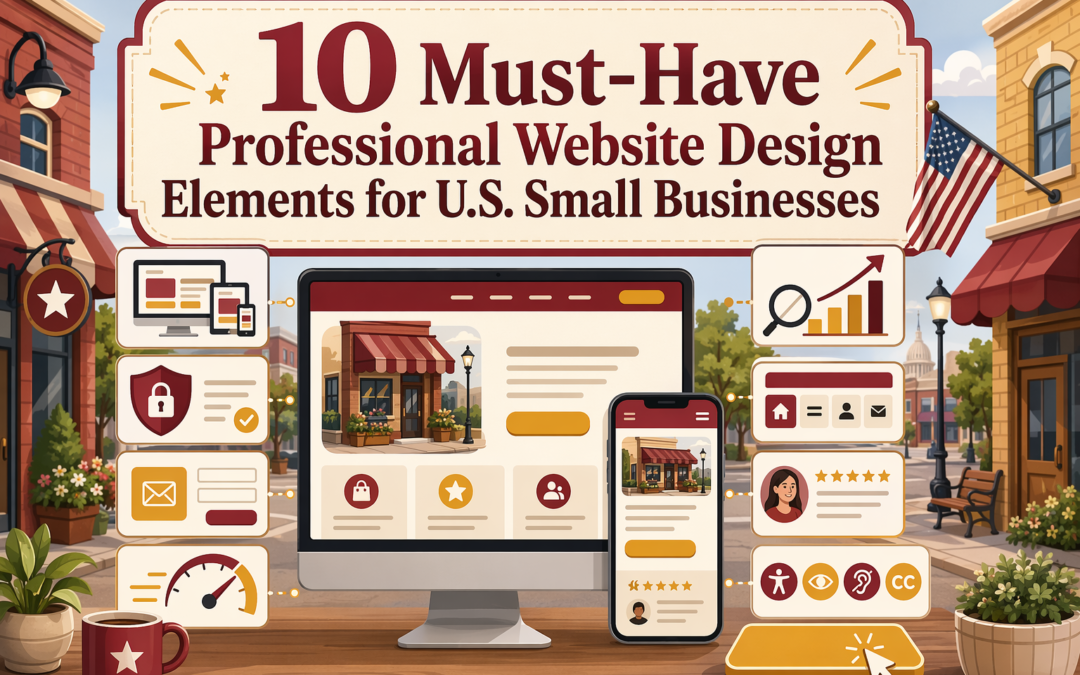
A small business site can look polished and still lose leads. Many Small Business Websites miss core Website Design Elements on the homepage, navigation, trust signals, and calls to action. This guide ranks the 10 Website Design Elements that matter most, so you can fix what drives trust, mobile use, and inquiries first. We chose these Website Design Elements based on first impressions, local trust, accessibility, lead flow, clarity, and practical Website Usability Tips.
Quick Comparison
Element
Best for
Primary benefit
What to check
Clear brand identity
Businesses that need immediate credibility
Stronger first impression
Logo, colors, fonts, and headline consistency
Mobile-responsive layout
Mobile-first customer journeys
Better usability across devices
Tap targets, text size, and layout behavior
Simple navigation
Service businesses and local brands
Faster information finding
Menu length, labels, and page order
Strong calls to action
Lead generation and appointment-based businesses
More inquiries and conversions
Button wording, placement, and repetition
What to know about website design elements
A professional website is more than a clean look. It blends layout, clear messaging, and an easy user path so people trust your business fast. For small businesses, that first impression often decides whether a visitor stays, calls, or leaves.
Right now, buyers judge credibility in seconds. If your site feels outdated, hard to use, or unclear, you lose leads. The right design elements help your website work like a sales tool, not just an online brochure.
Best for: Businesses that need immediate credibility
Primary benefit: Stronger first impression
Pros
Visitors understand the business quickly
Cons
Vague messaging weakens the effect
This ranks first because brand clarity sets trust before anything else.
Last updated: June 30, 2026
2. Mobile-responsive layout
Your site must work cleanly on phones, tablets, and desktops, which is why mobile-friendly website design is now a baseline requirement. Google says it uses the mobile version of your site for indexing, and it recommends responsive web design because it is easier to maintain.
Small business owner testing website on multiple devices
Highlights
Flexible layouts and images
Touch-friendly buttons
Readable text without zooming
Menus that collapse cleanly on mobile
Specs
Best for: Mobile-first customer journeys
What to check: Tap targets, text size, layout behavior
Core impact: Lower friction and fewer abandonments
It ranks here because bad mobile usability kills leads fast.
Last updated: June 30, 2026
3. Simple navigation
Help people find what they need in as few clicks as possible. Your menu should guide visitors to services, pricing, and contact info without making them think. NN/G recommends clear, familiar labels, and strong information scent helps users pick the right path fast.
Business owner reviewing website menu with designer
Highlights
Short top-level menu
Clear page labels
Logical page grouping
Easy access to key actions
Specs
Best for: Service businesses and local brands
Primary benefit: Faster information finding
What to check: Menu length, labels, and page order
Core impact: Lower bounce and stronger page flow
Pros
Makes the site feel easier and more professional
Improves access to money pages
Supports both users and search engines
Cons
Too many menu items can overwhelm visitors
Generic labels can reduce clarity
It ranks here because navigation is one of the fastest ways to cut confusion and keep people moving.
Last updated: June 30, 2026
4. Strong calls to action
A strong CTA tells visitors exactly what to do next. Use clear buttons like Request a Quote, Book a Consultation, or Call Now. HubSpot’s CRO guide recommends action-focused CTA wording, and NN/G shows vague labels like “Get Started” can confuse users.
Highlights
Action-oriented button text
Visible placement on key pages
Consistent next-step messaging
Low-friction lead capture
Pros
Makes the goal clear
Helps visitors act fast
Cons
Weak wording feels generic, a common issue when accessible web design guidelines are not paired with clear copy
Too many CTAs create clutter
It ranks here because traffic only matters if your site moves people to act.
Last updated: June 30, 2026
Honourable Mentions
These did not crack the top spots, but they still shape whether your site feels polished and easy to use.
Trust signals – prove you are real and reliable.
Fast page speed – keep load times short.
Readable content hierarchy – help people scan fast.
Accessible design – serve more visitors well.
Contact information visibility – make reaching you easy.
Conversion-ready footer – catch visitors before they leave.
How to choose the right website design elements
Pick based on what affects results first, not what looks flashy. Start here:
First impression: Choose brand identity, mobile responsiveness, and clear navigation before extras.
Lead generation: If calls, forms, or bookings matter, put strong CTAs, visible contact info, and trust signals near the top.
Local visibility: Make sure your phone, address, hours, and click-to-call are easy to find on every key page.
Access and speed: Require good contrast, keyboard use, readable labels, and fast load times from day one.
Support areas: Use the footer and secondary sections to reinforce trust and next steps.
Homepage
Need a site that looks polished and works without extra hassle? Monkey Business builds, hosts, maintains, and supports professional small business websites for you.
Frequently Asked Questions
Q1: What are the essential website design elements small U.S. businesses must include for effective online branding?
Use clear messaging, strong mobile design, fast load speed, simple navigation, trust signals, clear calls to action, service pages, contact info, and brand-consistent visuals.
Q2: How can small U.S. businesses optimize their website’s user experience to increase conversions?
Cut clutter, shorten forms, make buttons obvious, improve page speed, and guide visitors to one next step per page.
Q3: What key features boost trust and credibility on small business websites in the U.S. market?
Show real testimonials, accurate business details, secure browsing, clear policies, recent content, professional design, and easy ways to reach your team.
Quick Summary: If you want your website to stay secure, perform well, and comply with regulations, a full-service maintenance plan like Monkey Business is best. It handles updates, backups, security, and SEO with minimal owner effort. Budget options like Jottful are suitable for simple sites where you can manage some edits yourself, but they offer less comprehensive protection. Need more than quick edits? Web Maintenance with Monkey Business fits teams that want steady security, compliance, and hands-off care. Jottful suits simpler, lower-cost Website Maintenance. Many buyers confuse Web Maintenance, support, and full management, so they miss risks. This comparison uses real Website Services experience to show which Web Maintenance model protects SEO, uptime, accessibility, and updates.
Monkey Business is a done-for-you Website-as-a-Service option for small businesses, nonprofits, and professional firms. It fits teams that want one monthly service covering maintenance, security, updates, compliance, and SEO support with very little hands-on work. Key strengths
Monthly subscription
1-hour monthly content updates
24/7 security, backups, and SSL
Jottful Website Service
Jottful is a small-business website service built for owners who want lower upfront cost and simple support. Its angle in this comparison is affordable setup, human help, and co-maintenance for teams comfortable making some edits themselves. Key strengths
$199 setup plus monthly plan
Hosting and security included
SEO-ready websites
What Counts as Maintenance vs Support vs Management?
The labels matter because they change what you can expect. Maintenance is routine care like updates, backups, and security checks. Support is reactive help when something breaks or you need a quick fix. Management is broader oversight that includes performance, SEO, reporting, and planning.
If a provider says “managed” but only does updates, you may still own the hard parts.
Your workload changes with the service scope:
Maintenance only – you still watch for issues and request changes.
Support plus maintenance – you get help, but you still direct the work.
Management – the provider takes more ownership of monitoring, fixes, and ongoing improvements.
Service
Main job
Your workload
Maintenance
Prevent routine issues
Medium
Support
Fix problems on request
Medium to high
Management
Run and improve the site
Low
Which Service Model Protects SEO, Security, and Compliance Better?
Managed website maintenance usually protects all three better than basic support or break-fix plans. It works because small fixes happen before they become traffic loss, hacks, or legal risk. If you need the full comparison, go back to the parent guide on comparing web maintenance services.
SEO stability depends on quiet, continuous upkeep. Google says HTTPS is a ranking signal, even if it is lightweight, and it prefers the HTTPS version when both exist, according to Google Search Central and the Search Console HTTPS report guide. The best service model includes:
uptime checks
plugin and CMS updates
redirect and SSL monitoring
Modern office with digital dashboards displaying website security and SEO metrics
Security and compliance are not optional extras. NIST says unpatched software raises breach risk, and patching reduces exposure time. Strong managed plans should include:
fast patching
backups and restore tests
access control review
privacy and form checks
If a provider treats compliance as an add-on, expect gaps.
Which Should You Choose: Monkey Business or Jottful?
Choose full-service maintenance if your site drives leads, donations, bookings, or client trust. Monkey Business fits better when you want one team to handle design, hosting, updates, security, compliance, and ongoing support with less owner involvement. Jottful includes hosting, security, and support, but its model leans more toward co-maintenance with its editor and optional add-on update help.
Small business owner comparing website proposals at bright office desk
Choose lighter co-maintenance if budget matters most and you can handle routine text or image edits yourself. Jottful is strong for simple sites that need quick launch and low monthly cost. Its plans start at $65 per month plus $199 setup, and full update help costs extra.
Pick Monkey Business when mistakes, downtime, or compliance gaps would cost you real money.
Homepage
Need a done-for-you option? Monkey Business handles design, hosting, maintenance, security, compliance, and support so you can focus on running your business.
Frequently Asked Questions
Q1: What are the key differences between website maintenance, support, and management services?
Maintenance covers updates, backups, and security checks. Support fixes issues when something breaks. Management is broader. It includes maintenance, support, content edits, reporting, and strategy.
Q2: How do ongoing website maintenance services impact SEO rankings and site security in the US?
Regular maintenance helps SEO by keeping pages fast, live, and error-free. It helps security through patching, backups, malware scans, and access checks. Neglect often leads to downtime, hacks, and ranking loss.
Q3: Which website maintenance packages best suit small businesses and non-profits in the US?
Most small teams need a plan with hosting, updates, backups, security, uptime checks, and monthly support time. Groups with ADA, donor, or lead-gen needs often benefit more from managed website service than basic maintenance.
Conclusion
Pick based on risk, not price. The best fit covers updates, backups, SEO, and compliance. NIST notes small firms need clear, scaled cybersecurity basics.
Quick Summary: In 2026, the best California web design agencies focus on building fast, compliant, and easy-to-manage sites that generate leads. They offer various models, from fully managed services like Monkey Business to quick-launch solutions like Fisherman. Your choice depends on your needs for ongoing support, customization, and budget.
Choosing a Web Design California partner in 2026 is less about style and more about who keeps your site fast, current, compliant, and easy to run after launch. Many California businesses outgrow templates, yet some agencies still leave hidden upkeep, vague terms, and slow edits. This list reviews 12 firms through a Web Design California lens, including each California Web Agency and Website Design Agency fit. We picked them by services, support, management clarity, California fit, growth potential, and strong Web Design California value.
Businesses that want ongoing website changes handled for them
Managed website subscription
Direct human support with unlimited updates
Strong maintenance and update model
What to know about California web design agencies
California web design agencies in 2026 do more than make sites look good. The best ones build for leads, speed, accessibility, and easy updates. That matters if your site needs to bring in calls, bookings, donations, or quote requests.
Your best fit depends on how much help you want. Some agencies offer a fully managed monthly service. Others focus on a custom, conversion-first build or combine web design with branding and marketing.
Start with your goal first, then match the agency model to it.
Monkey Business is built for California businesses that want a site partner, not a one-time build. Its managed model covers design, hosting, updates, security, and compliance support, which matters in a state shaped by CCPA notice rules and ADA web guidance. Highlights
Fisherman is built for busy owners who want a site live fast. Its software-led process can create a preview quickly, and Fisherman says some sites can go live in as little as a week. Highlights
Big Rig Xpress sells an affordable WordPress site for $199 per month. Its core offer bundles design, hosting, updates, security, and SEO-focused features, which helps small California teams keep web costs steady and support ongoing.
Eversite is a managed website and digital marketing provider serving high-growth businesses in all 50 states. Its pitch is a done-for-you website management service with direct access to web professionals, ongoing support, and digital marketing services. Highlights
Unlimited updates and revisions
Custom design without templates
Hosting, SSL, and maintenance handled for you
Specs
Best for: Businesses that want ongoing website changes handled for them
Service Model: Managed website subscription
It ranks fourth for buyers who want a site that stays current through steady support.
Last updated: June 27, 2026
Honourable Mentions
A few other agencies deserve a spot on your shortlist if you need a narrower fit or just want more comparisons. 5. Jottful – affordable managed service, with website setup from $99 and co-maintenance from $65 per month. 6. AcumenSites – website plus business-suite support. 7. Website Concierge – low-friction help. 8. California Website Designer – web, SEO, creative. 9. Digi Studios – eCommerce support. 10. Big Fish – senior branding. 11. Big Fish Creations – newer option. 12. Arch Web Design – SaaS-focused.
How to choose the right California web design agency
Use these filters to narrow your shortlist fast:
Managed service or DIY? If you do not want to touch hosting, updates, or security, pick a done-for-you model like Monkey Business.
Ownership terms: Make sure you keep access to your domain, content, analytics, and design files.
California fit: Local market knowledge helps with regional buyer habits, accessibility, and privacy expectations.
Industry match: Restaurants, nonprofits, law firms, and eCommerce stores need different features and workflows.
Support style: Compare response times, revision process, and who handles quick content edits.
Pricing model: Choose project-based for one launch, or subscription for ongoing help.
Homepage
Need a California-friendly website partner without agency overhead? Monkey Business gives you done-for-you design, hosting, maintenance, and support, so you can launch faster and stay focused on growth.
Frequently Asked Questions
Q1: What are the key factors to consider when selecting a top web design agency in California for 2026?
Pick for fit, not just price. Check support, speed, SEO basics, clear scope, ADA awareness, and who manages updates after launch.
Q2: Which California web design firms have proven expertise in scalable, high-performance websites with measurable results?
Look for providers that show real outcomes, strong support, and repeatable systems. Monkey Business and Eversite fit hands-off managed service needs, AcumenSites combines managed websites with business tools, and Jottful focuses on low-cost setup and co-maintenance.
Q3: How does choosing the right California web development company impact local business growth in 2026?
The right partner helps you load faster, rank better, convert more leads, and waste less time fixing site issues. That matters a lot for local growth.
Quick Summary: The DOJ delayed web accessibility deadlines for public entities to 2027 and 2028, but the standards remain the same. Counties and vendors should update project plans now, focusing on fixing high-traffic issues and reviewing third-party content. The June 22, 2026 public comment period on the IFR has closed. The core obligation to meet WCAG 2.1 AA standards still applies, and active work is needed despite the extended timelines. On April 20, 2026, the DOJ pushed Title II web deadlines to 2027 for larger public entities and 2028 for smaller ones and special districts via an Interim Final Rule (IFR). The 60-day public comment period on the IFR closed on June 22, 2026. That helps, but it also shifts the target for vendors, nonprofits, and small firms handling public sites and apps under Website Compliance Guidelines. We track this rule closely. Here, you’ll get the exact change, what it means for Web Accessibility Standards, and what Accessible Web Design and WCAG 2.1 AA still require.
What DOJ Changed in April 2026
The big change was a one-year deadline extension. DOJ’s April 20, 2026 interim final rule moved the Title II web and app compliance date to April 26, 2027 for state and local governments with populations of 50,000 or more. It moved the date to April 26, 2028 for governments under 50,000 and for special district governments, according to the ADA.gov small entity guide.
50,000+ population entities: now due April 26, 2027
Under 50,000: now due April 26, 2028
Special districts: also due April 26, 2028
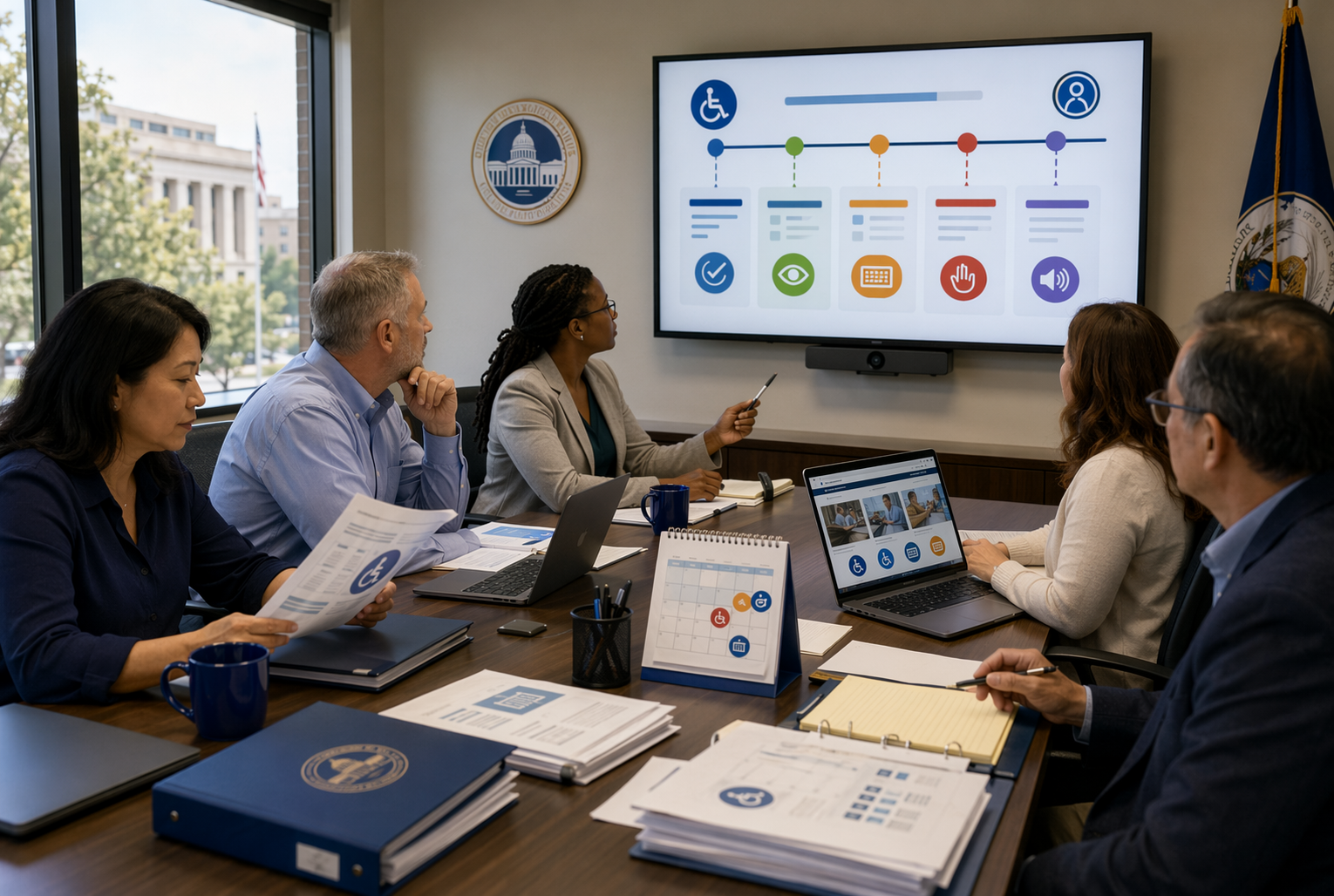
County staff reviewing accessibility compliance deadlines
What did not change is just as important. The rule still applies to Title II public entities, and the required Web Accessibility Standards still point to WCAG 2.1 Level AA from the 2024 rule, as shown in the 2024 DOJ final rule.
The delay changed timing, not the core duty to make public digital services accessible.
The same technical standard stays in place
Planning and vendor work still need to start now
Web Accessibility Standards did not get weaker
Why Counties and Vendors Need to Rework Timelines Now
The DOJ’s April 20, 2026 interim final rule moved the main Title II web deadline to April 26, 2027 for entities serving 50,000+ people and to April 26, 2028 for smaller entities and special districts, according to the DOJ interim final rule. That gives counties breathing room, not a free pass.
WCAG – Web Content Accessibility Guidelines 2.1 Explained | Intellipaat
Rebuild project plans now
Separate quick fixes from platform rebuilds
Move old PDFs, forms, and video into a review queue
The extension helps with scheduling, but active public services still need steady cleanup.
Counties also need vendors in the room early. DOJ says Title II still covers web content and apps provided through contractual or other arrangements, as explained in the ADA.gov compliance guide.
Group
What changes now
Counties
Reset milestones, budget, and content triage
Vendors
Add accessibility tasks, testing, and proof of compliance
Key Compliance Dates for Your Calendar
The DOJ’s public comment period on the Interim Final Rule closed on June 22, 2026. The rule took effect April 20, 2026, and moved the main compliance dates to April 26, 2027 for entities serving 50,000+ people, and April 26, 2028 for smaller entities and special districts, as shown in the Federal Register notice. The DOJ may issue further revisions based on comments received, but for now, entities should focus on:
Reviewing your current website, app, PDFs, and vendor contracts
Flagging the biggest access barriers
Adjusting project plans around the new deadlines
Nonprofit director reviewing accessibility compliance deadlines on desk calendar
What This Means for Readers in California and Beyond
California readers should treat this as a deadline shift, not a free pass. The DOJ moved Title II web compliance dates to April 26, 2027 for larger public entities and April 26, 2028 for smaller ones and special districts, according to the Federal Register rule.
That matters if you are:
A county, city, district, or public college
A nonprofit running services under a government contract
A vendor managing sites, forms, or app content for public entities
Need a compliant website without adding more work? Monkey Business builds, hosts, and maintains accessible sites, so you can meet 2026 requirements faster.
Frequently Asked Questions
Q1: What are the key updates on web accessibility laws for US counties in 2026?
The big update is the DOJ interim final rule issued April 20, 2026. It changed deadlines for some public entities and sharpened focus on accessible web content, mobile apps, PDFs, forms, and vendor-managed systems.
Q2: How does the DOJ’s 2026 extension impact compliance timelines for local governments?
Some local governments got more time, but not a free pass. Counties should confirm their new deadline, fix high-traffic services first, document progress, and review third-party tools that may still create legal risk.
Q3: What are the latest ADA web accessibility regulations small businesses should know in 2026?
Most private businesses still do not have a new federal technical rule just for them. Risk remains under the ADA. Focus on WCAG-based fixes, clear keyboard access, alt text, forms, and usable booking or contact flows.
Conclusion
The big takeaway: deadlines moved, but the work did not. The DOJ’s April 20, 2026 rule pushed Title II dates to 2027 and 2028, while core accessibility duties still apply under the interim final rule. The public comment period on the IFR closed on June 22, 2026. Entities should now focus on the extended compliance pathway and continue remediation work.
Quick Summary: Make a privacy-compliant website by mapping all data collection points, creating accurate legal pages, and configuring cookies and tracking tools to honor user choices. Keep vendor agreements and request processes simple, and regularly review your setup to stay compliant with laws like CCPA and GDPR. Proper documentation and ongoing maintenance are key to protecting user data and avoiding legal issues.
If your site has a contact form, Meta pixel, or newsletter signup, you are already collecting personal data under Website Privacy Regulations like the CCPA and GDPR. The hard part is knowing what to fix first. This guide gives practical Privacy Compliance Tips for consent, notices, and daily controls. It draws on real GDPR Compliance Website requirements and proven Privacy Compliance Tips small businesses can actually use, with more Privacy Compliance Tips built for website owners.
Step 1: Map Every Place Your Website Collects Personal Data
Start with a plain list of every place your site collects personal data. The FTC says websites may collect data through cookies, pixels, analytics, and forms through online tracking tools. Include contact forms, newsletter signups, donations, checkout, chat, account logins, booking tools, and embedded videos.
Then trace where that data goes after collection. The Library of Congress notes sites and third parties may use cookies, pixels, APIs, and fingerprinting to collect and link user data across systems and vendors. Map each flow from website to email platform, CRM, payment processor, analytics tool, ad platform, and support inbox.
If you cannot map it, you cannot disclose it well or control it.
Step 2: Build the Core Legal Pages and Notices
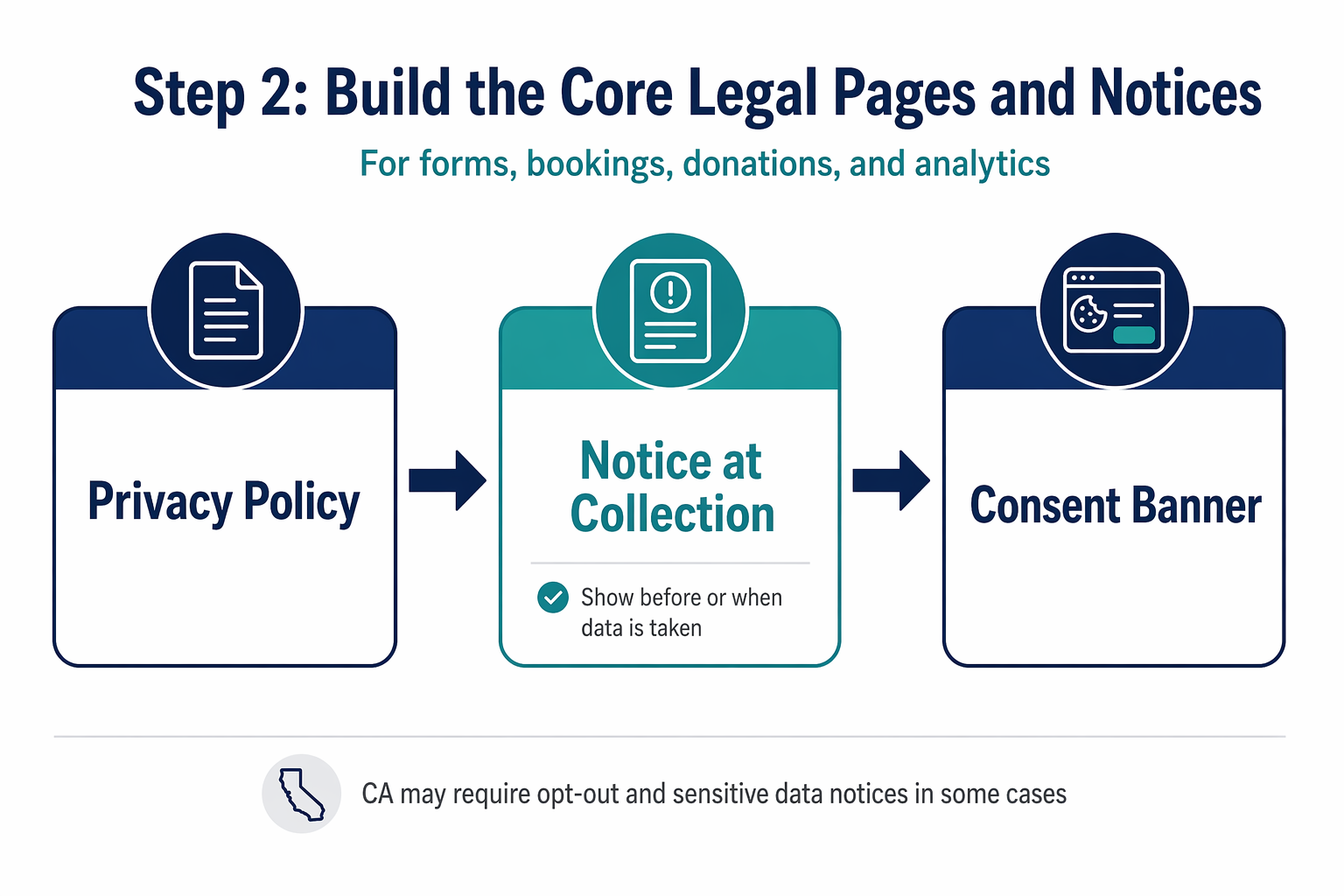
Write a privacy policy that matches reality. List what you collect, why you collect it, where it comes from, who gets it, and how long you keep it. California says a privacy policy must explain consumer rights and how to use them in CPPA notice guidance.
Add California and other state-required notices. If you collect data on forms, bookings, donations, or analytics, show a notice at collection before or when data is taken. California also requires clear opt-out and sensitive data notices in some cases under the 2026 CCPA text.
Flowchart of privacy notice process with policy, collection notice, and consent banner
Handle EU visitors with GDPR-ready consent language. If you attract EU traffic, use plain cookie and tracking language, name purposes, and let people choose before non-essential tracking starts. > Your banner, policy, and actual scripts must all say the same thing.
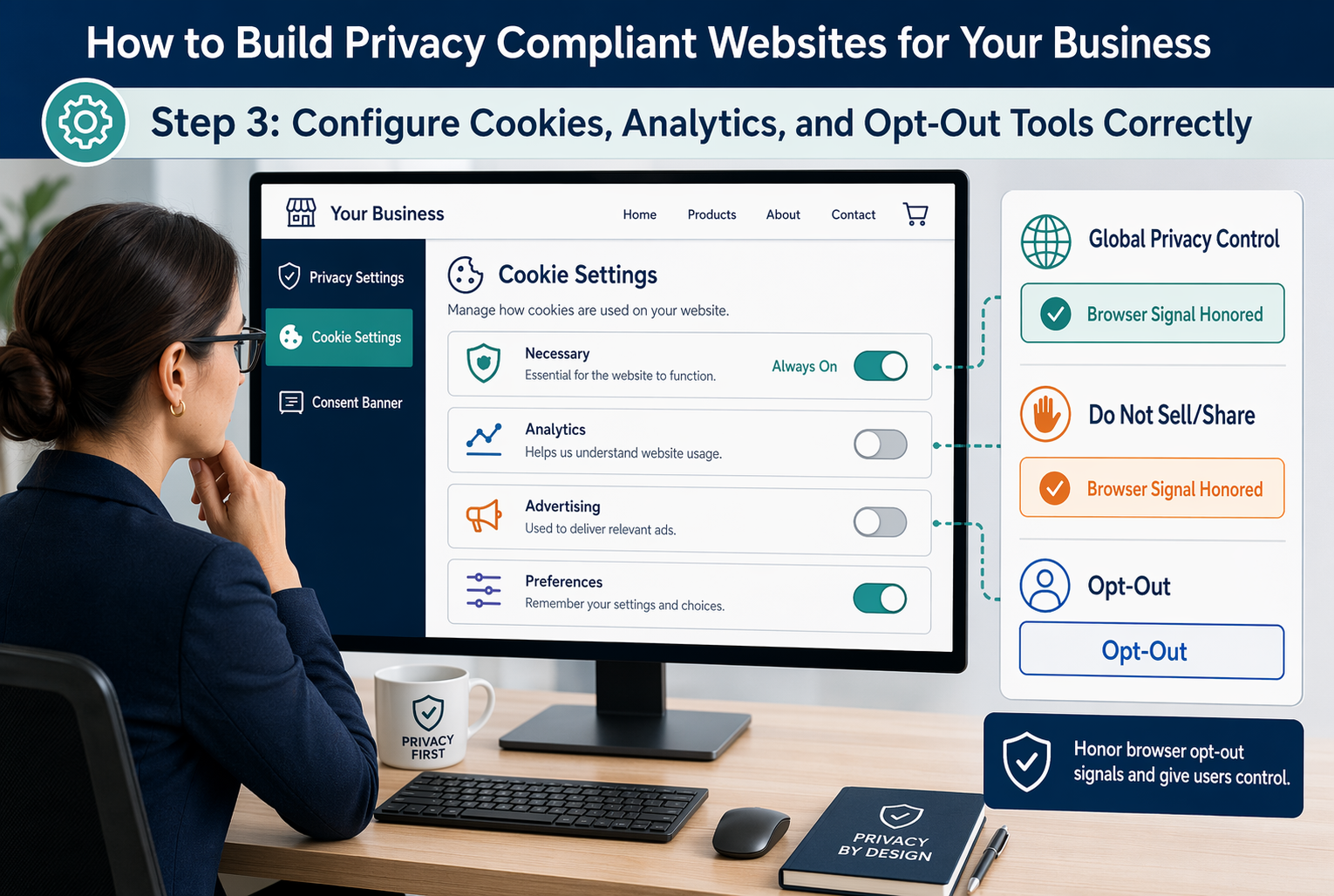
Step 3: Configure Cookies, Analytics, and Opt-Out Tools Correctly
Split your tags into essential and non-essential first. Essential tools keep the site working. Analytics, ad pixels, heatmaps, and retargeting tags are usually non-essential, so they should wait until consent or a valid opt-out check runs.
Make choices real. If a user rejects tracking, your site must stop those tags, not just hide them. California regulators are actively checking whether businesses honor Global Privacy Control signals, and the CCPA regulations require clear opt-out methods.
Privacy manager reviewing cookie categories and opt-out settings
Test the banner on desktop and mobile. Check first visit, return visit, and California traffic. Keep screenshots, tag audit notes, consent logs, and change dates.
If your banner says “reject,” your analytics and ad tools should actually stay off.
Step 4: Set Up Rights Requests, Vendors, and Ongoing Maintenance
Build a simple intake process first. Give people one clear way to submit privacy requests, route each request to one owner, and track deadlines in one log. California rules require businesses to offer methods for requests and set response timelines under the CCPA regulations effective January 1, 2026.
Check every vendor that touches personal data. Your contracts should limit use, require notice if the vendor cannot comply, and let you stop misuse. California law also says you must disclose retention periods, or the criteria for them, and use reasonable security practices under the California Civil Code text.
Keep a vendor list with purpose, data types, contract status, retention rule, and owner.
Set a repeat schedule. Review forms, cookies, notices, vendors, backups, and access rights every quarter. Train staff yearly, and rerun checks after any redesign, new plugin, or marketing tool change.
Homepage
Need a privacy compliant website without the legal and technical mess? Monkey Business builds, hosts, maintains, and supports compliant websites for California businesses.
Frequently Asked Questions
Q1: What are the essential legal components for building a privacy-compliant website in the U.S.?
You need a clear privacy policy, cookie notice, consent setup where required, data request process, secure forms, vendor agreements, and records of what you collect, why you collect it, and how long you keep it.
Q2: How can small businesses implement GDPR and CCPA compliance on their websites?
Map data first. Then add consent controls, disclosure notices, opt-out options, request workflows, and vendor checks. If you serve California or EU visitors, set rules by location and make updates part of normal site maintenance.
Q3: What are the best practices for creating a privacy policy that complies with US privacy laws?
Write in plain English. List categories of data, purposes, sharing, retention, rights, contact details, and state-specific disclosures. Review it whenever forms, cookies, tools, or services change so the policy matches actual website behavior.
Conclusion
Privacy compliance works when your site, notices, consent choices, and internal process match. California rules still require clear notices and consumer rights handling, according to the CPPA regulations and California DOJ CCPA overview.