
How to Convert Website Visitors into Customers: A Conversion Strategy for Small Businesses in California
In today’s competitive digital landscape, simply attracting visitors to your website isn’t enough. You need to convert website visitors into paying customers to grow your small business. For businesses in California, the key to success lies in developing a conversion strategy for small business that turns casual browsers into loyal buyers.
Whether you’re a startup or an established company, how to convert website visitors into customers is a challenge that requires a focused approach. In this post, we’ll explore actionable strategies to help you get customers to buy from your website, increase conversions, and boost sales. By the end of this article, you’ll be equipped with the tools to turn visitors into customers and see measurable results for your business.
Why Conversion is Key for Small Businesses
When it comes to running a small business, especially in a competitive market like California, every visitor counts. Having a high-traffic website is valuable, but without an effective conversion strategy, those visitors may never make a purchase. Conversion refers to the process of encouraging website visitors to take specific actions, such as making a purchase, signing up for a newsletter, or requesting a quote.
It’s important to understand that how to turn website visitors into customers is not just about getting visitors but also ensuring they are engaged and motivated to act. A well-optimized website can increase the chances of converting traffic into sales by guiding visitors toward the next step in their buyer’s journey.
By focusing on how to get website visitors to take action, you’ll maximize the return on investment (ROI) for your digital marketing efforts, whether they’re coming from SEO, social media, or paid ads. Your conversion strategy for small business will be essential in making this happen.
Optimizing Your Website for Conversions
A great website is more than just visually appealing—it’s designed to encourage action. To convert website visitors into customers, start with the fundamentals of good design and user experience (UX). Here are the critical aspects you should focus on:
1. User Experience (UX) Design
A seamless user experience is key to keeping visitors engaged. Poor website navigation or confusing layout can cause potential customers to leave. Here’s what you can do:
- Clear Navigation: Make sure your website’s menu is easy to navigate, and important pages like the homepage, product/service pages, and contact forms are easy to find.
- Fast Load Times: Slow websites lead to high bounce rates, which can harm your conversions. Optimize images, use caching tools, and choose fast hosting providers.
- Mobile Optimization: In today’s mobile-first world, ensure your site is responsive and loads correctly on all devices, especially smartphones and tablets.
A well-optimized website can also help you get more website visitors by improving your SEO performance. When your site is easy to use and provides a positive experience, visitors are more likely to return and recommend your website to others.
2. Clear and Persuasive Calls-to-Action (CTAs)
Every page on your website should have a clear, compelling call-to-action (CTA). A CTA prompts your visitors to take a desired action, whether it’s signing up for a newsletter or purchasing a product. Here’s how to improve your CTAs:
- Be Specific: Use action words that tell users exactly what they need to do, such as “Get Started” or “Buy Now.”
- Placement Matters: Position CTAs prominently on pages, particularly on your homepage, landing pages, and product pages.
- Create Urgency: Words like “limited-time offer” or “buy now before it’s gone” can help create a sense of urgency and motivate visitors to take action.
Effective CTAs will directly impact how to convert website visitors into customers by encouraging users to engage with your business.
Building Trust with Website Visitors
Trust is a crucial factor in the buying decision process. Visitors won’t buy from a website they don’t trust. Therefore, establishing credibility is essential for how to get customers to buy from your website. Here are some strategies to help you build trust:
1. Display Trust Signals
Trust signals include things like:
- SSL Certificates: Ensure your website uses HTTPS encryption, which provides a secure connection.
- Privacy Policies: Include clear policies outlining how customer data is used and protected.
- Secure Payment Options: Offering familiar payment methods like PayPal, Stripe, or credit cards will increase trust.
2. Leverage Social Proof
Social proof, such as reviews, testimonials, and case studies, can help convince visitors that your product or service is worth purchasing. Consider:
- Customer Testimonials: Showcase positive feedback from past customers to highlight the value of your offering.
- Case Studies: Provide in-depth case studies that demonstrate the success others have had with your product or service.
- User-Generated Content: Encourage customers to share their experiences with your product on social media or through photos, and showcase this content on your website.
By presenting social proof, you’ll increase your chances of turning visitors into customers.
Content Marketing and Conversion
Content marketing is a great way to attract more website visitors while also helping to convert them into customers. Here’s how content can help:
1. Blogging and Educational Content
Write blog posts that address your audience’s pain points and offer valuable solutions. Educational content positions your business as an authority and builds trust. Topics can include:
- How-to Guides: Provide step-by-step instructions that show users how to solve a problem.
- Industry Insights: Share knowledge about trends in your industry to show your expertise.
High-quality content will not only help get people to visit your website, but it also increases the likelihood that visitors will make a purchase once they arrive.
2. Visual Content
Visual content, such as videos and infographics, can engage users better than plain text. Use videos to demonstrate products, offer tutorials, or showcase customer testimonials. Infographics can break down complex information in an easy-to-understand way.
Email Marketing for Conversions
Email marketing is an excellent tool for how to turn website visitors into customers. Once you’ve captured a visitor’s email, you can nurture them through the sales funnel with personalized emails.
1. Lead Magnets
Offer valuable resources in exchange for visitors’ email addresses. Lead magnets can include:
- Free eBooks or whitepapers
- Discount codes or coupons
- Webinars or free consultations
2. Drip Email Campaigns
Once a user subscribes to your email list, set up automated drip campaigns to nurture them. Send relevant content, special offers, and updates that encourage recipients to take action.
Optimizing Your Sales Funnel
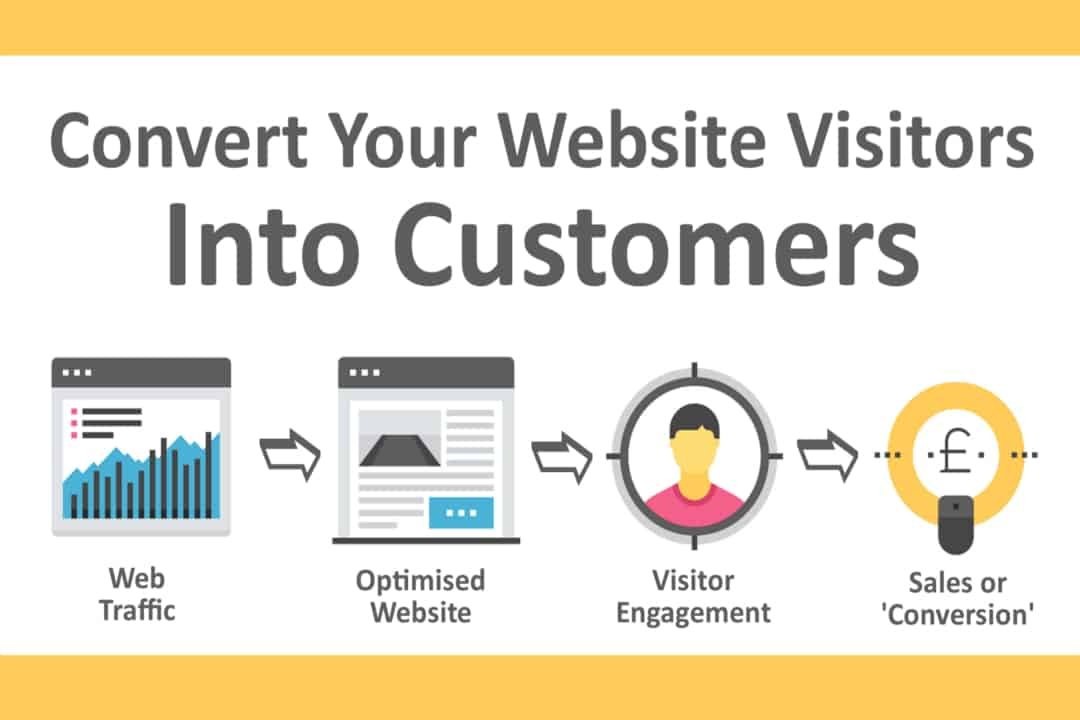
A well-optimized sales funnel guides your visitors from the awareness stage all the way through to conversion. The sales funnel includes:
1. Awareness Stage
This is the stage where potential customers first encounter your brand. Use SEO, social media, and content marketing to get website visitors into the funnel.
2. Interest Stage
At this stage, visitors show interest but haven’t made a decision. Engage them with educational content, testimonials, and special offers to keep them interested.
3. Decision Stage
Visitors are considering a purchase. Provide case studies, detailed product descriptions, and a clear comparison of your offerings with competitors.
4. Action Stage
This is the final step where visitors make a purchase. Use persuasive CTAs, limited time offers, and easy checkout processes to convert traffic into sales.
How to Get More Website Visitors and Boost Conversions
Increasing your website traffic can significantly improve your chances of conversion. Here’s how to get more website visitors:
1. SEO
Optimize your website for search engines by targeting relevant keywords for your business and location in California. A well-optimized website will rank higher in search results, bringing in more visitors.
2. Social Media Marketing
Leverage social media platforms like Instagram, Facebook, and LinkedIn to drive traffic to your website. Regularly post engaging content, share promotions, and interact with your audience.
3. Paid Advertising
Consider using Google Ads, Facebook Ads, or Instagram Ads to target your ideal audience and bring in high-quality traffic to your website.
Conclusion:
Converting website visitors into customers is an ongoing process that requires a well-thought-out strategy. By optimizing your website, building trust with your audience, providing valuable content, and utilizing email marketing and social proof, you can effectively turn visitors into customers and increase sales.
If you’re ready to implement these strategies and create a website that converts, contact MonkeyBusiness.Design today for professional web design services in California. Let us help you create a website that not only attracts visitors but turns them into loyal customers.