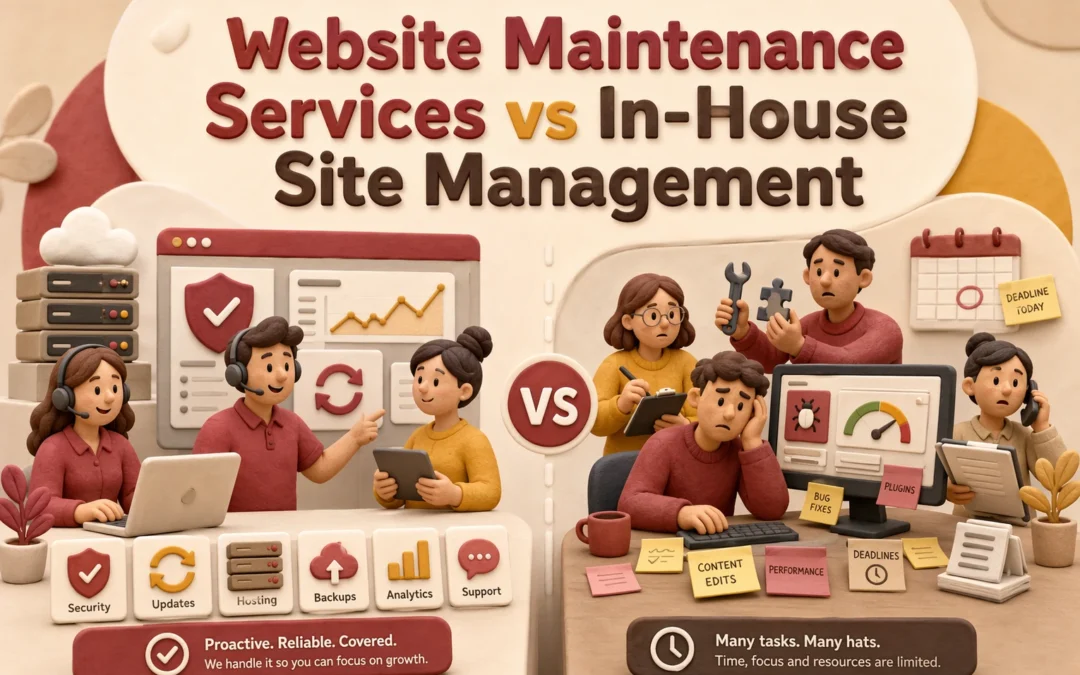
Quick Summary: Website maintenance services are better for small teams needing low-touch, risk-managed support, as they handle updates and security reliably. In-house management works only if a team member can dedicate time weekly to updates, backups, and security checks. Outsourcing reduces internal workload and risk, especially since outdated software poses security threats, according to CISA. If your site should drive leads, bookings, or donations, Website Maintenance services usually beat in-house Site Management for small teams. The key issue is not price alone. It is who handles Website Maintenance, fixes, security, and Website Support when something fails. We help businesses weigh risk, workload, and skills, so this Website Maintenance comparison shows which setup fits best.
Website Maintenance Services vs In-House Site Management: At a Glance
Website maintenance services give you a provider-led setup for updates, hosting, fixes, and security. They fit owners who need low-touch support, especially since CISA says outdated software raises business risk. Key strengths
Low owner time
Provider handles updates and security
In-House Site Management
In-house site management keeps website work inside your team. It fits groups with web skills and time, but your staff must own patching, backups, and response work, which CISA notes is critical for public-facing websites.
Cost, Staffing, and Hidden Workload
The monthly fee never tells the full story. You also pay for testing, fixes, backups, vendor follow-up, and emergency response. The FTC tells small businesses to update software and back up files regularly in its cybersecurity guidance. That work takes time, even on a simple site.
Outsourced plans turn that labor into a set monthly cost
In-house management often hides it inside payroll, delays, and interrupted work
Infographic comparing outsourced and in-house website maintenance workflows
Owning the site internally means someone must notice problems, test forms, approve plugin updates, and handle break-fix issues. If your site stores sensitive customer data, the FTC says some businesses must keep a written security program under the Safeguards Rule.
Website maintenance is mostly risk prevention, not design tweaks. Miss one plugin update, skip backup checks, or ignore uptime alerts, and small issues turn into hacked pages, broken forms, or lost leads. CISA says the Known Exploited Vulnerabilities catalog tracks flaws already abused in the wild, which shows why routine patching matters.
Website manager reviewing security alerts on dual monitors
In-house management stays safe only if someone owns the process every week. That means:
Choose website maintenance services if… you lack a web lead, need fast fixes, or hate chasing plugins, backups, and uptime alerts. This fits lean teams that want one owner and less day-to-day risk.
Choose in-house site management if… you have a trained staffer, clear workflows, and time for updates, testing, and vendor follow-up. This works when your site changes often and web tasks stay a true internal priority.
Choose website maintenance services if you want speed, fewer internal tasks, and tighter risk control. CISA says outdated software is a major security risk, and prompt patching matters for public-facing systems like websites Update Business Software. Pick in-house management only if your team can handle updates, backups, uptime checks, and incident response every week.
If website work keeps slipping, outsource it.
Homepage
If in-house site management keeps draining time, switch to Monkey Business for done-for-you website upkeep, security, hosting, and support.
Frequently Asked Questions
Q1: What are the key differences between website maintenance and website management services?
Maintenance covers updates, backups, fixes, and security checks. Management includes those tasks plus content edits, page builds, vendor coordination, reporting, and day-to-day ownership.
Q2: How do website maintenance tasks impact site security, speed, and user experience?
Regular updates close security gaps, clean code reduces slowdowns, and testing catches broken forms or pages before visitors notice problems.
Q3: What should small businesses look for when choosing a website management provider in the US?
Look for clear response times, backup policy, update process, content support, accessibility awareness, and a team that can handle urgent issues without hand-holding.
Conclusion
Outsourced maintenance fits most small teams because speed, coverage, and patch discipline matter. CISA warns public sites face common attacks, and outdated software raises risk. In-house works best only if someone consistently owns updates, backups, testing, and security.
Quick Summary: Outsourcing website maintenance tasks like security monitoring, backups, updates, and performance checks helps small businesses prevent costly downtime, security breaches, and lost leads. These tasks require technical skill and steady attention, making them ideal for external providers. Focusing on these priorities allows businesses to stay secure and reliable without overloading their internal teams.
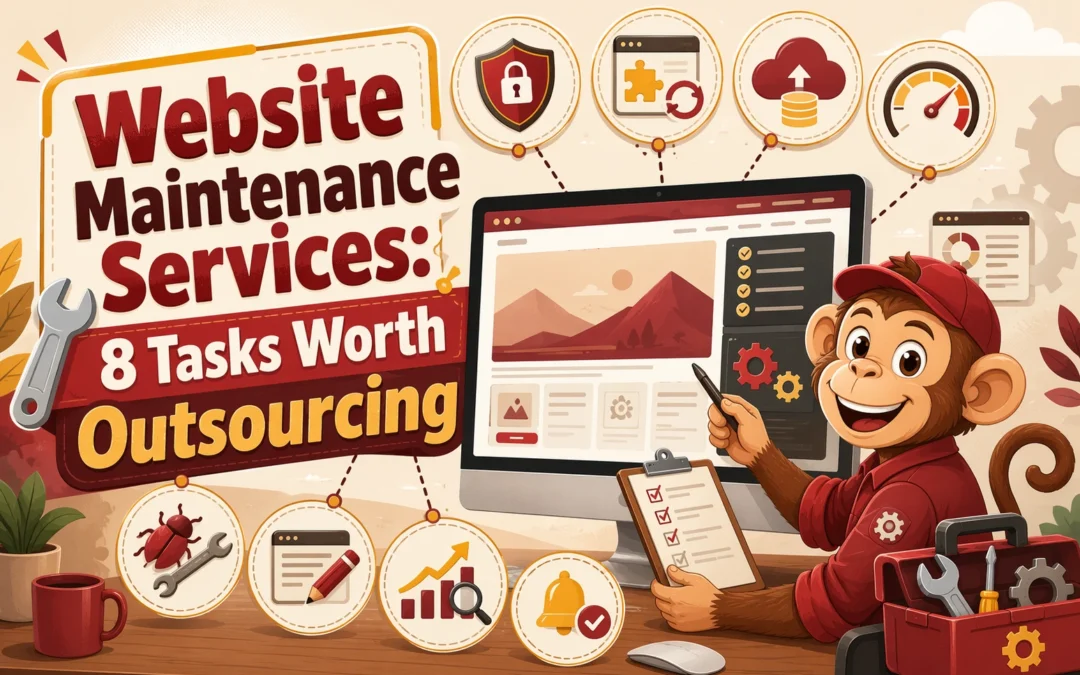
If your site only gets attention when it breaks, you may be spending the most on the work you still keep in-house. Small businesses lose time on repeat website chores, then overlook the jobs that protect revenue, security, and search traffic. This list ranks eight maintenance tasks usually worth outsourcing first, based on risk, repeat effort, and impact. The focus is simple: hand off costly technical work so your team can stay on sales, service, and daily operations.
Quick Comparison
Task
Best for
Why outsource
Risk if delayed
Typical owner effort saved
Security monitoring and patching
Businesses that collect leads, bookings, or sensitive customer information
Requires constant monitoring and fast response to threats
Malware, data exposure, reputation damage, and emergency cleanup
Daily checking, alert triage, and security troubleshooting
Backups and restore testing
Any business that cannot afford to lose site content or lead data
Backup schedules and restore testing are easy to neglect internally
Permanent data loss, downtime, and expensive rebuilds
Backup scheduling, storage checks, and restore testing
CMS, plugin, and core updates
Sites running on WordPress or other update-driven platforms
Updates require technical judgment and follow-through
Security holes, broken features, and plugin conflicts
Version checking, compatibility testing, and update scheduling
Uptime and performance monitoring
Lead-generation sites, booking sites, and local service businesses
Monitoring should be continuous, not occasional
Lost leads, slow pages, and unreported downtime
Manual checks, speed testing, and outage follow-up
What to know about website maintenance tasks
Website maintenance is a group of repeat jobs, not one simple task. It keeps your site secure, fast, working right, and up to date. If you skip it, small issues can turn into lost leads, broken pages, or a hacked site.
The best tasks to outsource usually need technical skill, steady attention, or quick action when something fails. That matters more now because sites connect to more plugins, forms, payment tools, and updates than ever.
If your website supports sales, leads, bookings, or donations, maintenance is part of running the business.
1. Security monitoring and patching
Outsource this first. Security issues stay quiet until they turn into downtime, cleanup bills, or lost trust. CISA says website attacks can expose customer data and hurt your reputation in its website security guidance.
Website support specialist reviewing threat alerts at workstation
Backups are not just for hacks. Bad updates, staff mistakes, and hosting failures can wipe out pages or lead data, so you need tested recovery, not just copies, as NIST recommends.
Web developer restoring website from backup in bright office
Highlights
Scheduled website backups
Restore-ready recovery planning
Protection for key pages, forms, and databases
Specs
Best for: Any business that cannot afford to lose content or leads
Updates keep your site stable, secure, and working. On WordPress, one bad plugin mix can break forms or layouts, so outsourcing saves weekly guesswork and testing.
Website manager reviewing plugin update notifications on dual monitors
Slow pages and outages cost leads fast. Outsourcing website uptime monitoring and website performance monitoring helps you catch issues before customers do. Google’s PageSpeed Insights reports real user speed data, and CrUX tools help track trends over time.
Business owner reviewing website performance dashboard on tablet
Highlights
Continuous uptime checks
Speed and load-time tracking
Early alerts before complaints
Pros
Improves reliability
Protects conversions
Cons
Monitoring does not fix root causes
May need separate speed work
This ranks high because owners rarely monitor performance well by hand.
Keep edits in-house only if your team can post changes correctly and on schedule.
Ask clear service questions – What gets monitored, how often do backups run, and who responds first?
If your site drives leads, bookings, or donations, protect uptime and trust before anything else.
For most small teams, Monkey Business is the safest pick because its done-for-you model covers the core work owners usually miss.
Homepage
Stop juggling updates, backups, and fixes yourself. Monkey Business handles design, hosting, maintenance, security, and support, so your site stays current while you focus on running your business.
Frequently Asked Questions
Q1: What are the top 8 website maintenance tasks small businesses should outsource?
Core tasks include updates, backups, security scans, uptime checks, speed fixes, broken link repair, form testing, and content edits. These jobs need steady attention. Outsourcing them cuts risk and keeps your site useful.
Q2: How can outsourcing website maintenance improve security and site performance?
A good provider patches plugins fast, watches for malware, and fixes speed issues before they hurt leads. That means fewer hacks, faster pages, better form delivery, and less downtime for your business.
Q3: What are the cost-effective benefits of outsourcing website maintenance for US small businesses?
You avoid hiring in-house, reduce emergency repair bills, and save owner time. Predictable monthly support often costs less than one major outage, hacked site cleanup, or lost sales from a broken website.
Quick Summary: Freelancers are cheaper upfront and suitable for simple sites, but agencies cost more initially and offer better support, fewer surprises, and ongoing maintenance. Agencies typically charge between $5,000 and $15,000 in California, while freelancers can be as low as $2,000. Startups should choose based on their need for certainty and support rather than just initial cost, as hidden expenses like revisions and scope creep can increase total spending.
For a lean California launch, Freelancer Web Design often looks cheapest first. A California Web Agency usually costs more up front, but it can cut surprise fees, weak handoff, and budget creep. I have seen California startups compare both paths, and this guide shows how a California Web Agency or California Web Agency affects your Web Design Budget once revisions, support, hosting, and updates hit.
California Web Design Agency vs Freelancer: Startup Budget at a Glance
A California web design agency gives startups a managed path. You pay more upfront, but you usually get design, build, hosting, support, and updates in one plan. This fits founders who want less hands-on work and fewer gaps after launch. Key strengths
One team for strategy, design, development, and support
Predictable monthly ownership
Lower surprise risk
Freelancer web design
Freelancer web design is often the cheapest way to launch, with many small business sites falling in the lower pricing bands shown by 2026 cost benchmarks. It suits simple brochure sites, lean MVPs, and owners who can manage scope, feedback, and post-launch support themselves.
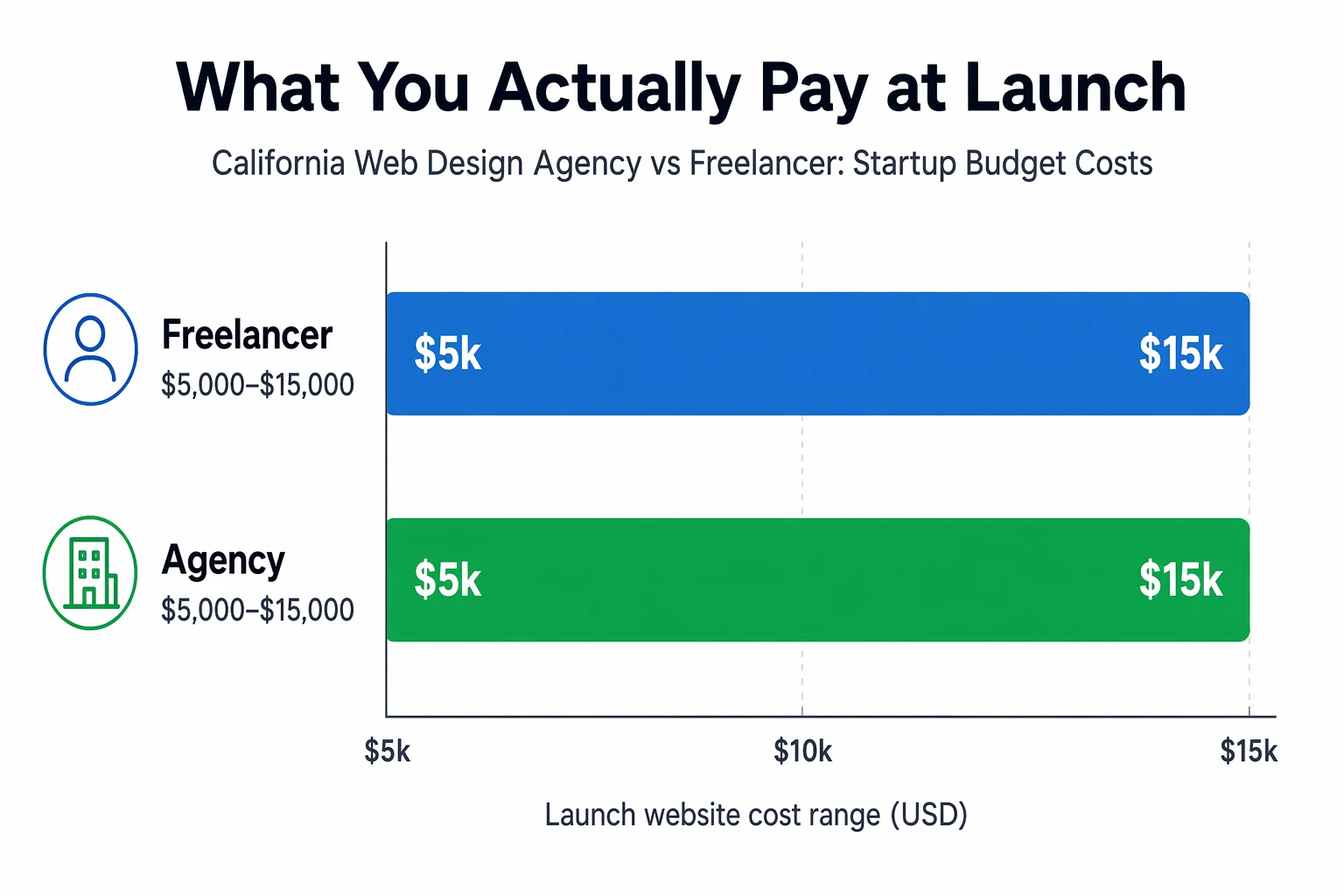
What You Actually Pay at Launch
Agency quotes cost more because you fund a team on day one. That usually means strategy, custom design, development, QA, project management, and launch support in one price. Current 2026 guides put small business agency builds around $5,000 to $15,000 in California and beyond, depending on scope and features, according to LinkTech Solutions and Media Search Group.
Bar chart comparing startup website costs for freelancers and agencies in California
Freelancer quotes look cheaper because they often cover less upfront. You may get design and build, but not messaging, copy, SEO setup, revisions, training, or post-launch fixes. That lower entry price can still work for a simple site. Just ask what is excluded before you compare bids.
Cheap launch pricing is only cheap if you do not need to rebuild six months later.
Revisions, scope creep, and rescue work often break the first budget. A vague scope leads to extra pages, new features, and rework, which YourWebTeam flags as a common cost driver in website projects scope checklist.
Ask how many revision rounds are included, what counts as a change request, and what rescue work costs.
Hosting, updates, and post-launch support keep charging after launch. Recent 2026 maintenance benchmarks show even small business sites often need a monthly budget for updates, backups, monitoring, and support maintenance benchmarks. Monkey Business stands out here because bundled support cuts surprise invoices.
Choose a freelancer when cash is tight and your site is simple. A basic brochure site, one landing page, or a fast refresh usually fits this path. Upwork’s comparison notes freelancers often cost less because they carry less overhead. That works if you can manage feedback, content, and a few risks yourself.
California startup founder reviewing website proposals at office desk
Choose an agency when you need fewer surprises. If timing, QA, and support matter more than the lowest bid, agency pricing can make sense. AgencyPro’s 2026 guide says agencies fit complex, ongoing work because they bring process, backup, and wider skills.
If a missed deadline would hurt sales, fundraising, or trust, pay for predictability.
Homepage
Want agency-level support without agency overhead? See how Monkey Business gives California startups predictable website costs, design, hosting, maintenance, and support in one done-for-you plan.
Frequently Asked Questions
Q1: What are the typical startup costs for hiring a California web design agency versus a freelancer?
Freelancers often start around $2,000 to $8,000. Agencies often land near $6,000 to $25,000+.
Q2: How do California web design agency prices compare to freelancer rates for small businesses?
Agencies cost more, but usually include strategy, copy help, project management, and support.
Q3: What are the key factors influencing web design costs in California for startups?
Scope, custom design, number of pages, content needs, SEO, ADA work, and monthly upkeep drive price.
Conclusion
Freelancers cut upfront cost. Agencies raise certainty, support, and process. Most California startups should choose by risk, not price alone, since 2026 pricing ranges still vary widely.
Quick Summary: Effective California web design focuses on converting visitors into leads through strategies like clear calls to action, local SEO, and dedicated landing pages. Building a site around user actions and removing friction boosts inquiries and bookings. Agencies that integrate these services and track results help businesses maximize their traffic and revenue.
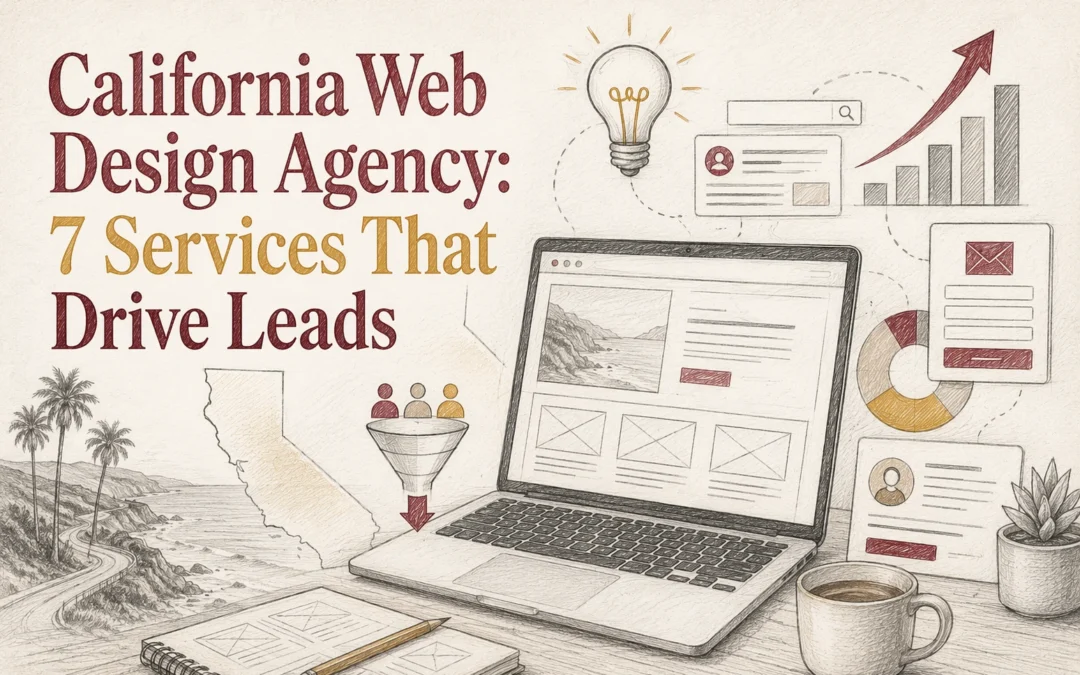
If your site gets visits but not calls, forms, or bookings, it is just a nicer brochure. Many firms sell Web Design Services, but you need Web Design Services that move people to act. That gap wastes traffic and budget. This guide covers the seven Web Design Services that matter most in California Web Design for Lead Generation Websites – from conversions and local SEO to follow-up and ongoing improvement.
Paid campaigns, service promotions, and high-intent landing traffic
High
Dedicated campaign landing page
Look for message match, conversion focus, and tracking readiness
What to know about California web design services
California buyers move fast, and local markets are crowded. Your website cannot just look good. It needs to turn visits into calls, form fills, and booked consults.
The best California web design services help you remove friction, guide action, and track what brings leads in. That matters now because ad costs are up, search results are tighter, and small gains in conversion rate can turn the same traffic into more revenue.
Build the site around the lead, not just the layout. A strong strategy maps pages, message, and UX to one clear action. Stanford found design and structure shape credibility fast in its web credibility research, and its guidelines stress clear contact paths and ease of use for trust. Highlights
Custom, responsive, SEO-aware structure built for inquiries
Specs
Best for: California businesses that want a lead-first foundation
Lead impact: High
Typical deliverable: Custom strategy and build direction
Pros
Aligns design with business goals and lead flow
Cons
Quality varies by agency
It ranks first because every other lead service works better with the right conversion path.
Local SEO helps California businesses get found by nearby people ready to call, visit, or book. Go Fisherman builds SEO into the site and ties it to Google Business Profile best practices, which matters in dense local markets where intent is city and neighborhood based. Highlights
Built-in local SEO
Google Business Profile connection
Strong fit for service areas and nearby demand
Specs
Best for: California businesses that need local discovery
Lead impact: High
Typical deliverable: Local SEO setup and visibility improvement
Landing pages work best when they push one offer and one action. For paid or organic traffic, strong message match and a single goal usually beat sending visitors to a general homepage. Highlights
One page for one service, offer, or campaign
Strong fit for PPC, seasonal, and local service-area pushes
Specs
Best for: Paid campaigns, service promotions, and high-intent traffic
It ranks fourth because it turns clicks into leads with less friction.
Last updated: July 23, 2026
Honourable Mentions
A few services still matter, even if they did not make the top spots. These runners-up often help turn more traffic into real leads.
5. Trust-building content and social proof – Add proof, clear copy, and real human support to lower doubt.
6. Analytics, tracking, and conversion optimization – Track results, spot drop-offs, and improve weak pages.
7. Ongoing maintenance, speed, and compliance – Keep your site fast, secure, compliant, and working every day.
How to choose the right California web design agency
Use these filters before you sign:
Pick for leads, not looks – Ask how the agency improves calls, form fills, and booked consults.
Check the full stack – You want strategy, forms, local SEO, and tracking in one plan.
Match your demand source – Local firms need California targeting and Google Business Profile help. Ad-driven teams need landing pages.
Protect trust – Lawyers, clinics, and nonprofits should ask for testimonials, proof points, and message support.
Avoid hidden upkeep – Maintenance, speed, and compliance should be included.
Best fit:Monkey Business stands out if you want an all-in-one, done-for-you lead gen setup.
Homepage
Need more leads without chasing freelancers? Monkey Business gives California organizations a done-for-you website that is built, hosted, maintained, and tuned to convert.
Frequently Asked Questions
Q1: What are the top services offered by a California web design agency that drive leads?
The best agencies focus on landing pages, local SEO setup, conversion copy, fast mobile design, form tracking, call tracking, and CRM-ready lead capture.
Q2: How does professional web design help California businesses increase customer leads?
It removes friction. Visitors find answers faster, trust the business sooner, and take action more often on phones, tablets, and desktops.
Q3: What should I look for when choosing a California web design agency for lead generation?
Ask how they measure leads, improve conversion rates, write calls to action, and support updates after launch. Monkey Business stands out if you want done-for-you support.
Quick Summary: Design ADA-compliant websites from the start by choosing the right accessibility standards, mainly WCAG 2.1 Level AA. Focus on building accessible site structures, clear navigation, and labels before designing visuals. Incorporate accessible content practices and test early with tools and real users to avoid common mistakes like missing alt text and poor contrast. Planning early helps prevent costly rework and ensures legal compliance, especially for government and public-facing sites.
Planning a new law firm site, nonprofit donation page, or California service homepage? ADA Website Design starts in the wireframe, not after launch. The big problem is simple: many teams treat ADA Website Design like a final checklist, which leads to rework, risk, and missed users. This guide shows how to plan ADA Website Design from day one, using practical Accessible Website Features and clear ADA Compliance Tips. It draws on real-world website planning standards, not guesswork.
1. Define the accessibility standard your website will be built to
Pick your standard before design starts. The ADA is the law. WCAG is the technical rule set teams use to build accessible websites. DOJ guidance says its 2024 Title II web rule adopts WCAG 2.1 Level AA as the required technical standard for state and local governments under the final rule.
Plan to Level AA unless you have a very narrow reason not to. It is the safest target because it is the most common benchmark in policy, audits, and vendor scopes. ADA.gov also states that, for the Title II rule, complying with WCAG 2.1 Level AA is required in DOJ’s planning guide.
If you skip this choice, your sitemap, content, design, and QA process will drift.
2. Build accessibility into the site structure before design begins
Start with structure, not colors. WCAG 2.2 says accessible sites need clear navigation, labels, keyboard access, and readable contrast from the start, not as a late fix WCAG 2.2.
Plan clear navigation and page hierarchy: Map your main pages first. Use a simple menu, logical heading order, one clear purpose per page, and short link names. Descriptive headings and labels help people understand where they are and what comes next W3C guidance on headings and labels.
Flowchart of website pages and navigation pathways
Design forms, buttons, and media for accessibility: Give every form field a real label. Make buttons say what they do, not just “Submit.” Plan keyboard focus, error messages, alt text, captions, and transcripts before content gets built.
Choose visual design elements that pass accessibility checks: Pick color pairs with enough contrast, avoid tiny tap targets, and make focus states easy to see. If your brand palette fails, adjust it early.
3. Create an accessible content and launch workflow
Write accessibly from the start so fixes do not pile up later. Use plain language, clear headings, descriptive links, alt text, and captions. The DOJ says common barriers include missing alt text, poor contrast, unlabeled forms, and mouse-only navigation in its web accessibility guidance.
Team reviewing website content on digital tablets
Test before launch with both tools and people. Run scans, then do manual checks for keyboard use, focus order, forms, error messages, and video captions. Section508.gov also recommends regular post-publish checks, not just a one-time review.
Do not treat accessibility as the last QA step. Build it into writing, upload, review, and approval.
Keep compliance active after launch with a simple workflow:
The biggest ADA website mistakes usually block basic access. The DOJ says common barriers include missing alt text, poor color contrast, forms without clear labels, no captions, and mouse-only navigation in its web accessibility guidance.
Mistakes that often cause the most trouble:
Missing alt text on key images
Low color contrast on text and buttons
Forms with no labels, hints, or error help
Menus and pop-ups that fail by keyboard
PDFs posted without an accessible HTML option
New content published with no review process
Fix the pages people use most first – home, services, contact, forms, and payment or booking pages.
The 2024 DOJ rule also set specific web standards for state and local governments in the Federal Register.
Homepage
Need an ADA-compliant site without the stress? Monkey Business plans, builds, hosts, and supports compliant websites, so you can launch faster and avoid costly mistakes.
Frequently Asked Questions
Q1: What are the essential steps to plan an ADA compliant website from scratch?
Set scope, map key user tasks, choose accessible templates, define content rules, require keyboard access, color contrast, alt text, captions, form labels, and test early with real users and audit tools.
Q2: How do WCAG 2.1 Level AA guidelines ensure ADA compliance for US websites?
They give the clearest working standard for accessible design. Courts and lawyers often use WCAG 2.1 Level AA as the benchmark for readable, usable, keyboard-friendly, screen-reader-friendly public websites.
Q3: Why is ADA compliance essential for website accessibility and business reputation in the US?
It helps more people use your site, lowers legal risk, and shows care for customers. For small organizations, that trust can raise inquiries, donations, bookings, and overall confidence in your brand.
Conclusion
Plan ADA compliance early. Build clear structure, readable content, keyboard-friendly paths, and accessible forms from day one. The DOJ says businesses open to the public must make websites accessible in its web guidance, and Title II deadlines for governments now extend into 2027 and 2028.