Quick Summary: For most small businesses and nonprofits, an all-in-one turnkey website beats custom development on cost, speed, and simplicity, with flat monthly fees from $100 to $500 versus $12,000-plus upfront builds. Custom code only makes sense when you need complex business logic like custom portals or unusual integrations. Turnkey providers like Monkey Business handle design, hosting, security, and updates, so you avoid tech headaches and surprise bills. Choose custom only if your site must act like software, not just a polished online presence.
If your California business needs a polished site for services, bookings, or donations, an all in one website usually beats custom development on cost, launch speed, and simplicity. Custom code makes sense only when your site must act like software. We’ve built both for small businesses and nonprofits, so this comparison weighs all in one website options against custom builds across total cost, maintenance, ownership, and growth.
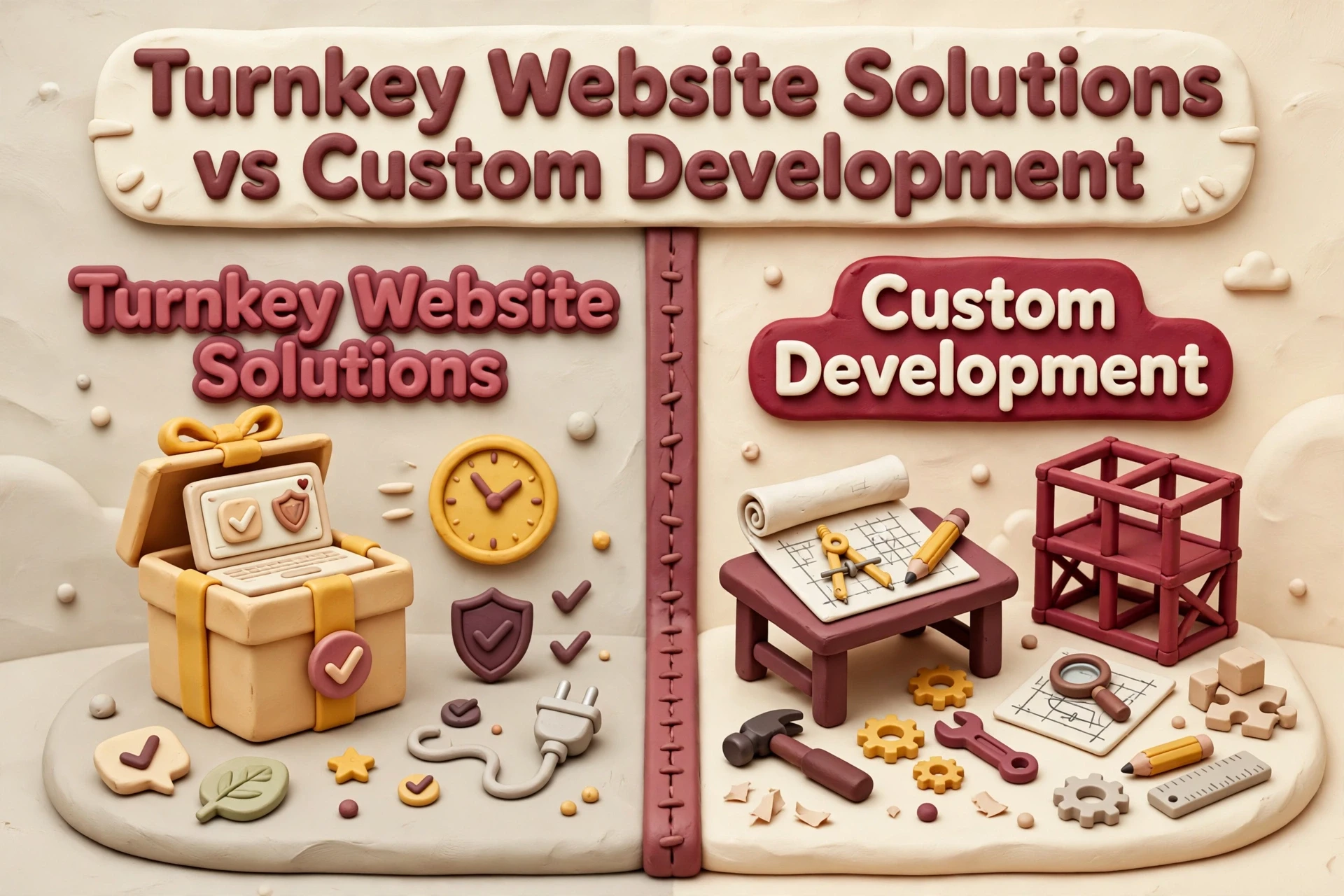
All-in-One Website vs Custom Development: At a Glance
| Turnkey website solution | Custom website development | |
|---|---|---|
| Typical cost model | Predictable monthly subscription | Higher upfront project investment |
| Time to launch | Weeks for a tailored business site | Weeks to months depending on scope |
| Customization | Custom design within a managed platform | Maximum control over design and functionality |
| Ongoing maintenance | Provider-managed updates, security, and support | Requires an internal team or development partner |
| Scalability | Strong for standard business growth and content | Designed for custom logic and complex growth |
| Best for | Small businesses, nonprofits, and professional services | Portals, applications, and unusual integrations |
How Turnkey website solution and Custom website development Compare
Turnkey website solution
A managed, all in one website service that bundles design, hosting, security, maintenance, and support with one provider. You pay a flat monthly fee and stay focused on running your business. Providers like Monkey Business and Jottful serve small businesses, nonprofits, and professional firms this way.
Key strengths
- Predictable monthly cost, no surprise bills
- Live in weeks, not months
- Provider handles updates, backups, and security
Custom website development
A website or web app built from scratch around your exact workflows and requirements. You get maximum control over design and functionality, but you also own everything that comes after launch. It fits organizations that need custom portals, unusual integrations, or complex logic.
Key strengths
- Total design and functionality control
- Built for complex growth and custom features
- Ideal for apps and portals off-the-shelf tools can’t handle
Cost and Time to Launch
Custom development usually runs $12,000 to $45,000 for a small business site and takes 6 to 12 weeks, though complex projects can stretch much longer according to 2025 US pricing guides. Turnkey services spread that cost across a flat monthly fee. Most plans bundle design, hosting, updates, and support, so typical ranges land between $100 and $500 per month instead of one big invoice.
| Factor | Turnkey (WaaS) | Custom Development |
|---|---|---|
| Upfront cost | Low to none | $12,000+ |
| Launch time | 2-6 weeks | 6-12+ weeks |
| Ongoing fees | One flat monthly rate | Separate hosting, fixes, updates |
| Budget surprises | Rare | Common (scope creep) |
Why the Monthly Model Can Be More Predictable
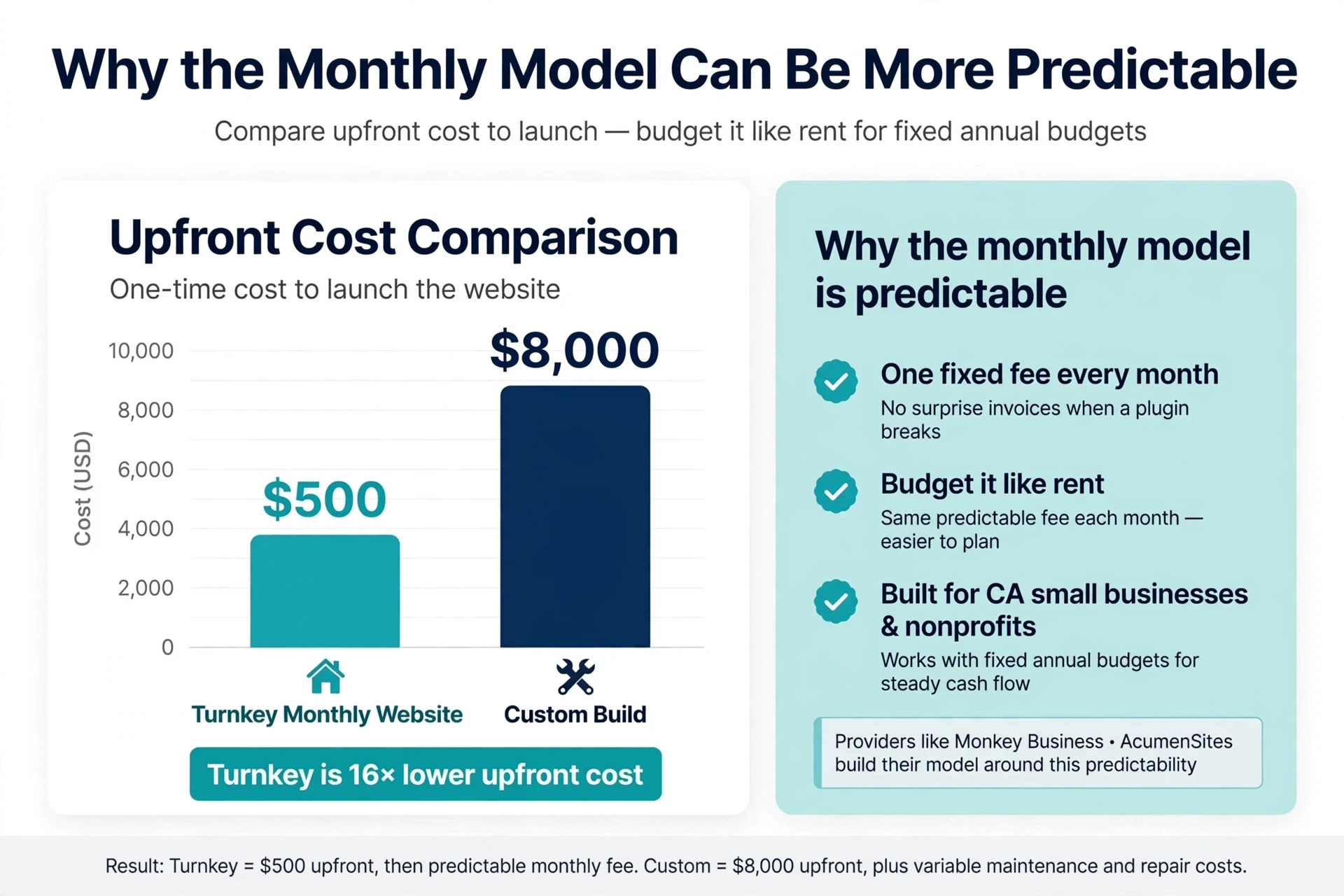
A custom project rarely ends at the quoted price. Revisions, integrations, and post-launch fixes inflate the bill, and maintenance alone often runs $100 to $500 per month on top of the build. Turnkey pricing folds hosting, security updates, backups, and support into one number, so you can budget it like rent. That matters for California small businesses and nonprofits running on fixed annual budgets. Providers like Monkey Business and AcumenSites build their whole model around this predictability: same fee every month, no surprise invoices when a plugin breaks.
Watch the launch date, not just the price. A “cheap” custom build that ships three months late costs you leads the whole time.
Customization, Integrations, and Growth
The Website or the Website’s Business Logic?
Ask what your site actually does, not how it looks. Pages, forms, and a blog fit almost any turnkey plan. But booking systems, quote calculators, CRM syncing, and member portals are business logic – and that is where the two paths split. Custom builds connect to any API or internal system; turnkey plans usually limit you to a fixed connector list. The smarter question: will your needs change in 12 to 24 months? Research on platform limits suggests listing mission-critical integrations first, then choosing. A managed WaaS provider like Monkey Business handles common integrations for you, without hiring a developer.

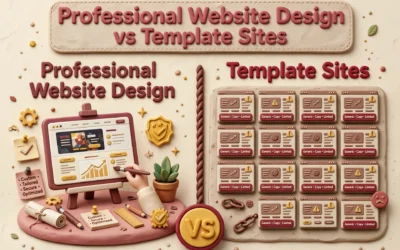
Also Read: Professional Website Design vs Template-Based Sites
Who Handles Security, Compliance, and Updates?
With a turnkey plan, the provider owns the technical work. Website-as-a-Service vendors handle hosting, security patches, backups, and updates under one monthly fee. Custom development puts that burden on you or a hired developer – every plugin update and privacy rule lands on your desk. Unpatched plugins remain the top way sites get hacked, which is why managed care matters for busy owners.
The Ownership and Exit Questions to Ask
Before signing, ask:
- Do I own my domain and content?
- Can I export my site if I leave?
- Who fixes a hack – and who pays?
- Is CCPA compliance included?
Good providers answer these plainly. Traps hide in vague contracts.
Also Read: Turnkey Website Solutions: 7 Deliverables to Expect
Which Should You Choose: An All-in-One Website or Custom Development?
Pick the all-in-one route if you want a professional site without touching code, hosting, or updates. Pick custom development if you need special features like complex booking systems or custom integrations.
Custom builds offer more control, but they cost more. Projects built by pros often run well into five figures, while builder plans are usually a fixed monthly fee, as Shopify’s comparison explains. Maintenance costs also run higher on custom sites.
For most small businesses and nonprofits, a managed all-in-one plan is the smarter fit. Services like Monkey Business handle design, hosting, security, and updates for one flat monthly price, so you skip the big upfront bill and the tech headaches.

Skip the upkeep headaches. Get a done-for-you, compliant website with Monkey Business. Request your free quote today.
Frequently Asked Questions
Q1: Turnkey website solutions vs custom development?
Turnkey means one flat fee covers design, hosting, and upkeep. Custom development costs more upfront and leaves maintenance on you. Most small California businesses get better long-term value from turnkey.
Q2: How much does a turnkey website cost monthly?
Most plans run $100 to $300 per month, depending on features and support level. Custom builds often cost $5,000 or more before ongoing hosting and updates.
Q3: Can I migrate my existing site to a turnkey service?
Usually yes. Providers like Monkey Business handle the transfer, keep your links working, and refresh the design during setup.
Q4: Who owns my website content with a turnkey plan?
You own your text, images, and data. Confirm ownership terms in writing before signing any service agreement.
Conclusion
Turnkey wins on time and peace of mind; custom wins on control. Most California small businesses need the former. SBA guidance on digital readiness supports starting simple.