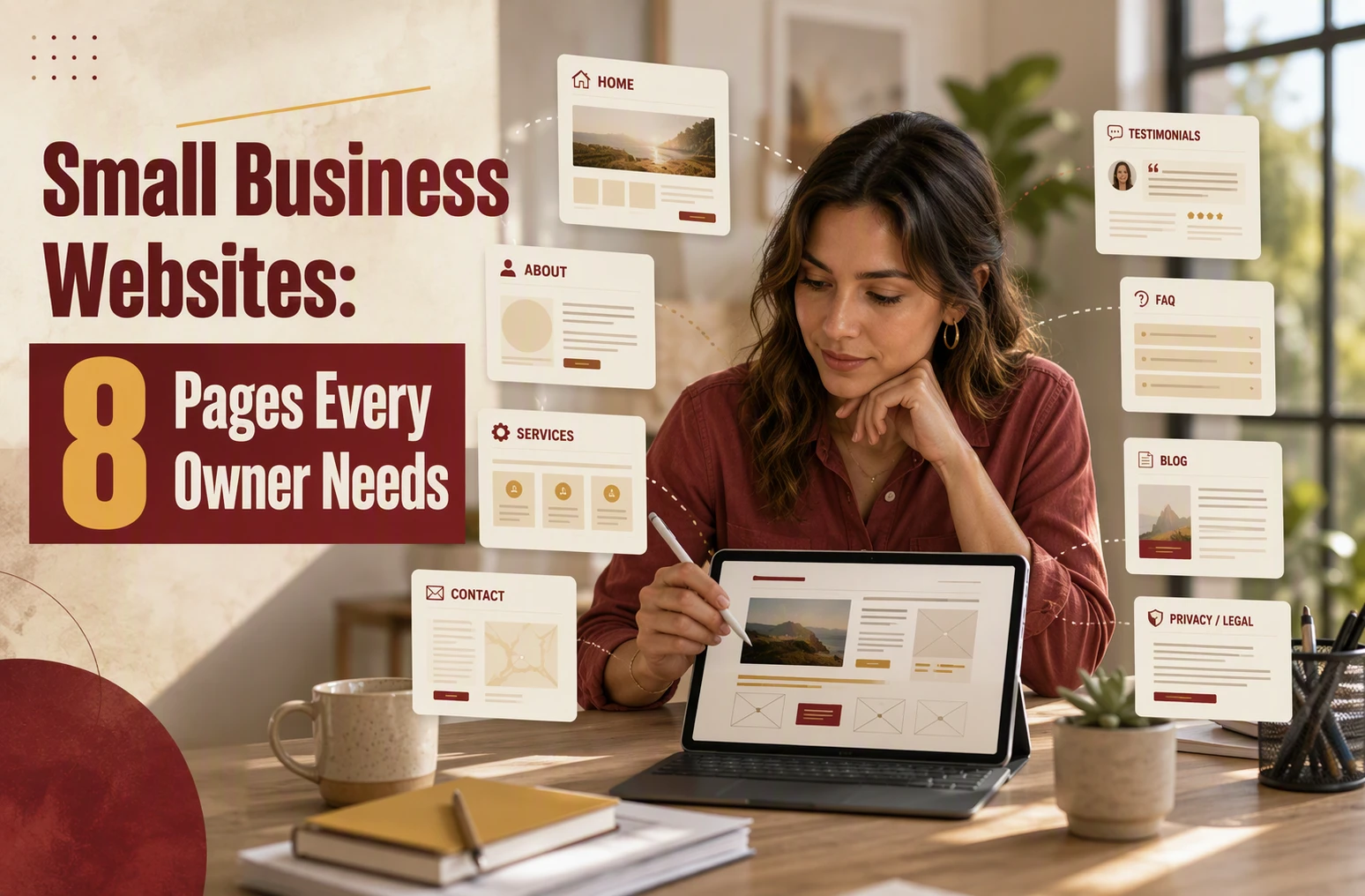
Quick Summary: A small business website should focus on eight key pages: homepage, about, services or products, contact, testimonials, FAQ, location, and legal pages. Each page must answer specific questions, build trust, and guide visitors toward contact or sales. Starting with these core pages helps convert visitors and grow trust efficiently.
If your site has only a few pages, structure is what separates polished Small Business Webs from ones that bring in leads. Many owners launch with a homepage and contact page, then skip the pages that answer questions and build trust. This guide to Small Business Websites shows the 8 pages that matter most. We chose them from proven Business Website Design patterns. If needed, build your first four Small Business Webs now, then grow.
Quick Comparison
| Page | Best for | Must-have content | Primary conversion role | Priority |
|---|---|---|---|---|
| Home Page | First impressions and guiding visitors | Clear offer, summary of services, contact links | Directing visitors to the next step | Highest |
| About Page | Trust and credibility | Story, values, team or founder intro | Reducing hesitation | Very high |
| Services or Products Page | Explaining offers and driving sales | Offer details, deliverables, CTA | Turning interest into action | Very high |
| Contact Page | Lead capture and support | Form, phone, email, hours | Turning visitors into inquiries | High |
What to know about small business websites
A good website does not need dozens of pages. It needs the right ones. Small Business Webs work best when each page answers a clear question, builds trust, and moves people one step closer to contact.
That matters more now because buyers compare fast. If your Small Business Webs feel thin, missing, or hard to follow, people leave. A complete site helps them understand your offer, trust your business, and reach out with less doubt.
1. Home Page
Your homepage is your site’s main summary page. It should tell visitors what you do, who you help, and what to click next within seconds, as NNGroup explains.

Highlights
- State your offer in the first screen.
- Add a short services summary.
- Use trust signals like reviews or partner logos.
- Give clear paths to contact, book, or learn more, as the U.S. Chamber notes.
Specs
- Best for: First impressions and guiding visitors
- Must-have content: Clear offer, summary of services, contact links
- Primary conversion role: Directing visitors to the next step
Pros
- Central hub
- Builds trust fast
Cons
- Easy to overcrowd
- Weak copy confuses visitors fast
It ranks first because most visitors judge your business here.
Last updated: August 8, 2026
Also Read: 5 Essential Tips for Selecting a Reliable Website Security Provider
2. About Page
Your About page makes your business feel real. It gives people a reason to trust you before they call, especially in service businesses where buyers often research the team first, as noted by NN/g and Google.

Highlights
- Tell a short story
- Show values and your founder or team
- Focus on how you help the customer
Specs
- Best for: Trust and credibility
- Primary conversion role: Reducing hesitation
Pros
- Humanizes your brand
- Supports local trust
Cons
- Can get too self-focused
Buyers often check this page before contacting you, so it earns a very high spot.
Last updated: August 8, 2026
Also Read: 7 Small Business Website Features That Boost Conversions
3. Services or Products Page
This is where interest turns into buying intent. Show what you sell, what’s included, and the next step. Clear pricing or starting rates help, and the FTC says businesses should avoid vague fee labels and be upfront about charges in its fee guidance.

Highlights
- Describe each offer clearly.
- List deliverables, outcomes, or key features.
- Add pricing or starting points when it fits, and make buying terms easy to review using FTC online shopping advice.
- End with one strong CTA.
Pros
- Tied closest to sales.
- Cuts repeat questions.
Cons
- Gets weak fast if it reads like a brochure.
This ranks high because it moves ready buyers toward booking, quoting, or buying.
Last updated: August 8, 2026
Also Read: Blog | Monkey Business
4. Contact Page
Your contact page should help people reach you fast. Keep it simple: a short form, phone, email, hours, and clear next steps. Google also tells businesses to keep hours accurate on their profile and website business hours guidance.

Highlights
- Short form
- Phone, email, hours
- Response time
- Location or booking details
Specs
- Best for: Lead capture and support
- Must-have content: Form, phone, email, hours
It ranks high because this page turns ready visitors into inquiries right when intent peaks.
Last updated: August 8, 2026
Also Read: ADA Compliant Website Design: What Your Business Needs to Know
Honourable Mentions
These pages may not make the core cut first, but they still help conversions and trust.
- FAQ / Support Page – Answers objections before they block a sale.
- Portfolio or Case Studies Page – Shows your work gets real results.
- Blog Page – Helps grow visibility over time.
- Testimonials Page – Adds social proof that supports the buying decision.
How to choose the right pages for your small business
Pick pages based on what brings results first.
- Match your main goal: leads, bookings, donations, or sales should decide your first pages.
- Start lean: publish Home, About, Services or Products, and Contact first if time is tight.
- Add FAQ early if people keep asking the same pre-buy questions.
- Show proof: use Portfolio or Case Studies when trust depends on past work.
- Add a blog only if you can stay consistent with useful, keyword-focused posts.
- Spread testimonials across key pages instead of hiding them on one page.
If you want help choosing and building the right mix fast, Monkey Business is the strongest fit for done-for-you setup and ongoing support.
Need these pages built right the first time? Monkey Business handles design, hosting, updates, and support so your site stays clear, compliant, and ready to convert.
Frequently Asked Questions
Q1: What are the essential pages every small business website should have?
Most small business sites need a homepage, about page, services page, contact page, testimonials page, FAQ page, location page, and privacy or legal page. If you sell online, add product and checkout pages too.
Q2: How can a small business optimize its homepage to attract visitors?
Lead with a clear headline, say who you help, and add one strong call to action. Show trust fast with reviews, service areas, and key benefits. Keep menus simple so people know where to click next.
Q3: What content should be included on an effective about page for small businesses?
Include your story, who you serve, your values, team details, and why clients trust you. Add a photo, local ties, and a next step. People want proof that real humans stand behind the business.