Quick Summary: Custom nonprofit websites better build trust, tell stories, and optimize donation flows compared to generic templates. While templates are faster and cheaper to launch, they often weaken mission identity and limit storytelling. For long-term fundraising success, a tailored site that matches your mission and improves user experience is usually the better choice.
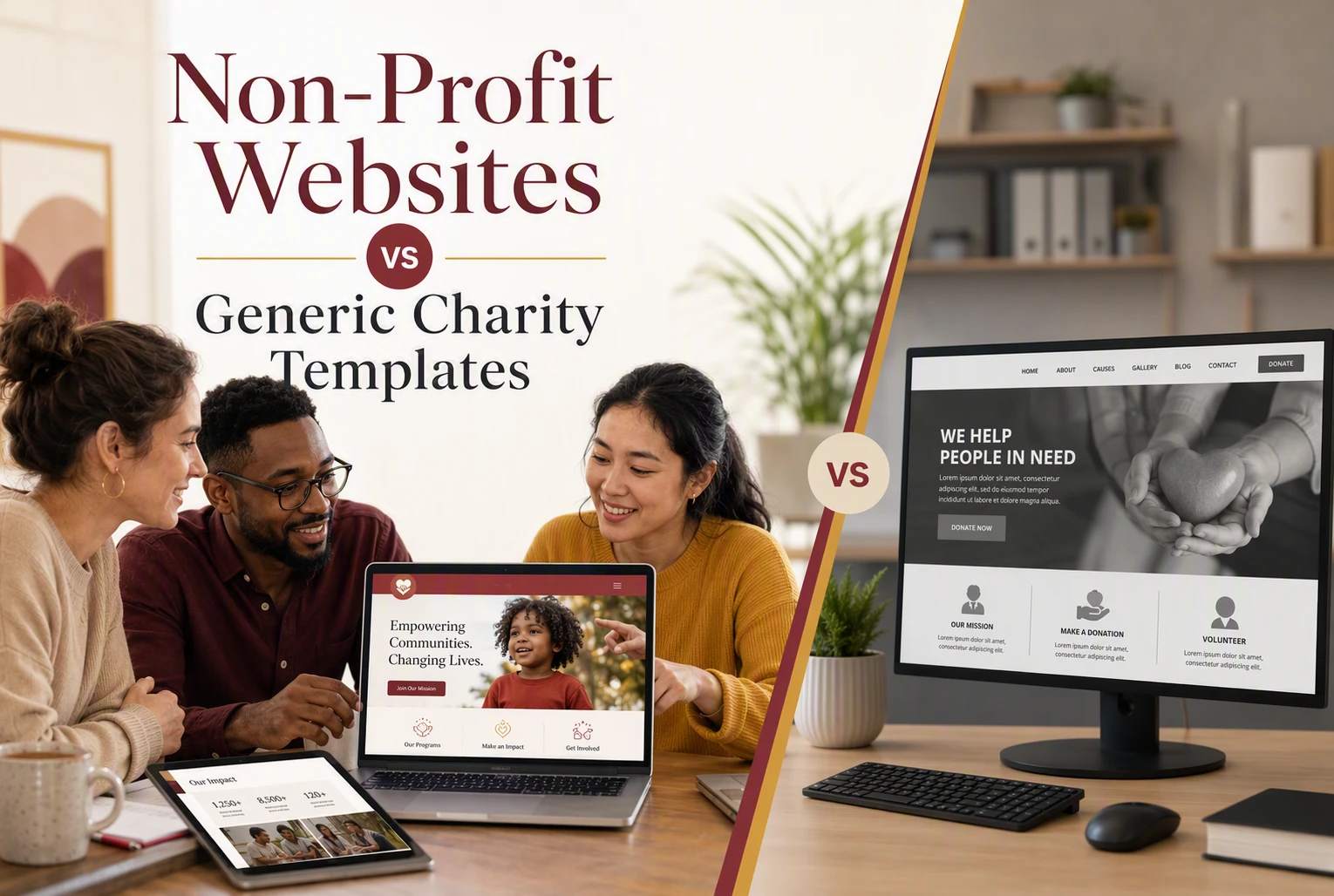
If your nonprofit depends on donations, volunteers, or repeat supporters, a custom site usually wins. It fits your mission, message, and giving path instead of squeezing you into a generic template. Teams want speed and lower cost, but they still need trust and easy donations. This comparison explains when templates work, where they fail, and when custom becomes the stronger fundraising choice.
Non-Profit Websites vs Generic Charity Templates: At a Glance
| Non-profit website | Generic charity template | |
|---|---|---|
| Customization depth | High; built around unique goals and branding | Moderate; constrained by preset sections and layouts |
| Donor journey alignment | Strong; designed for specific donation and action flows | General-purpose; optimized for broad use cases |
| Storytelling flexibility | High; content and layout can be structured around campaigns | Limited to the template’s structure and modules |
| Accessibility and compliance | Can be planned and maintained with accessibility in mind | Depends on edits and implementation quality |
| Launch speed | Slower than a template, but more strategic | Fast; good for rapid setup |
| Best fit | Organizations that want long-term fundraising performance | Small teams needing a quick, low-lift start |
How Non-profit website and Generic charity template Compare
Non-profit website
A non-profit website is built around your mission, donor path, and campaign goals. It fits teams that want stronger fundraising, clearer stories, and room to grow over time.
Generic charity template
A generic charity template gives you a ready-made layout and a faster launch. It works best for small teams that need a simple starting point and can live with preset structure.
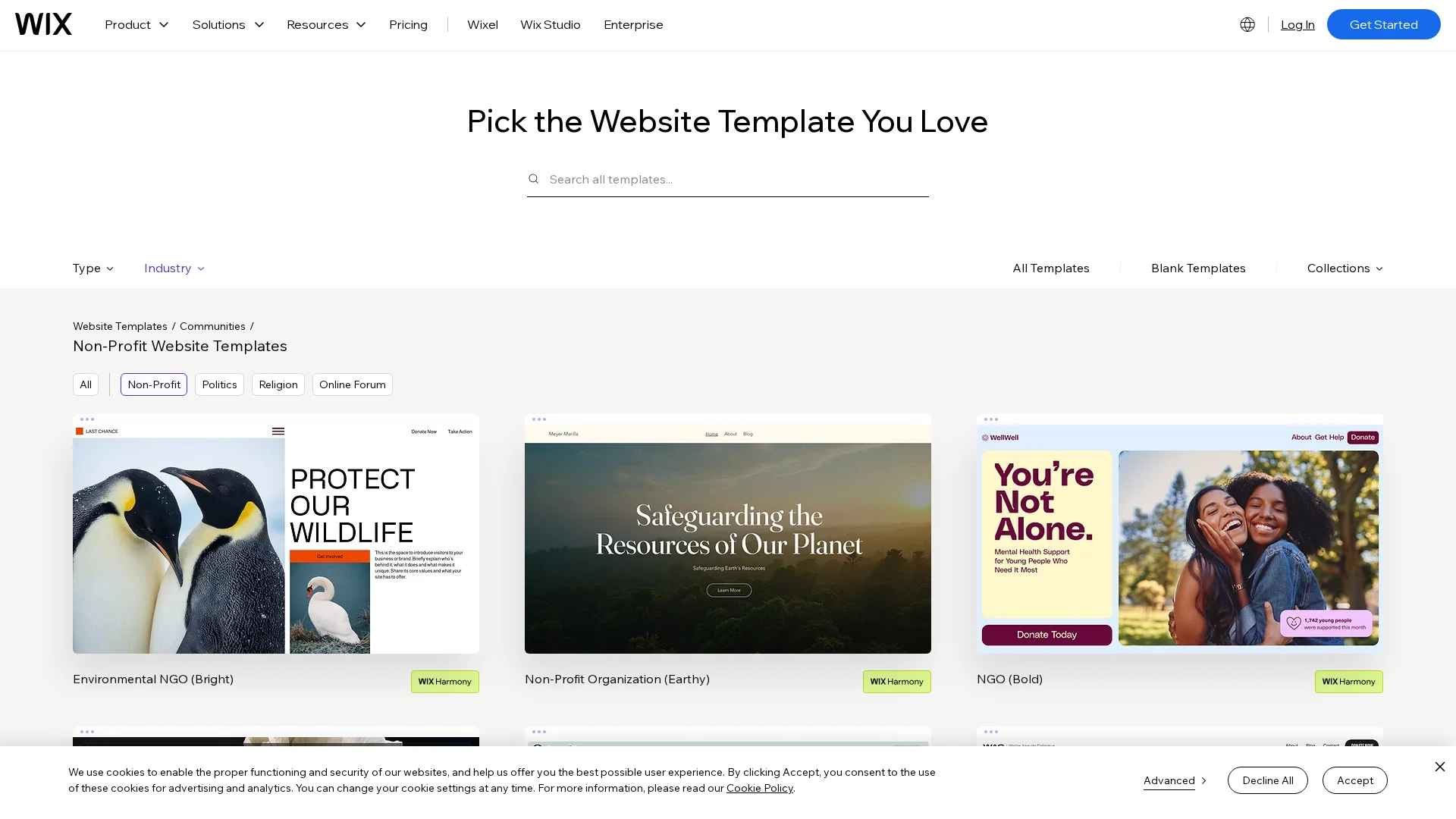
Customization Depth and Brand Trust
One-size-fits-all charity templates often make different nonprofits look the same. That weakens mission identity fast. Nielsen Norman Group found donors first want clear mission details and how funds are used, yet many sites fail to show that upfront on the homepage in donation usability research. If your layout, photos, and calls to action feel generic, visitors may assume your impact is generic too.
Custom design helps supporters trust the cause faster because it matches message, visuals, and proof on purpose. Research on nonprofit websites found site design credibility strongly shapes attitudes toward the site in this Wiley study. Strong customization usually means:
- clearer mission cues
- real local imagery
- better donation flow
- more consistent tone
If donors need to guess who you help, trust drops before they ever click Donate.
Also Read: Blog | Monkey Business
Donor Journey, Storytelling, and Fundraising Conversions
Story turns interest into action when it follows a simple path: problem, person, proof, ask. A generic template often leaves this scattered across pages. A stronger nonprofit site keeps one clear narrative from homepage to donation form. Recent NextAfter testing shows donor-focused, story-driven pages can lift motivation because people see a specific outcome and their role in it.
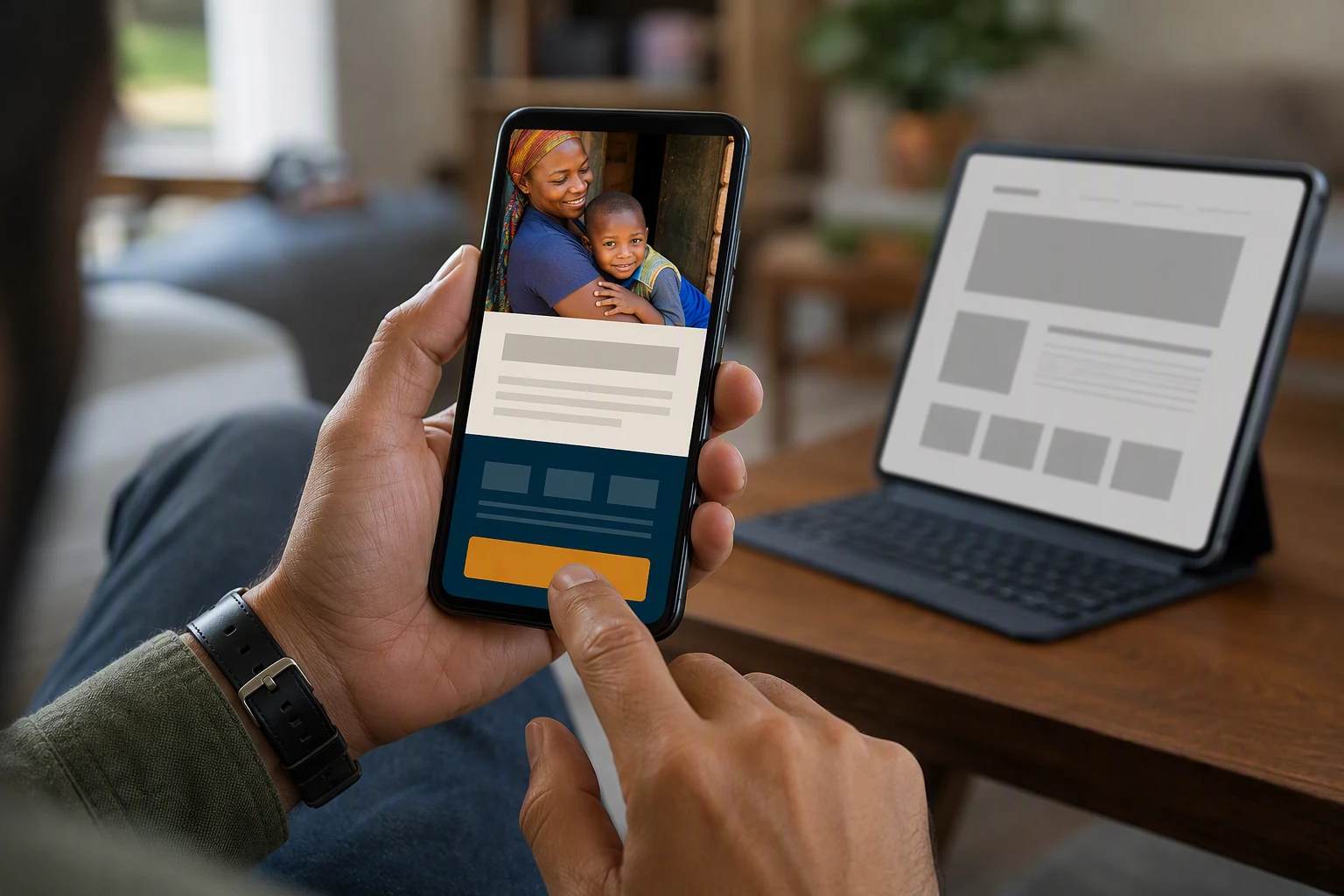
Put the donor in the story, but keep the beneficiary real and specific.
Donation friction kills good intent fast. The M+R Benchmarks 2026 report says nonprofits get donations from 1.6% of all website visitors, and mobile drives 52% of visits but less revenue than desktop. That gap grows when forms ask too much or hide the next step. Fix the path with:
- one primary CTA
- short forms
- mobile-first payment options
- clear impact amounts
Also Read: Professional Website Design vs Template-Based Sites
Which Should You Choose for Your Nonprofit?
- Choose a generic template if you need to launch now. It works for a new nonprofit, a short campaign, or a tight budget. You get online fast, collect basic gifts, and test your message before spending more.

- Choose a custom nonprofit website if fundraising is the priority. That path makes more sense when you need stronger trust, better accessibility, and clearer donor flows. Public trust still matters, and 57% of Americans say they trust nonprofits to do what is right, according to Nonprofit Quarterly’s report. Accessibility matters too – WebAIM’s 2025 study found 94.8% of home pages had detected WCAG failures. If donations drive growth, custom usually wins.

Need a nonprofit site that earns trust and donations? See how Monkey Business builds secure, custom, done-for-you websites.
Frequently Asked Questions
Q1: What are the key differences between non-profit websites and generic charity templates?
Custom nonprofit sites match your mission, donor path, brand, and accessibility needs. Generic templates look fast and cheap, but often limit storytelling, trust signals, donation flow, and search visibility.
Q2: How can customizing non-profit website templates improve donor engagement?
Customization helps you guide visitors clearly. You can feature real impact stories, stronger calls to action, simple giving forms, and pages built for volunteers, sponsors, and repeat donors.
Q3: What features should a top non-profit website include for effective storytelling and fundraising?
A strong site needs mobile design, fast load speed, accessible pages, clear donation buttons, impact proof, event tools, email capture, volunteer paths, and easy updates for your team.
Conclusion
Custom nonprofit websites usually win because they build trust, support accessibility, and improve giving. Donors rely heavily on charity websites before giving, according to Give.org.