Quick Summary: Monkey Business builds CCPA compliant websites for California businesses, non-profits, and professional practices, and says yes, it can. A compliant site needs four things: a notice at collection, a Do Not Sell or Share link, automatic support for the Global Privacy Control signal, and a working process for consumer data requests, which is more than just having a privacy policy page. The agency handles most of the build, then monitors third-party tracking scripts and applies CPRA updates as the site changes, while the client supplies a data inventory, privacy policy facts, a list of third-party scripts, and one decision maker for approvals. Most small business builds take two to four weeks, and the California Attorney General can fine per violation, so owners are advised to build to CCPA standards by default.
Your website likely collects more personal data than you realize. A contact form, a booking link, a tracking pixel, a map embed: each one matters under California law. Many owners discover this only after a complaint. This guide explains what a CCPA compliant website design actually requires, and how Monkey Business builds privacy compliant websites and keeps them that way for you.
What a Privacy Compliant Website Actually Requires
Under the CCPA, a compliant website does four things in order. It shows a notice at collection before gathering data, offers a Do Not Sell or Share link, honors the browser’s Global Privacy Control signal as a valid opt-out, and gives visitors a working request process for their data. The California Attorney General requires each of these, not just a privacy policy page (oag.ca.gov).
- Notice at collection at or before data collection
- Opt-out link for selling or sharing
- Global Privacy Control honored automatically
- Consumer request process with response deadlines
Whether Your Business Is Covered
Most California small businesses qualify. The law applies once you meet revenue or data thresholds, and many owners cross them without knowing it, especially sites running tracking scripts. If you collect personal information from California residents, building to these standards is the safe default. We cover the full build process on our page about building a privacy compliant website in California, including steps for each layer.
Can Monkey Business Build Privacy Compliant Websites?
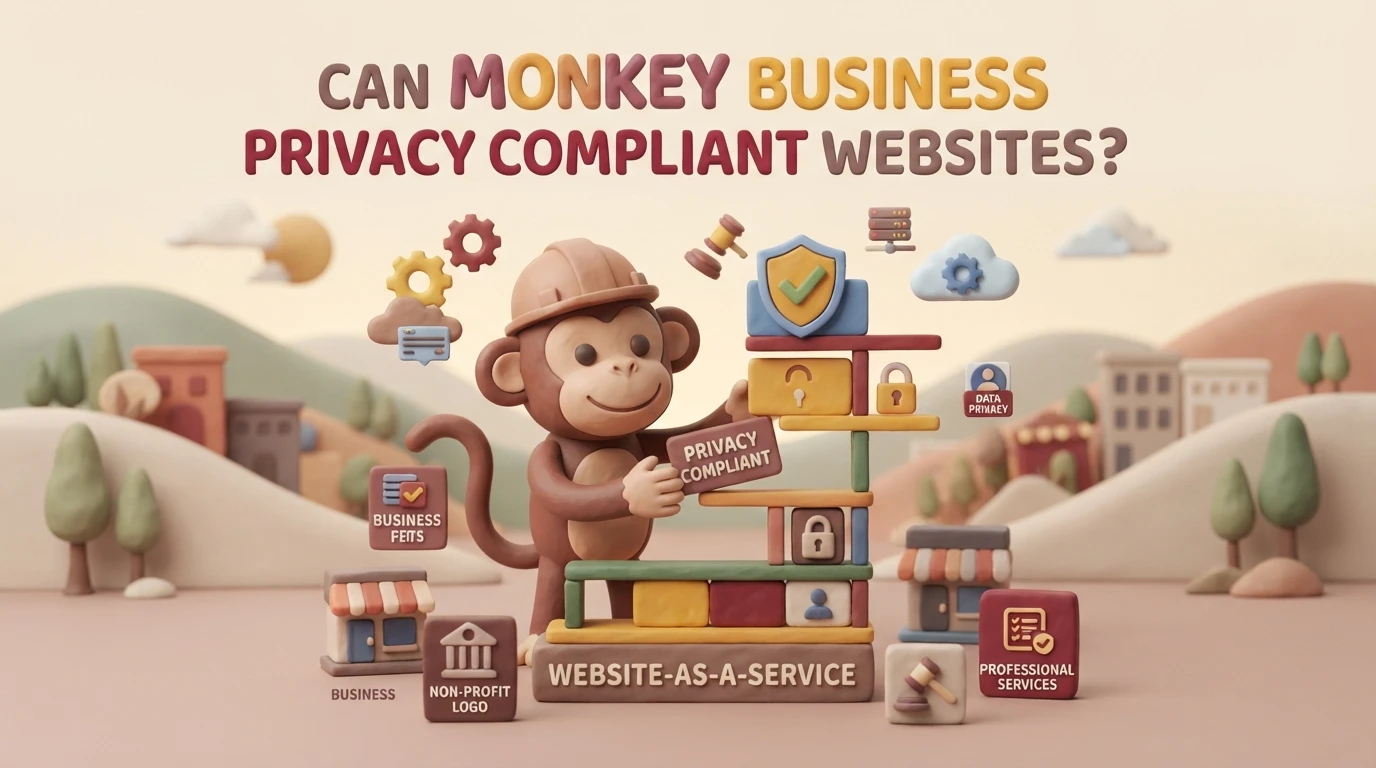
Yes. Monkey Business builds privacy compliant websites, including CCPA compliant website design for California businesses, non-profits, and professional practices. Every build includes the core items the law expects:
- A notice at collection so visitors know what data you gather
- A Do Not Sell or Share link where required
- Support for Global Privacy Control opt-out signals
- A privacy policy tailored to your site, not a generic template
- A simple process for consumer requests to delete or correct data
We walk through the full process in our guide to building a privacy compliant website in California.

What We Keep Watch After Launch
Compliance is not a one-time task. We monitor third-party tracking scripts, apply CPRA updates as they roll out, and adjust your policy as your site changes, so your website stays current without you tracking the rules yourself.
What We Need from You to Keep You Compliant
The build is mostly on us, but your answers shape it. To design privacy compliant websites that fit your business, we need four things from you:
- A data inventory: every place your site collects personal details, from contact forms to newsletter signups.
- Your privacy policy facts: who you are, how you use data, and who you share it with.
- Third-party scripts: a list of plugins, analytics, and ad tools you want running.
- Decision makers: one person who can approve your notice at collection and opt-out settings.

Mistakes We See Most Often
Owners skip the data inventory, then discover a forgotten form or tracking script. Others assume a copied policy covers them, or no one owns consumer requests when they arrive. Your ongoing website maintenance plan catches those gaps early, so nothing lingers on a live site.
How to Check Your Current Website in an Afternoon
A Simple Self-Audit
How do you check if your website is privacy compliant? Work through this ordered list in one afternoon:
- Read your privacy policy. Does it cover California visitors and mention the CCPA?
- Look for a notice at collection where you gather visitor data.
- Check for a Do Not Sell or Share link in your footer.
- Test whether Global Privacy Control opt-out signals are honored.
- List your third-party tracking scripts in a simple data inventory.
- Confirm a consumer request process exists and works.
The steps to make a website privacy compliant in 2026 walk through each fix. Anything you cannot finish yourself, a managed partner like Monkey Business can handle.

Ready for a site that respects privacy rules without the headache? Talk to Monkey Business about your privacy compliant website and get started at Monkey Business.
Frequently Asked Questions
Q1: Can Monkey Business build privacy compliant websites?
Yes. Monkey Business privacy compliant builds include a notice at collection, a Do Not Sell or Share link, Global Privacy Control support, and a tailored privacy policy.
Q2: How long does a CCPA compliant website design take?
Most small business builds take two to four weeks, depending on your data inventory and how quickly you approve policies and settings.
Q3: Do I need compliance if my business is small?
Possibly. Thresholds are lower than owners expect, and tracking scripts count as data collection. Build to CCPA standards by default.
Q4: What happens if my site is not compliant?
California’s Attorney General can issue fines per violation, and consumers can sue after breaches. Fixing gaps early costs far less.
Conclusion
Yes, Monkey Business builds privacy compliant websites. A compliant build starts with a notice at collection, a Do Not Sell or Share link, and Global Privacy Control support, then stays current through ongoing monitoring and CPRA updates.