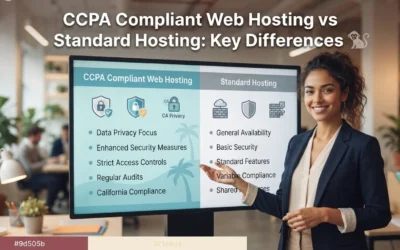

Quick Summary: California businesses need more than firewalls from their web host to stay CCPA compliant. Encryption, backup deletion routines, role-based access controls, and a written data processing agreement all matter because even small practices, like IP profiling in analytics, can turn a host into a legal third party. Vendors such as Monkey Business bundle these features into managed plans, including CCPA-aligned DPAs and tested encrypted backups, so site owners do not have to assemble compliance pieces on their own. Before signing, ask any host to show audit logs, retention settings, and subprocessor lists to confirm they can support deletion requests and breach notice duties.
A Sacramento yoga studio learned the hard way: its host was profiling visitor IPs for cross-client analytics. That quiet detail turned the vendor from a service provider into a third party under California law. Secure web hosting is not just firewalls and uptime. The CCPA also cares how hosts handle, share, and delete data. This guide gives you a ranked checklist of secure web hosting features to verify, so your hosting choice actually supports compliance rather than undermining it.
Security and Encryption Features That Cut Your Privacy Risk
Start with encryption. If your host does not force HTTPS with a current TLS certificate, a breach of visitor data may already be a legal problem. Ask for encryption at rest too, so stored form entries stay unreadable if a server is stolen. Your forms matter most here: use spam protection, honeypots, and encrypted delivery of submissions.

Next, check the perimeter. A web application firewall, daily malware scans, and DDoS protection block most attacks before they touch your data. Ask how fast the host patches software and who fixes a hacked site. Good secure web hosting includes these defenses by default, not as paid add-ons, which is what separates CCPA compliant hosting from a bargain server.
Backup, Retention, and Deletion Features That Honor Data Lifecycle Duties
The CCPA’s deletion right is only as strong as your hosting setup. A visitor can ask you to erase their data, but if old copies live in backups your host never purges, you can’t fully honor the request.
Automated Backups and Tested Restore Drills
Look for daily automated backups with at least 30 days of history, stored apart from your main server. A backup you can’t restore is worthless, so ask vendors how often they run restore tests. Ask too whether backups are encrypted. Managed plans from providers like Monkey Business bundle this, so you don’t chase it yourself.

Retention Windows and the Right to Be Forgotten
Your host should let you set retention limits and purge deleted records from backups on a fixed schedule, not keep them forever. Under the CCPA deletion rules, consumers can ask businesses to delete personal information, and providers must honor verified requests. Ask each vendor to document their deletion process in writing, including backup timelines.
Access Controls, Audit Logs, and Privacy-Friendly Infrastructure
Least-Privilege Admin Access and Audit Trails
Your host should support least-privilege access: each person gets only the admin rights their job requires. Ask for two-factor authentication, role-based user levels, and an audit log that records who changed what and when. These records matter if a breach or a consumer complaint forces you to explain your data handling.
Privacy-Friendly Defaults: Logging, Regions, and Data Minimization
Good hosts minimize data by default. Check that request logs are short-lived, IP addresses are truncated or anonymized, and you can choose a US hosting region instead of routing data abroad. Fewer stored details mean a smaller breach risk and a simpler CCPA story.
Quick test: ask any vendor to show you the audit log and retention settings before you sign.
Contract and Consumer-Rights Features: DPA, Subprocessors, and Request Support
Your host handles personal data on your behalf, so the contract and its consumer-rights support matter as much as firewalls. Check both before you sign.
A Real CCPA Data Processing Agreement, Not a Generic TOS
Ask for a written data processing agreement (DPA). It should state that the host processes data only on your instructions, follows your security requirements, and helps you respond to consumer requests. A generic terms-of-service page does none of this. Providers such as Monkey Business include CCPA-aligned terms in their managed hosting plans, so you are not left drafting one yourself.
Subprocessor Transparency, Breach Notice, and Rights-Request Support
A good DPA also lists subprocessors, the vendors your host shares data with, and commits to timely breach notice. That notice window lets you meet your own duty to alert affected consumers. Finally, confirm the host will help honor deletion and opt-out requests that touch server logs or backups. Ask how each request flows and who signs off.

Checking whether your host meets every CCPA duty takes time you may not have. Monkey Business handles secure, compliant hosting for you, so your site stays protected and your focus stays on your business.
Frequently Asked Questions
Q1: Which hosting providers help with privacy compliance?
Choose providers that offer SSL, encryption, backups, and tools for cookie consent and data deletion. Managed hosts like Monkey Business build these CCPA features into every plan.
Q2: Does CCPA compliance depend only on my host?
No. Your host covers security and data handling, but you must add a privacy policy, cookie notices, and opt-out links yourself.
Q3: Is CCPA compliance required for small websites?
Yes, if you collect personal data and meet CCPA thresholds, or share visitor data with ad platforms. Most small sites benefit from following it anyway.
Q4: How often should I review my hosting setup?
Check quarterly. Review security updates, backup tests, and vendor contracts whenever you add a plugin, form, or tracking tool.
Conclusion
Check any host against the four pillars: security, data lifecycle, access and transparency, and rights and contracts. Score each vendor, ask for written answers, and keep proof on file. A host that meets CCPA compliant hosting standards keeps your business out of avoidable legal risk.