Quick Summary: Vet California web design agencies by reading recent reviews across Google, Yelp, and Clutch before relying on polished portfolios. Test their knowledge of CCPA and ADA compliance, domain ownership, maintenance costs, and working habits, then request a small paid project with written scope, price, and deadlines. Compare proposals line by line, including month-three costs, before signing.
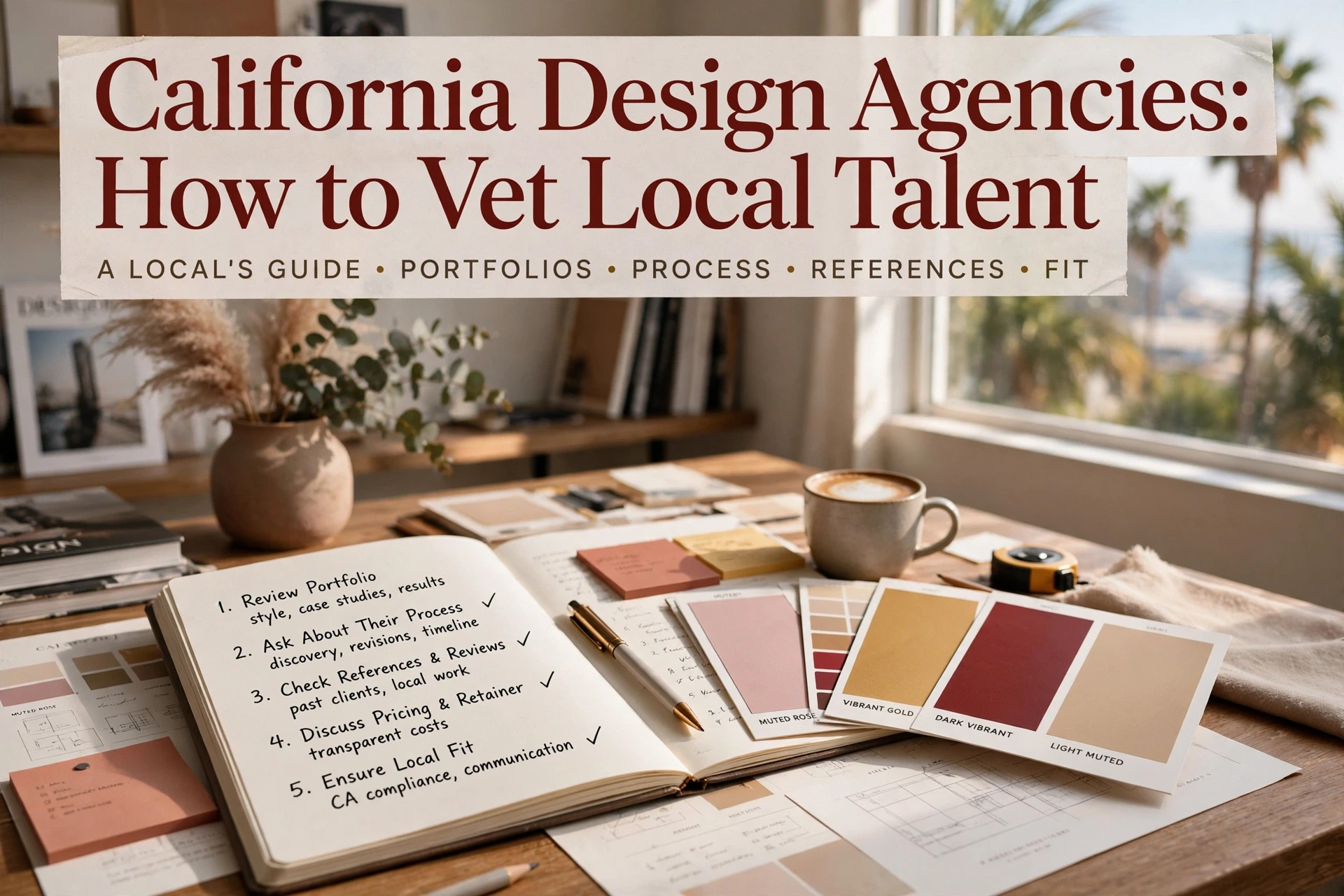
Three California agencies made your shortlist. Every portfolio looks polished, and each one can quote real work. So the only real difference left is the agency reviews you have not read yet, and those reviews tell you how each California web design agency behaves after the contract is signed. That is the hard part of vetting local talent, and this guide walks you through it: reading reviews first, then pricing, CCPA and ADA compliance, contracts, and nonprofit options.
Step 1: Read the Reviews Before You Read the Portfolio
A portfolio shows only the wins. Agency reviews show what happens when a launch slips or an invoice grows. Start there.
Where California agency reviews actually live
Read Google Business reviews, Yelp, and Clutch for any California web design agency you shortlist. Google shows volume and recent ratings. Clutch adds project budgets and timelines. Cross-check at least two sources, and weigh reviews from the last 18 months most heavily.
A pattern across platforms beats a single five-star page every time.
Reading reviews for nonprofits in California
The top California web design agencies for nonprofits usually show up in reviews from other mission-driven clients, not just commercial ones. Look for mentions of grant budgets, volunteer-friendly handoffs, and donation tools. If a nonprofit review praises clear pricing and patient training, that agency likely understands your world.
Sorting reviews this way is the first step in picking a California web design agency with confidence.
Step 2: Ask Questions That Test California-Specific Know-How
Any California web design agency should pass this test with specific answers, not vague nods.
Compliance questions that separate specialists from generalists
- How will you build a CCPA compliant website design, and where does my privacy notice live?
- What does your ADA compliant web design agency process look like – who runs accessibility testing, and when?
- Who owns the domain and content if I leave?
Generalists often stumble on the last one. For a deeper checklist, see how to choose an ADA compliant website design partner.

Questions that expose how they will actually work with you
Compliance aside, ask questions to ask a web design agency that reveal daily working habits:
- How often will we meet, and who is my single contact?
- What do website maintenance and hosting costs run after launch?
- What web design agency contract red flags should I watch for in your proposal?
Hesitation on ownership or pricing tells you plenty. Clear, written answers tell you more.
Step 3: Make Them Prove It With a Paid Test or a Small Real Build
Reviews and portfolios tell you what an agency has done. A paid test shows how it works with you. Before you sign a long contract, ask for a low-risk first engagement.
What a low-risk first engagement looks like
A good trial might be a one-page audit, a landing page build, or a fixed-fee design sprint. Agree on the scope, price and deadline in writing. Many providers, including Monkey Business, offer month-to-month service instead of long contracts, which lets you leave if the work disappoints.

Spotting a proposal that avoids specifics
Vague wording is a red flag. Watch for proposals that skip the timeline, name no deliverables, or quote a range with no scope behind it. A serious proposal lists pages, revisions, deadlines and who owns the domain and content. If it dodges those details, ask why before you pay anything.
Step 4: Compare Proposals Line by Line Before You Sign
Put both bids into the same grid so you compare costs, not vibes.
The comparison sheet every bid should fill in
| Line item | Bid A | Bid B |
|---|---|---|
| Design and build cost | ||
| Monthly maintenance and hosting | ||
| Domain and content ownership | ||
| ADA and CCPA compliance scope | ||
| Timeline and revision limits |
Any agency that can’t fill in the ownership row is a red flag.
The questions to settle before signing
Ask each bidder: who owns the domain and files, what happens if you leave, and whether support after launch is billed hourly or included. Compare month-three costs, not just the launch fee, since website maintenance and hosting costs vary widely between models. This is where an all-inclusive website maintenance and hosting setup is easier to price against a build-then-bill bid.

Vetting agencies takes weeks. Monkey Business skips the guesswork with done-for-you, compliant websites built for California businesses. Start today.
Frequently Asked Questions
Q1: Top California web design agencies for nonprofits?
Look for reviews from other mission-driven clients mentioning grant budgets, donation tools, and patient training. Cross-check Google, Yelp, and Clutch before shortlisting.
Q2: What questions should I ask a web design agency before signing a contract?
- How will you handle CCPA and ADA compliance?
- Who owns the domain and content if I leave?
- What are monthly maintenance and hosting costs?
- Are revisions and support included?
Q3: Do I need to hire a California agency in person?
No. Many work remotely, but local agencies know CCPA, ADA, and California market rates, and reviews from nearby clients are easier to verify.
Conclusion
Vetting a California web design agency comes down to reading reviews first, asking sharp compliance and ownership questions, and comparing proposals line by line. Do those three things, and the polished portfolios stop mattering more than how an agency treats you after launch.