Quick Summary: Turnkey website solutions are ideal for startups needing quick, low-cost launches with limited customization, while custom-built sites suit those requiring deep control, unique features, and scalability. Turnkey options can go live in days and are less expensive upfront, but custom sites take longer and cost more initially. The choice depends on whether speed or control is the priority for the startup’s growth and functionality needs.
If you need to launch fast and protect founder time, turnkey Website Building Platforms often make sense. If your Startup Website Design needs special flows, deeper testing, or room to grow, Custom Website Development is the smarter bet. We assess Startup Website Design choices every week, so this comparison focuses on speed, cost, ownership, flexibility, and when Custom Website Development beats fast-launch options.
Turnkey Website Solutions vs Custom-Built Sites for Startups: At a Glance
| Turnkey website solution | Custom-built site | |
|---|---|---|
| Launch speed | Very fast | Slower initial build |
| Upfront cost | Lower initial spend | Higher initial investment |
| Customization | Moderate | High |
| Ownership and flexibility | Limited platform/process flexibility | Strong control and adaptability |
| Ongoing support | Included or bundled | Available as a separate service |
| Best for | Startups needing a quick, low-friction launch | Startups needing distinctive UX, scaling, or integrations |
How Turnkey website solution and Custom-built site Compare
Turnkey website solution
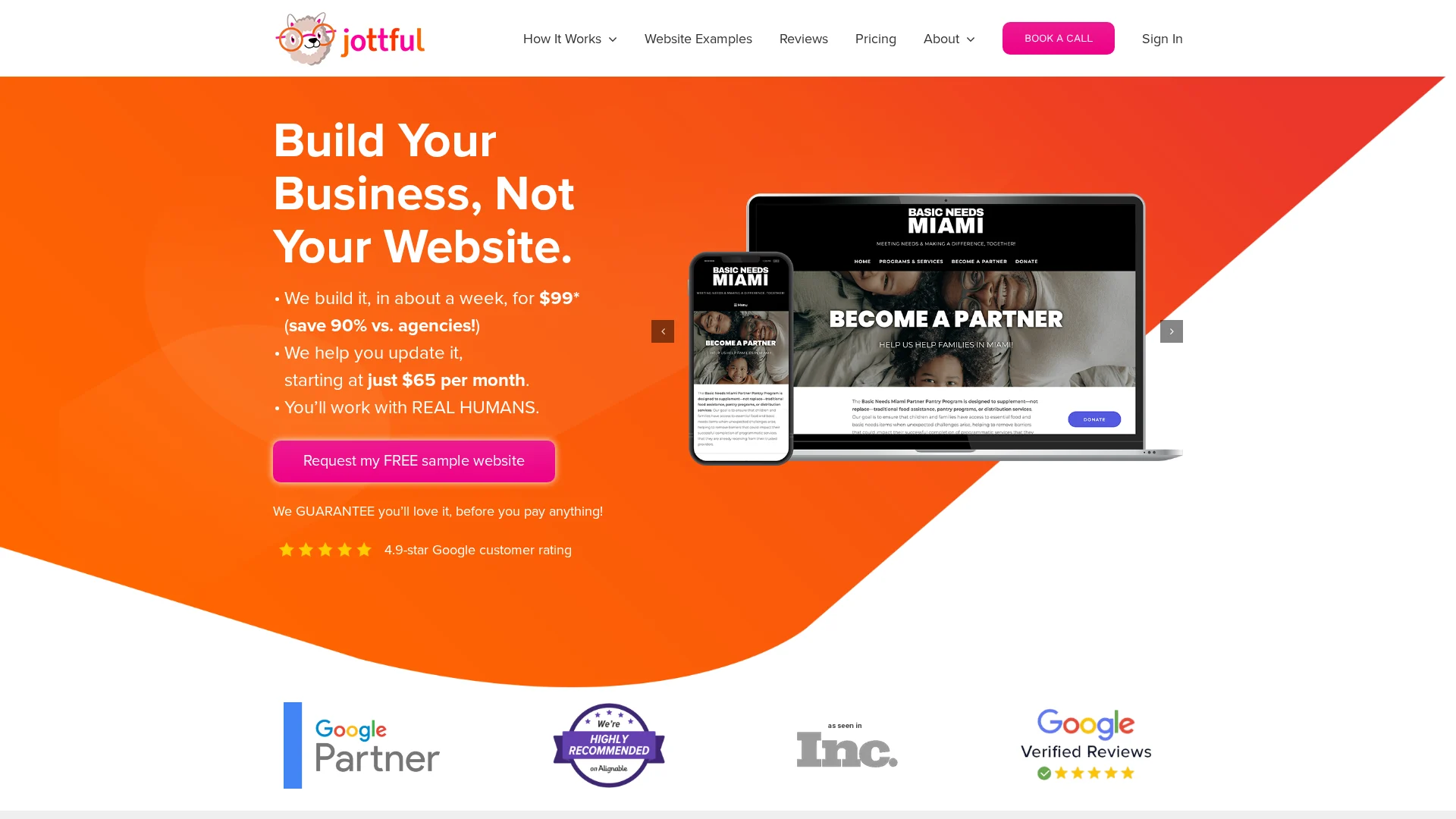
A turnkey website solution is a done-for-you service for startups that need to launch fast with less founder time. Options like Wix show the core angle well – quick setup, bundled support, and lower upfront cost, with some limits on deep changes.
Key strengths
- Very fast launch
- Lower initial spend
Custom-built site
Custom-built site projects fit startups that need Custom Website Development around brand, workflows, and future growth. This path takes longer and costs more up front, but it gives stronger control, distinct UX, and room for deeper integrations.
Key strengths
- High customization
- Strong ownership and flexibility
Speed, Launch Friction, and Time to Market
Turnkey sites win when speed matters. A simple brochure site can go live in 1-3 days DIY or 1-2 weeks with a pro, while large custom builds often take 4-6+ months according to Elementor’s 2026 timeline guide. Fewer handoffs, fewer tech choices, and built-in hosting cut launch friction fast.
Custom work earns its extra time when the site needs logic, not just pages. If you need portals, custom workflows, or deep integrations, the slower path can save a rebuild later. A 2026 comparison notes custom projects usually land in the 4-16 week range because they allow full control over features and scale from the start.
Also Read: 5 Essential Tips for Selecting a Reliable Website Security Provider
Budget, Ownership, and Flexibility Over Time
Turnkey pricing works early because it keeps risk low. You pay a flat monthly fee, launch faster, and avoid a large upfront bill while cash is tight. That matters for startups still testing demand. A 2026 cost review from grEEff.dev notes that total website ownership often grows well beyond the first invoice.
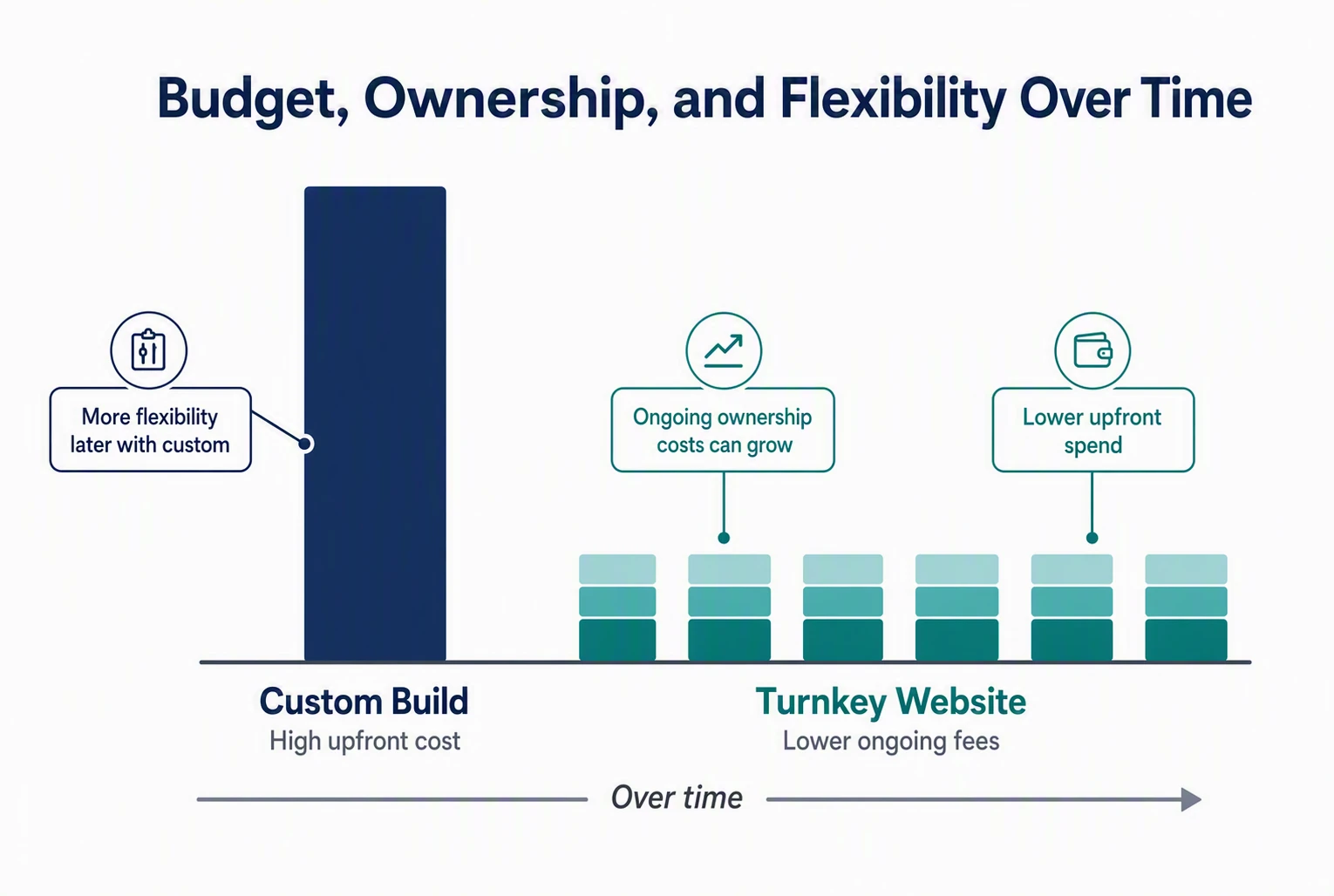
Custom can win later if your site keeps outgrowing its setup. Repeated redesigns, plugin fixes, and migrations add up fast. One 2026 breakdown from Project Cost Estimator says redesigns can cost more than new builds because of content, SEO, and legacy cleanup.
If you need speed now, turnkey is often smarter. If you need deep control later, custom may cost less overall.
Also Read: What is Website as a Service (WaaS) and How Does It Work?
Which Should You Choose: Turnkey Website Solution or Custom-Built Site?
Choose turnkey if you need proof fast. A startup site often needs to test demand, collect leads, and get you live without a long build cycle. That fits the MVP mindset. Several 2026 startup guides stress that early validation beats overbuilding, because weak demand kills more startups than bad code RaftLabs’ MVP guide. If your goal is speed, clarity, and low lift, turnkey wins.

Choose custom if the website is part of the product itself. That means custom workflows, user accounts, payments, dashboards, or deep integrations. In that case, your site is not just marketing. It is core business logic. Refact’s 2026 MVP web development guide also notes that scope drives risk, so custom makes sense when one critical flow must work your way.
Start with the business goal, not the build style.

Need a startup site without custom-build delays? See how Monkey Business gives you secure, done-for-you website support fast.
Frequently Asked Questions
Q1: What are the main differences between turnkey website solutions and custom-built sites for startups?
Turnkey sites launch faster, cost less, and include hosting, updates, and support. Custom sites give deeper control, unique features, and harder integrations, but they take more time, money, and hands-on project management.
Q2: How does choosing a turnkey website benefit small startups compared to custom development?
Small startups save cash, reduce delays, and avoid hiring extra specialists. A provider like Monkey Business can handle design, security, maintenance, and compliance, so founders stay focused on sales, service, and early growth.
Q3: What key features should a startup look for in a turnkey website solution?
Look for mobile design, easy edits, fast hosting, SSL, backups, SEO basics, clear pricing, support, and room to grow. Check ownership terms too, so you know what happens if you switch providers later.
Conclusion
Turnkey wins when you need speed, lower risk, and simple needs. Custom wins when growth needs control. Stanford found design and ease of use shape credibility strongly in web credibility research.